South · US

Hazmat Spill Response in Bethesda, MD

Planning hazmat spill response in Bethesda, MD

Bethesda MD clinic-tower spill guide: isolate Medical Center docks, SDS not janitor chemistry, berm Rock Creek drains, MDE notice, air reopen files. This is planning guidance, not a claim of a local office or crew in Bethesda.

Get an email reply about hazmat spill response

Send a short message to the follow-up inbox. A coordinator can reply by email. This form does not send emergency help; call 911 first if anyone is in danger.

Tell us what you need help with. Share a short description; please leave out medical details, access codes, and other sensitive information.

A request does not confirm a booking. For immediate danger, contact local emergency services.

Or email info@prompartybuses.com

Direct answer

The short answer for Bethesda, MD

Offices at the Medical Center Metro, clinic towers on Wisconsin Avenue, and paving that drains to Rock Creek streams see remodel glues, generator diesel, battery fluid, and unlabeled build-out totes. Patients and riders notice the smell fast. Clear the clinics first. Pull the Safety Data Sheet (SDS) instead of letting janitors mix chemicals. Put barriers at trenches that lead to the creek. Montgomery County fire crews work with the Maryland Department of the Environment (MDE). Each load of pads leaves with a shipping record, as the federal waste law RCRA may require. Hold Monday reopening until air targets are in writing.

Editorial guide · Biohazard Remediation NetworkUpdated 2026-07-22Location focus: Bethesda, MD

Local planning context

Medical office campuses along the Red Line have a business-type mix, not an estate barn mix. There are backup generator fuel transfers under clinic towers, lithium residue in patient parking decks, glue stocks for overnight suite build-outs, and shared janitor closets with strong products that must not mix. Clinic staff should clear the loading area, send the janitors away, and phone 911. Clinic managers do not need a chemistry lesson in the lobby. Weekday Metro riders make a slow perimeter more costly.

Trenches under the Wisconsin Avenue aprons can carry product toward Rock Creek streams faster than a home dry well. Hosing the dock before patients arrive usually makes the job bigger. Air handlers and freight elevator fans stay as they are unless a firefighter asks. SDS binders from suite build-outs kept in a clinic office help trained crews, if you can reach them without exposure. Maryland MDE rules apply here, not templates from other states.

Texts to clinic tenants should say which floor to leave and which door to avoid, nothing more. Log when it was found, deck numbers, and garage height limits. A packed appointment book does not let anyone skip a step.


Property considerations

Clinic lobbies need one named person who can post a leave-now notice without a chemistry debate.

Charger cabinets in patient garages add both spark and battery acid risk.

Overnight build-out cages leave unlabeled totes. Keep them out of freight elevators.

Sketch which dock trenches drain toward Rock Creek before anyone power-washes.

Fumes can rise through shared shafts to treatment floors, and air freshener will not fix that.

Response-planning framework

Close the clinic dock; protect Metro-edge exits

Front desk staff steer patients to the entrance the fire department names, and nobody switches on dock fans. Building engineers and firefighters decide together whether to stop the air handlers or elevators. Absorbent work waits until the perimeter is set.

Buildout SDS packets—do not open adhesive drums

The practice manager can bring the build-out crew's product sheets and purchase orders out to the sidewalk. Do not pry faded lids in the loading bay to read them. When labels are missing, trained responders sort out the hazard themselves before choosing absorbents. That keeps patients in the waiting rooms upstairs away from any reaction.

Creek-apron berms and MDE/fire notification

If product reaches a storm drain, state environmental staff may be called. Medical office managers should decide ahead of time who calls 911 and who handles environmental notices. Diesel bound for Rock Creek could also trigger a National Response Center (NRC) call.

Lab-test the pads before clinics reopen Monday

Each drum of pads from the clinic dock gets a lab profile and rides away with a signed shipping paper. Patients deserve a written air reading, not a glance at the floor.

Documentation checklist

  1. 1Which clinic floors were closed, and when
  2. 2Photos of the spill near the dock drain and patient parking
  3. 3Build-out contractor chemical lists or SDS gathered from the clinic office without opening containers
  4. 4Montgomery County fire and state case numbers
  5. 5The engineer who opened the garage for firefighters
  6. 6Waste test results, the waste shipping record, and receiving sites for loads from the clinic campus
  7. 7Readings that allowed the clinic lobby to reopen
  8. 8Patient and tenant notices that stick to facts and do not name a guessed chemical

Official resources

Questions for this location

Diesel films a Medical Center Metro loading dock before clinic opening. Staff actions?

Treat it as a matter of safety and spark control. A diesel smell, a sick staff member, or an unlabeled drum means everyone leaves the bay. Route patients to the front door and phone emergency services. Do not mop toward a trench that may drain to Rock Creek. Note tank labels from outside. Give responders the garage codes and the SDS. Tell dispatch which Wisconsin Avenue entrance reaches the dock, and wait there.

Can overnight cleaners bleach an unknown sheen before the first appointment?

No. Pouring bleach on a mystery sheen next to a clinic entrance can release fumes that patients then breathe. Appointment calendars do not make any chemistry safe. Cleaners save labels and guard the perimeter. Trained responders choose absorbents after checking the SDS. Written vendor rules should ban field neutralizing on clinic docks.

When does a Rock Creek tributary pathway widen reporting duties?

When product leaves the pad toward trenches, soil, or waters that flow to the creek. Hose rinses are a common way this goes wrong. Once the product is identified, barriers and matching absorbents stop it before the Wisconsin Avenue inlets. State notice may follow if it reaches a stream. Insurance calls are a separate step.

What should a Bethesda clinic building keep on file once the dock spill is cleaned up?

Start with the hauler's waste shipping records and the lab profiles for every drum of pads that left the dock. Add the lobby and garage air readings, the fire department case number, and any state reference. Note which clinics were told the building had reopened, and when. Later trench or soil work belongs in its own folder.

A Bethesda medical garage smelled of battery acid. When can patients park there again?

Once the written readings for that acid are met. Check the exhaust paths toward clinic lobbies. Record who approved it and the readings. If the smell continues, the garage stays closed. Patient appointment schedules do not override written reopen targets.

How should a Bethesda medical office warn patients about a chemical odor in the building?

Keep the message short and factual: there is a smell, the area is closed, and staff are working with building managers and responders. Move patients to a clear waiting area, or reschedule if needed. Ask anyone who feels unwell to tell staff right away. Leave the chemical's name out until firefighters or the hazmat team confirm it. Patients with asthma or other breathing problems may be more sensitive. Offer them a seat far from the affected area, or outside if that is safer.

What should Bethesda homeowners know about heating-oil tanks in older neighborhoods?

Some older Bethesda homes still have buried or basement oil tanks, even if the house now heats with gas. Ask a qualified tank contractor to check the tank's condition, especially before a sale or renovation. Signs of trouble include an oil smell in the basement, wet or stained soil, or fuel use you cannot explain. If you notice any of these, call your oil company. A heavy oil odor, or anyone in the house feeling ill, is a reason to dial emergency services.

Contact

Get help by email

Send a short message for an email reply about hazmat spill response planning questions for the Washington DC area.

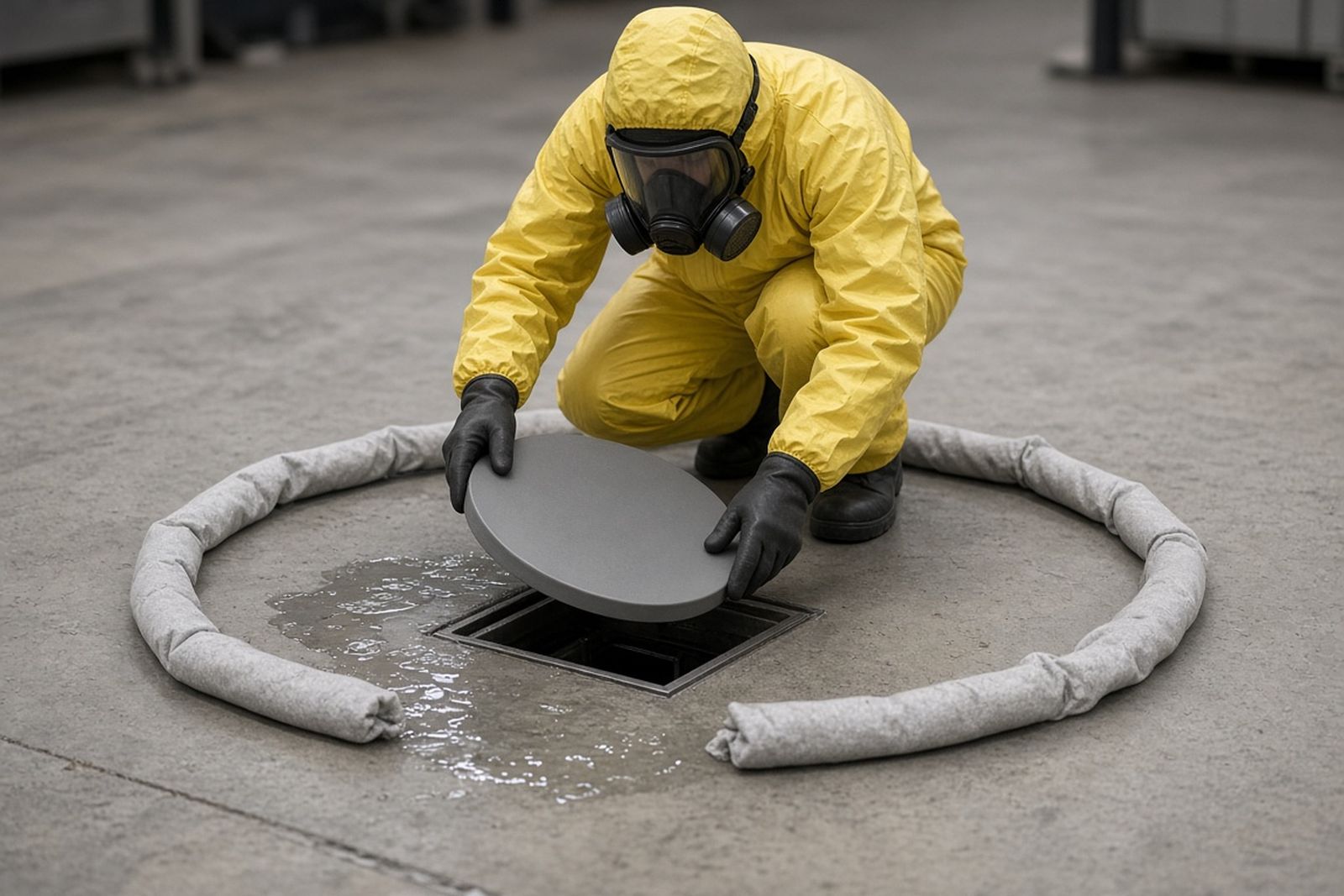
Technician in a yellow suit and respirator reading a safety data sheet binder beside a drum
Illustrative photo, not a job record. Technician in a yellow suit and respirator reading a safety data sheet binder beside a drum.
Open spill kit drum holding absorbent pads, goggles, gloves and disposal bags
Illustrative photo, not a job record. Open spill kit drum holding absorbent pads, goggles, gloves and disposal bags.

Hazmat Spill Response figures to keep in mind

National and research figures, not Bethesda data. Local conditions, rules and providers vary; use these for scale and context only.

4.31

Uninsured flooded respondents had higher adjusted odds of probable PTSD (aOR 4.31; 95% CI 1.31–14.20).

Read with care: Observational; some estimates imprecise; same wider cohort as S060. Depression estimate has a very wide confidence interval.

Source: Mulchandani et al. (2019)851 flood-affected/disrupted English respondents surveyed two years after 2013–2014 flooding.

12

Displaced residents without advance warning had higher depression and PTSD scores than those warned over 12 hours ahead.

Read with care: Related cohort to S059; associations, not proof displacement caused symptoms.

Source: Munro et al. (2017)622 English respondents whose homes flooded in 2013–2014; one-year survey.

382

382 of 12,855 RMP facilities reported at least one accident during 2016-2020, about 3 percent of regulated sites.

Read with care: Only accidents meeting RMP reporting criteria are counted.

Source: EPA (2024)United States RMP facilities, 2016-2020

These figures are public research and agency data, not this network's own job records. Keep each number with its population, year and limits; none of them predicts cost, timing or outcome at a specific property.

Plan before you reach out

Use the first 24 hours planner for immediate steps and the provider vetting checklist to confirm any Bethesda provider's training, insurance and waste path in writing.

What research has found

Findings from published studies of people and properties in situations like this one. They describe what researchers observed in a specific group; they are not predictions for your case.

Severe insurance-related stress was associated with probable depression, anxiety and PTSD.
Who was studied: 851 flood-affected/disrupted English respondents surveyed two years after 2013–2014 flooding.Limits: Observational; some estimates imprecise; same wider cohort as S060. Depression estimate has a very wide confidence interval.Effect of Insurance-Related Factors on the Association between Flooding and Mental Healt… (2019)
Displaced residents had higher depression, anxiety and post-traumatic-stress scores than flooded residents who stayed.
Who was studied: 622 English respondents whose homes flooded in 2013–2014; one-year survey.Limits: Related cohort to S059; associations, not proof displacement caused symptoms.Effect of evacuation and displacement on flooding and mental health outcomes (2017)

Hazmat Spill Response community polls

Poll results

Every count is a real visitor vote; nothing is seeded or padded. One vote per poll per device, and you can change your answer.

Safety

How prepared is your site for a chemical or fuel spill right now?

No visitor votes yet
Your experience

In your most recent spill, what was the first action taken?

No visitor votes yet

Planning cleanup in Bethesda?

Send a short message about the property to the follow-up inbox. A coordinator can reply by email with next steps.

Your request is sent to the follow-up inbox. A coordinator can reply by email.

If anyone is hurt or in danger, call 911 first.