South · US

Hazmat Spill Response in Great Falls, VA

Planning hazmat spill response in Great Falls, VA

Great Falls VA overlook spill planning: isolate spray slopes, SDS not hillside DIY, berm gorge sheet-flow and wells, DEQ notice, porch reopen files. This is planning guidance, not a claim of a local office or crew in Great Falls.

Get an email reply about hazmat spill response

Send a short message to the follow-up inbox. A coordinator can reply by email. This form does not send emergency help; call 911 first if anyone is in danger.

Tell us what you need help with. Share a short description; please leave out medical details, access codes, and other sensitive information.

A request does not confirm a booking. For immediate danger, contact local emergency services.

Or email info@prompartybuses.com

Direct answer

The short answer for Great Falls, VA

Great Falls has parcels on Georgetown Pike overlooks, busy weekends at the national park entrance, French drains at cliff edges, and turnouts for horse trailers. Spills there include burst spray tanks, tractor hydraulic leaks, remodel glues, and unlabeled stump killer jugs. Visitors often smell trouble before a caretaker finishes the rounds. People and spark control come first. Safety Data Sheet (SDS) packets replace sniffing jugs on the hillside. Barriers are placed to protect the gorge from runoff and to keep product away from wells. The Virginia Department of Environmental Quality (DEQ) may need notice. Federal hazardous waste law (RCRA) may cover the used pads. Sleeping porches reopen only on air test results.

Editorial guide · Biohazard Remediation NetworkUpdated 2026-07-22Location focus: Great Falls, VA

Local planning context

Overlook acreage faces weekend park traffic on Georgetown Pike that canal estates elsewhere in the region do not see. Spills often start as hydraulic hose failures on mowers working steep slopes. Others are stump killer jugs tipping near trailers, glue spills during porch renovations, or generator cans left open after storms. They are rarely laundry room films in finished basements. Visitors on gorge paths may smell weed killer before a caretaker returns from errands. Map the Pike pull-offs ahead of time. Narrow shoulders and overlook bends can trap engines.

Water sheeting off the cliffs toward the Potomac Gorge and private wells changes the math on rinsing. A quick wash downhill can reach soil, groundwater, or waterways that Virginia DEQ will review. Oil or chemicals bound for the river could also call for a federal report. Keep SDS binders in a dry tack room or garage office. Do not walk across steep slopes full of fumes to scrape at faded jug labels.

Estate directors should script which porches and barns empty, which overlook footpaths close, and who waves in engines at the Pike turnout. From a safe terrace, photograph which way the sheen runs downhill. After recovery, keep the waste shipping records for used pads and air targets written for each porch.

Property considerations

Horse trailer turnouts gather stump killer and fuel cans right where visitors walk.

After a rinse, runoff down a cliff moves product faster than a flat lawn's dry well.

With private wells nearby, a hose downhill becomes a way to foul the groundwater.

Park weekend jams on the Pike mean fire crews need a staging plan away from the site.

Hydraulic fluid on a steep mower deck is a slip and fire hazard while the area is closed off.

Porch renovations leave unlabeled glues that no one should try to sort by smell.

Response-planning framework

Close overlook paths; stage engines at a Pike turnout

If anyone feels sick, liquids have no labels, or a film is moving downhill, clear the porches and barns. Keep park visitors off private slopes and call emergency services. Share a Georgetown Pike turnout so fire trucks are not trapped on a cliff drive. Leave mower engines off.

Tack-room SDS and stump-killer invoices beat hillside jug reading

Hand over Safety Data Sheets and purchase invoices from a dry room. Do not tip burst jugs on a slope to read the bottoms. Field checks fill the gaps. Staff never invent neutralizing mixes for weed killers and hydraulic oil.

Gorge sheet-flow and well-setback berms with DEQ

After the product is identified, crews place barriers and matching pads before it reaches cliff drains or the ring around a well. Near the gorge or a well, state environmental staff may be called. Product headed into the gorge may also mean a National Response Center (NRC) call.

Porch and barn reopen only with hazard-matched readings

Used pads from mower or stump killer spills are tested, since federal waste law may apply, and their waste shipping records are kept. The sleeping porch and any barn apartment reopen only when readings meet targets written for that product. Dry flagstone after an overnight smell does not mean guests can come back for the weekend.

Documentation checklist

  1. 1Photos from the terrace of the sheen running downhill toward gorge drains or well circles
  2. 2Stump killer invoices, hydraulic tickets, or remodel SDS handed over with containers left sealed
  3. 3Notes on the Pike turnout meeting point and which porches or barns were cleared
  4. 4Fairfax County fire and Virginia DEQ reference numbers for the overlook parcel, plus the NRC number if called
  5. 5Barrier spots, pad types, and estimates of amounts recovered on the slopes
  6. 6Lab sheets, how many jugs and drums left the overlook lot, the trucker, and each signed shipping paper
  7. 7Readings that allowed the porch or barn apartment to reopen
  8. 8Pollution-liability dates, kept in estate claim folders

Official resources

Questions for this location

Hydraulic oil streaks a steep mower deck above the gorge during a park-busy Saturday. Actions?

Stop the mower and keep visitors off the slope. Call emergency services if there are fumes, anyone feels sick, or the oil may have mixed with other products. Do not rinse downhill toward the cliff drains. From a safe terrace, note the equipment tags. Give responders the SDS and a turnout spot on the Pike. Park weekend traffic is no reason to clean it up yourself.

How should gorge-lot planning differ from a C&O Canal horse-barn page?

Runoff down the cliffs, Pike traffic on park weekends, and Virginia DEQ contacts replace canal culverts and Maryland MDE. Trailer turnouts and foot traffic at the overlook change how you hold the perimeter. Do not paste towpath weed killer scripts onto hydraulic leaks on a slope. National Response Center duties may still apply when product threatens the water.

A stump-killer jug tips near a private well. Hose the grass?

No. Hosing can push product into the ground around the well and widen Virginia DEQ duties. Close off the area, keep the label, and wait for trained crews to act once the product is known. Photograph the spot from a safe place. Hosting deadlines never justify rinsing.

Which records should a Great Falls owner keep once a hillside spill is cleaned?

Keep the waste shipping records and waste test results for everything hauled off the slope. Add photos of how far the spill traveled toward the gorge, the Fairfax County fire and state case numbers, and the air readings for the porch or barn apartment. If soil near the well needs digging later, keep that on separate paperwork from the emergency waste.

When may a sleeping porch reopen after overnight adhesive odor?

Once the porch readings meet the written targets and soaked cushions are removed. A breeze off the gorge is not clearance. Log who approved it and the readings. A guest with itchy eyes or skin keeps the porch off-limits. Guest calendars never replace written reopen science.

How should Great Falls properties with private wells respond to an herbicide spill?

Keep people and pets away from the spill and the wellhead. Call emergency services if the spill is large, spreading, or near the well. Stop using tap water for drinking or cooking until you know it is safe. Ask the Fairfax County health office about testing the well. Keep records of where the spill happened and any test results, especially if you plan to sell.

What should Great Falls horse owners do with trailer fuel or hydraulic leaks near paddocks?

Move horses away from the leak. Keep them from drinking from any fouled puddles or troughs. Do not start the tow vehicle or equipment if fuel is pooling. Call emergency services if the leak is large or heading toward a drain or creek. For small drips, set out a drip pan only if you can do it safely. Have a trained service handle cleanup and disposal.

Contact

Get help by email

Send a short message for an email reply about hazmat spill response planning questions for the Washington DC area.

Technician in a yellow suit and respirator reading a safety data sheet binder beside a drum
Illustrative photo, not a job record. Technician in a yellow suit and respirator reading a safety data sheet binder beside a drum.
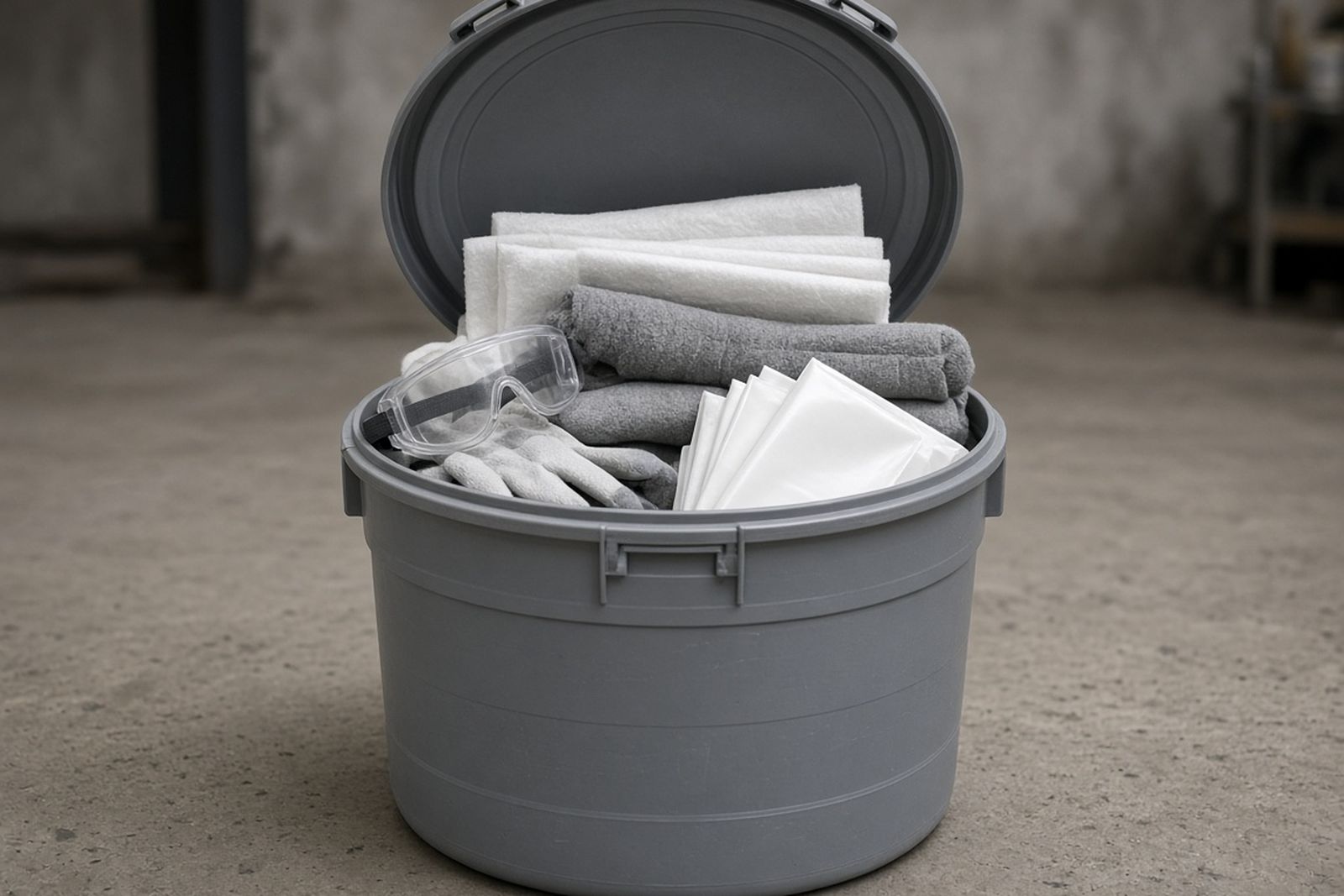
Open spill kit drum holding absorbent pads, goggles, gloves and disposal bags
Illustrative photo, not a job record. Open spill kit drum holding absorbent pads, goggles, gloves and disposal bags.

Hazmat Spill Response figures to keep in mind

National and research figures, not Great Falls data. Local conditions, rules and providers vary; use these for scale and context only.

70%

70% in affected counties reported following recommended behaviours.

Read with care: Self-reported behaviour; event-specific communications.

Source: Savoia et al. (2015)690 West Virginia adults surveyed online in February 2014, including affected and unaffected areas.

34

Hazmat transportation fatalities fell from 60 in 2011-2015 to 34 in 2016-2020, almost all of them on highways.

Read with care: Five-year totals, not annual figures.

Source: PHMSA Incident Statistics Portal (via ICC Compliance Center) (2021)United States, all modes, 2011-2020

52

Over ten years, 52 people died and 160 were injured in hazmat incidents involving tractor-trailers in transit, with human error behind 18 percent of incidents.

Read with care: Counts depend on carrier self-reporting.

Source: PHMSA data (via CBS News) (2023)United States, PHMSA in-transit truck incidents, ten years

These figures are public research and agency data, not this network's own job records. Keep each number with its population, year and limits; none of them predicts cost, timing or outcome at a specific property.

Plan before you reach out

Use the first 24 hours planner for immediate steps and the provider vetting checklist to confirm any Great Falls provider's training, insurance and waste path in writing.

What research has found

Findings from published studies of people and properties in situations like this one. They describe what researchers observed in a specific group; they are not predictions for your case.

Greater perceived risk was associated with compliance.
Who was studied: 690 West Virginia adults surveyed online in February 2014, including affected and unaffected areas.Limits: Self-reported behaviour; event-specific communications.Public response to the 2014 chemical spill in West Virginia: knowledge, opinions and beh… (2015)
Nearer-zone residents more often reported eye irritation, breathlessness and agitated behaviour attributed to exposure.
Who was studied: 204 household representatives surveyed in two distance zones, September 2012.Limits: Reported symptoms and odor; not measured individual exposure doses.Community health assessment following mercaptan spill: Eight Mile, Alabama (2014)

Hazmat Spill Response community polls

Poll results

Every count is a real visitor vote; nothing is seeded or padded. One vote per poll per device, and you can change your answer.

Safety

How prepared is your site for a chemical or fuel spill right now?

No visitor votes yet
Your experience

In your most recent spill, what was the first action taken?

No visitor votes yet

Planning cleanup in Great Falls?

Send a short message about the property to the follow-up inbox. A coordinator can reply by email with next steps.

Your request is sent to the follow-up inbox. A coordinator can reply by email.

If anyone is hurt or in danger, call 911 first.