McLean, VA

Hazmat Spill Response in McLean, VA

What to do, who to contact, and what to ask in McLean.

Oil, spray tank or diesel spill in McLean? Get people clear, call 911, keep it out of drains to the Potomac, and learn which records to save.

Get an email reply about hazmat spill response

Send a short message to the follow-up inbox. A coordinator can reply by email. This form does not send emergency help; call 911 first if anyone is in danger.

Tell us what you need help with. Share a short description; please leave out medical details, access codes, and other sensitive information.

A request does not confirm a booking. For immediate danger, contact local emergency services.

Or email info@hazmatspillcleanup.online

The short answer for McLean, VA

If heating oil, a spray tank or dock diesel spills at your McLean home or office park, get people clear and call 911. Do not rinse it toward a French drain or a stream that feeds the Potomac. Here is what Fairfax County fire crews need from you, when Virginia DEQ steps in, and what to keep.

What to do, step by step

  1. 1

    Clear the wing or freeze the dock

    Pick the plan that fits where the spill is. If your eyes sting or a liquid is unknown, everyone leaves the area and someone calls 911. At home, do not run attic fans, which can pull basement oil fumes into the bedrooms. On a dock, let responders and your building engineers decide whether to hold the freight elevators. Send your escort to the gate arms so the Fairfax County engines are not kept waiting.

  2. 2

    Give responders spray tank labels and oil tickets

    From a safe garage office, hand over the weed killer labels, heating oil tickets and Safety Data Sheets. Do not open a burst tank to check the color of what is inside. Crews can test in the field for anything you cannot name. Smell is not a test. Make sure your caretaker knows never to mix pool oxidizers into diesel to cancel an odor. Tell responders if anything was added to the spill before they came.

  3. 3

    Keep the film out of drains and Potomac streams

    After the product is named, a good crew sets barriers and matching pads before the film reaches a French drain or a stream that feeds the Potomac. Fairfax fire works with Virginia DEQ when the spill spreads that far. If oil gets into one of those streams, the National Response Center may also have to be told. Ask the officer what has been reported so far. Your guest list or a board visit does not shrink those duties.

  4. 4

    Get separate reopen notes for each wing and lobby

    Used pads are tested and leave with a waste shipping record, so ask for your copy. If both a bedroom wing and an office lobby were exposed, ask for a written reopen note for each. The readings for one space do not clear the other. Dry bluestone does not mean a space is safe after an overnight solvent or oil smell. Keep each note with the name of the person who signed it.

What cleanup is like in McLean

McLean blends gated homes with secure office parks, so the spill you face depends on where you are. At home it may be heating oil under the bedroom wing, a burst landscaping spray tank on a steep lawn, or glue stored for a kitchen renovation. At work it may be a diesel film on a dock behind badge readers. A neighbor may call about a weed killer smell before your security team sees anything. Treat either as a threat to life. Know how fire trucks reach you by Chain Bridge and Dolley Madison Boulevard, because the narrow shoulders slow engines.

French drains and campus trenches here can feed streams that flow to the Potomac. Rinsing to tidy up before guests arrive is how a spill gets there. Virginia's Department of Environmental Quality (DEQ) gets involved when soil, groundwater or waterways are affected. Certain oil or hazardous substance spills may also need a National Response Center report. Get the spray tank labels and Safety Data Sheets (SDS) from your garage office without walking through fumes. Your landscapers and night cleaners can help keep people back. They are not a hazmat team.

It helps to have two short plans. One covers clearing a wing of your home. The other covers freezing a badge-access dock. From a safe terrace or stair landing, photograph the sheen and the drain it is heading for. When the crew is done, put the pad shipping records and the air targets for each wing or lobby in one folder. Do that before a guest wing or lobby reopens. A dinner party or a board meeting does not change the steps, and it is better to delay than to reopen too soon.

What to expect for your type of home

  • Homes with steep lawns and French drains: A spray tank rinsed on the slope puts groundwater and streams at risk. Tell your landscaper never to rinse, and show the crew where the drains run.
  • Houses with bedrooms above an oil tank: The sleeping wing needs its own air readings. Do not assume a result for the rest of the house covers the rooms over the tank.
  • Office parks with badge-access docks: Name an escort who can walk fire trucks through the gate arms. Give security that person's name before a spill ever happens.
  • Homes under renovation: Kitchen remodel glues stored with garage fuels are an unsafe mix. Ask your contractor to keep them apart and to leave product sheets at the house.
  • Properties near the Chain Bridge approach: Evening traffic may force fire crews to meet you away from the site. Agree on a meeting point and tell the dispatcher when you call.
  • Estates with landscaping contracts: Add a line that bans neutralizing any unknown film on the spot. The landscaper's job is to stop work, keep people away and tell you.

Papers and records to keep

  • A list of which wings or docks were emptied, and at what times
  • Spray tank labels, oil tickets or remodel Safety Data Sheets you handed over
  • Gate arm codes and meeting points near Chain Bridge that you shared with responders
  • Fairfax fire and Virginia DEQ case numbers for the spill
  • Photos of drain paths taken from a safe terrace, with notes on barriers
  • The waste shipping record for pads hauled from your estate or dock
  • Air or wipe results that allowed each wing or lobby to reopen
  • Notices sent to your pollution insurer, kept in the estate or company claim file

Local offices and official help

Common questions in McLean

A landscaping spray tank burst on my Dolley Madison hillside above a French drain. What do I do?

Keep people and pets off the slope, and do not rinse downhill. Call 911 if weed killer fumes are drifting, a neighbor feels ill, or the tank has no label. From upwind, note the markings on the tank. Have the Safety Data Sheet and gate codes ready for responders. Tell the dispatcher about your steep drive, then wait at the top where the engine will arrive.
Why do I need separate reopen notes for a guest wing and an office lobby?

Because fumes reach them in different ways. Basement oil fumes rise into bedrooms, while solvent on a dock climbs the elevator shafts. The targets should match each space. One note saying "the house looks fine" will not satisfy a home buyer or a company safety office. Ask for the name of the person who cleared each space and the readings for it, and keep them in your McLean property file.

Can our night cleaners use bleach on a diesel smell at the dock before executives arrive?

No. Bleach on diesel can give off fumes, and a badge-access dock is a poor place to find that out. An executive's arrival time is no reason to experiment. Your night cleaners should leave the label intact, hold people back from the dock and call security, who calls 911. Once responders identify the product, they choose pads that will not react with it.

When does rinsing toward a Potomac stream become something I must report?

It can once product leaves your pad toward drains, soil or waterways. That widens what Virginia DEQ expects of you. Certain oil or hazardous substance spills may also need National Response Center notice. Do not rinse at all. Let the crew put up barriers once the product is known, and photograph the flow direction from a safe spot. Your insurer's deadlines are a separate matter from these reports.

Which files matter after a basement oil cleanup at my home?

Hold on to the shipping records and lab results for the waste, the oil delivery tickets used to identify the product, and the Fairfax County fire and state reference numbers. Add the air results that cleared the bedrooms above the basement. If soil around a buried tank needs more work later, keep that contract apart from the emergency shipping papers. Then a future buyer can follow the history.

My estate shares a property line with an office park. How should we coordinate during a spill?

Agree ahead of time on who calls whom, since you may share roads or drains. Whoever notices the spill first should call 911. Then they should alert the security desk or estate manager next door. Share access details for gates and badge-controlled drives so responders are not held up. Neither property should send staff into the spill to check on it.

What should we do with leftover paints and solvents after our kitchen renovation?

Ask your contractor to take the leftover products away. Or keep them sealed and labeled until you can drop them at a Fairfax County household hazardous waste site. Do not pour them into a sink, a storm drain or the yard. Store them away from the furnace, the water heater and children. If a can leaks or the smell is strong, call for help instead of moving it.

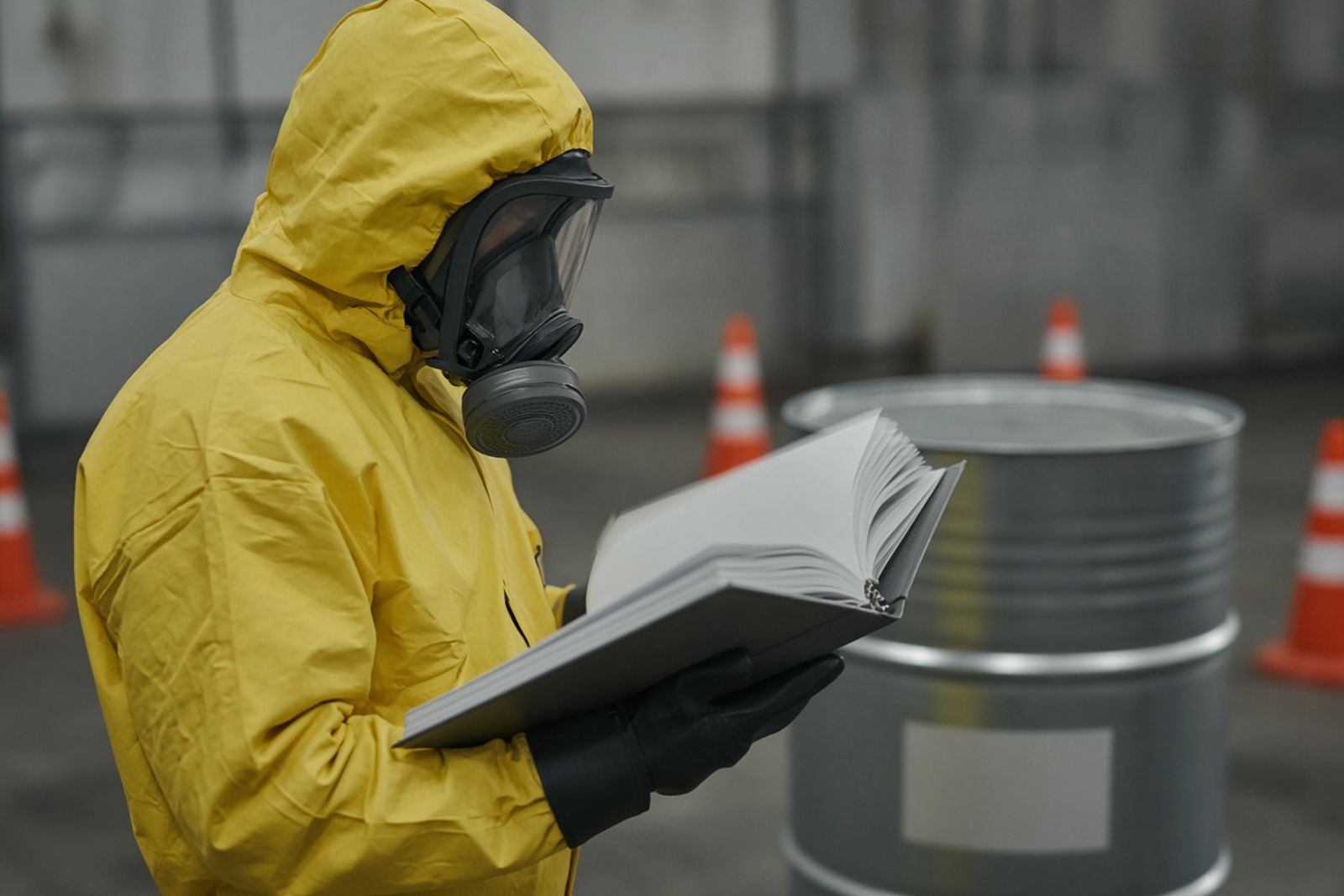
Technician in a yellow suit and respirator reading a safety data sheet binder beside a drum
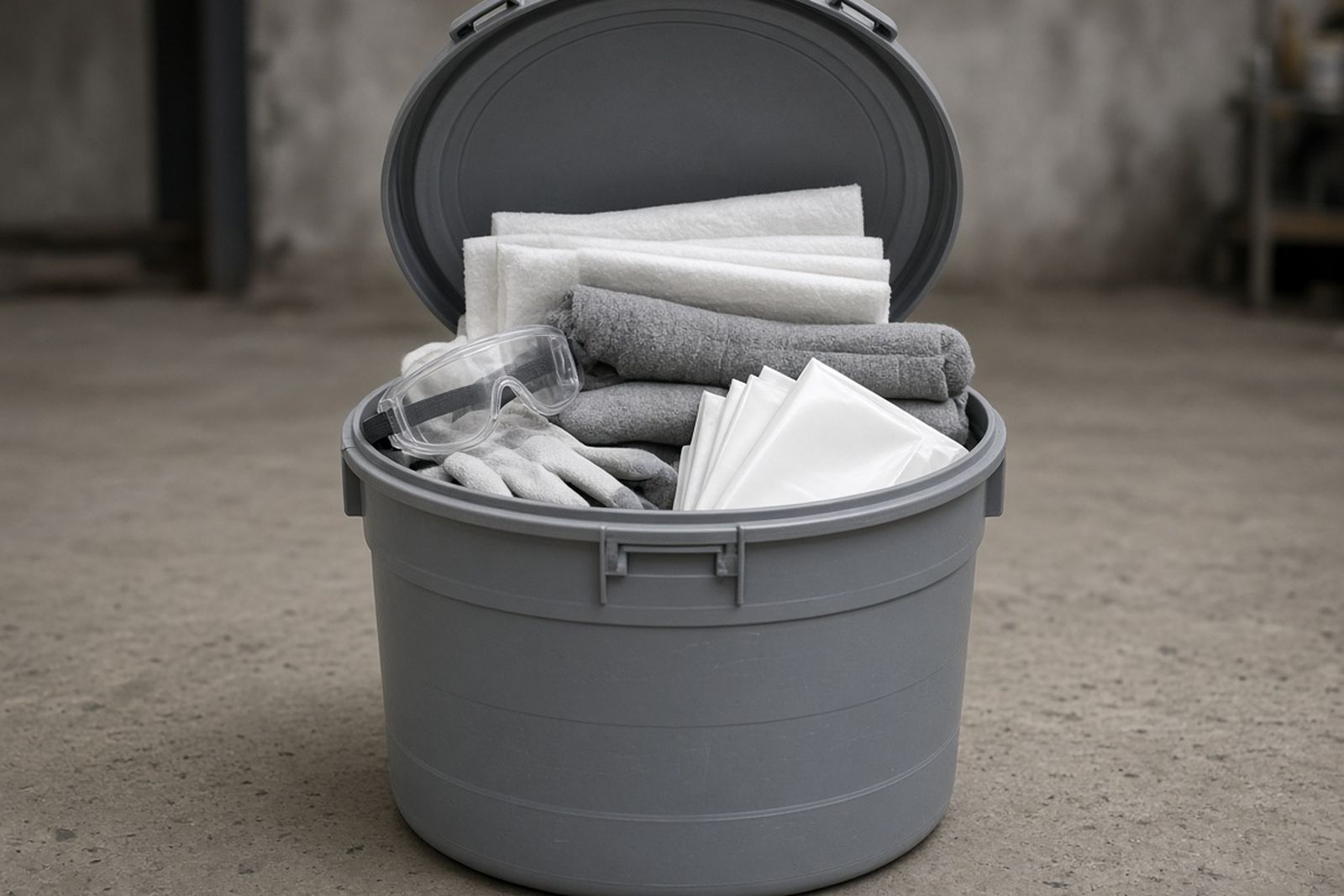
Open spill kit drum holding absorbent pads, goggles, gloves and disposal bags

Facts worth knowing

  • Lab experiments done after a January 2014 West Virginia spill showed that flushing plumbing could move chemicals from the water into the air.

    Why it matters: If you are told to flush contaminated pipes, open windows and stay out of the room while the water runs if you can.

    Source: Whelton et al., 2015

  • Insured flood victims in a study published in 2022 said different insurers handled similar claims in different ways.

    Why it matters: Do not rely on what a neighbor's insurer did; ask your own insurer to confirm in writing what it will cover.

    Source: McKenzie et al., 2022

  • Emergency responders at the first-responder operations level need at least 8 hours of training, and hazardous materials technicians need at least 24 hours.

    Why it matters: Check that your staff only take spill actions their training level covers; hours alone do not prove competence.

    Source: OSHA, 2024

Tools that help right now

What would you do?

Poll results

Vote to see how other people answered. You can change your answer at any time.

Safety

How prepared is your site for a chemical or fuel spill right now?

Be the first to vote
Your experience

In your most recent spill, what was the first action taken?

Be the first to vote

Need help in McLean?

Send a short message about the property to the follow-up inbox. A coordinator can reply by email with next steps.

Your request is sent to the follow-up inbox. A coordinator can reply by email.

If anyone is hurt or in danger, call 911 first.