South · US

Hazmat Spill Response in Arlington, VA

Planning hazmat spill response in Arlington, VA

Arlington VA Crystal City spill planning: shaft isolation, contractor SDS not porters, Four Mile Run berms, county fire/DEQ notice, air reopen files. This is planning guidance, not a claim of a local office or crew in Arlington.

Get an email reply about hazmat spill response

Send a short message to the follow-up inbox. A coordinator can reply by email. This form does not send emergency help; call 911 first if anyone is in danger.

Tell us what you need help with. Share a short description; please leave out medical details, access codes, and other sensitive information.

A request does not confirm a booking. For immediate danger, contact local emergency services.

Or email info@prompartybuses.com

Direct answer

The short answer for Arlington, VA

Arlington has Crystal City underground walkways, Pentagon City freight rooms, Rosslyn elevator banks, and storm lines to Four Mile Run. They see lithium residue, glue drums from tenant build-outs, hotel day tank diesel, and unlabeled coolers left at midnight. Orange and Silver Line riders often smell trouble first. People and shaft control lead. Contractor Safety Data Sheet (SDS) packets replace guesswork by porters. Protecting the inlets to the stream comes before recovery. Arlington County fire takes charge. The Virginia Department of Environmental Quality (DEQ) may need notice, and RCRA, the federal hazardous waste law, may cover the waste. Shops and lobbies reopen only on written air numbers.

Editorial guide · Biohazard Remediation NetworkUpdated 2026-07-22Location focus: Arlington, VA

Local planning context

Parking stacked under hotels, underground shopping walkways, and freight rooms in podium buildings give the county a vertical profile. That is unlike the surface alleys along Embassy Row. Triggers include day tank top-offs before conference season, lithium battery cabinets that weep in parking decks, glue drums after overnight suite makeovers, and unlabeled coolers left by audio-visual vendors. A rider's report of a chemical smell near the underground mall often comes before facilities has a packing list. Tape off the walkway, keep shoppers on the public side, and call emergency services. Porters are not field chemists.

Storm lines to Four Mile Run run under unbroken pavement and move a rinsed film fast. County storm water rules and Virginia DEQ come into play once product leaves a pad. A sizable oil or chemical release could also bring a federal report. Turn fans off only when responders and engineers say it is safe. Leaf blowers pointed at unknown air spread the exposure through the shafts. Get the SDS from a site office without cracking drums beside the valet lanes.

Property teams should script which walkways close, which station stairs stay open as exits, and who meets engines away from the Orange Line entrances. Log podium height limits so recovery trucks do not block hotel drop-off lanes. After the pros finish, keep waste test results, the waste shipping records for used pads, and hallway air targets before underground shops reopen. Store opening hours do not change the steps.
Property considerations

Underground mall walkways can carry fumes blocks away from the freight room where they started.

Orange and Silver Line stairwells must stay usable even while a podium deck is taped off.

Hotel day tanks next to valet lines create a fire risk during rushed morning top-offs.

Coolers left unlabeled overnight by audio-visual vendors should never be dragged into freight elevators to clear the exit.

Curb cuts to Four Mile Run under unbroken paving move a spill faster than a suburban dry well.

Housekeeping duties should leave emergency chemical work out of ordinary mop tickets.

Response-planning framework

Tape underground spines before chasing a mall odor report

If riders or staff report stinging eyes, unknown liquids, or a spreading film, close that stretch of walkway. Send shoppers another way and call emergency services. Do not push air toward elevator banks with shop fans. The closed area includes the freight room and any mechanical room that shares its return air.

AV and buildout packing lists beat hallway jug sniffing

Building management brings the vendor product sheets. Leave faded drums sealed. Field checks fill the gaps. Housekeeping never invents neutralizing mixes for glue sitting next to diesel. OSHA hazard training rules put naming first, because under a hotel podium a wrong guess can fume beside the valet line.

Four Mile Run curb protection with county fire and DEQ

Once the product is known, crews set barriers and matching pads before the film reaches inlets to the stream. Arlington County fire runs the emergency. Virginia DEQ handles environmental notice when storm water or soil is involved. A big enough release toward the Potomac may add a National Response Center (NRC) call. Crowds of shoppers do not shrink those duties.

Underground retail stays closed until hallway air numbers exist

Every bag of garage pads goes to a lab, then off site with its signed paper. Demand written air targets before underground shops or hotel lobbies reopen. A dry patch of epoxy floor after a night of solvent fumes does not give permission to reopen to the public.

Documentation checklist

  1. 1Walkway maps showing which underground stretches were taped off
  2. 2Vendor packing lists and SDS gathered without cracking drums
  3. 3Times riders were told, and engine meeting points away from Metro entrances
  4. 4Arlington County fire and Virginia DEQ reference numbers, and the NRC number if used
  5. 5How crews protected the Four Mile Run drains
  6. 6The waste shipping record for the garage pads
  7. 7Hallway air readings that allowed underground shops to restart
  8. 8Landlord risk notices tied to hotel or office claim files

Official resources

Questions for this location

Shoppers smell solvent in a Crystal City underground spine. Who acts first?

Facilities and security close the affected walkway and keep riders on open exit paths. If a shopper feels ill, vapor lingers, or the liquid is a mystery, they phone emergency services. Do not hose the film into a floor trench to save lunch traffic. From a safe landing, collect vendor badges and packing lists. Give the SDS to arriving officers. Point firefighters to the right Metro-side entrance, then stand back.

How is county vertical stock different from District federal freight courts?

Underground shopping walkways, hotel drop-off lanes, and Virginia DEQ contacts replace the District's federal security screening scripts. Storm lines to Four Mile Run, not Anacostia outfalls, shape the storm water risk. Badge and metal detector delays may be lighter here, but fumes moving through shafts are a bigger problem. Copying District pages wholesale misses those differences.

An AV cooler weeps adhesive near a Pentagon City freight pod. Open it to identify?

No. Leave the cooler sealed, tape off the freight room, and wait for trained crews to sort it out. Get packing lists from the vendor's office instead. Opening it the wrong way can raise the exposure and create more waste. Pads get chosen once the vendor list or SDS says what is inside.

Which records prove subterranean retail reopen was science-based?

Keep the hallway air readings, the name of the person who approved reopening, the waste shipping records for used pads, and agency reference numbers. Reopening underground shops based on looks after a night of solvent fumes fails a landlord's review. A later remediation job gets its own folder.

Does a Four Mile Run pathway change a private deck film into a reporting matter?

It can, once product leaves the pad toward curb inlets or soil. Rinsing before the evening rush often makes a spill bigger. Barriers and matching pads, used once the product is known, stop it from traveling. Photos from a safe distance record which way it went. Virginia DEQ notice, and NRC contact for certain releases, may apply. Telling your insurer runs on a separate clock.

How should Arlington apartment managers handle a lithium battery fire or leak in a bike room?

Keep residents out of the bike room. Call emergency services at the first sign of smoke, hissing, swelling, or leaking. Close the door if you can do it safely. Do not let staff move or cool the battery. Afterward, ask responders or the fire marshal's office about safe removal. Consider rules that keep chargers away from exits and limit charging when no one is in the room.

What should Arlington commuters do if they smell chemicals in a Metro station garage?

Leave the area and get to fresh air. Tell station staff or garage security what you noticed and where. Dial 911 if the smell is heavy or you feel sick. Do not stay to find the source, and do not walk back through the area to warn others. Follow staff instructions about other entrances or routes.

Contact

Get help by email

Send a short message for an email reply about hazmat spill response planning questions for the Washington DC area.

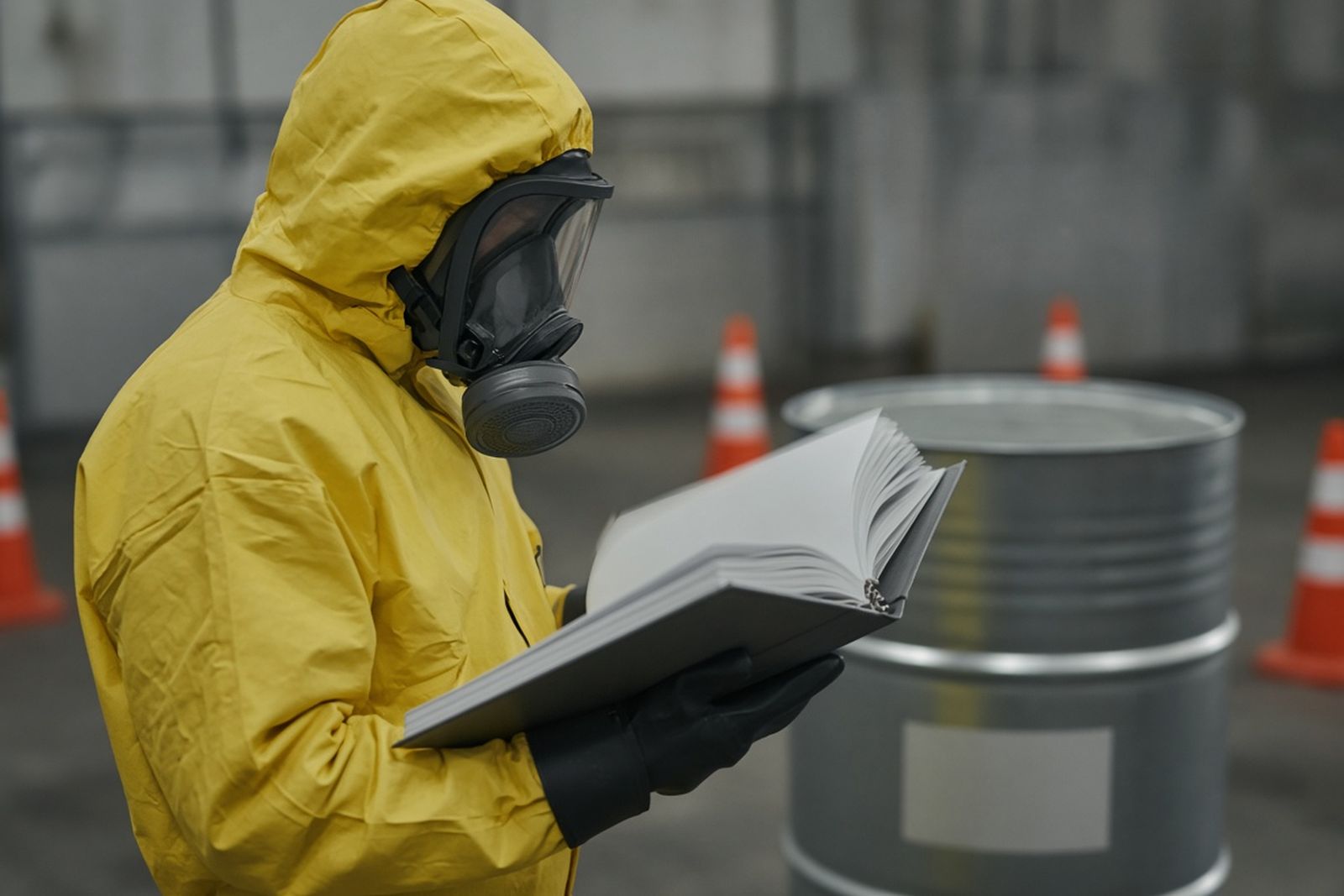
Technician in a yellow suit and respirator reading a safety data sheet binder beside a drum
Illustrative photo, not a job record. Technician in a yellow suit and respirator reading a safety data sheet binder beside a drum.
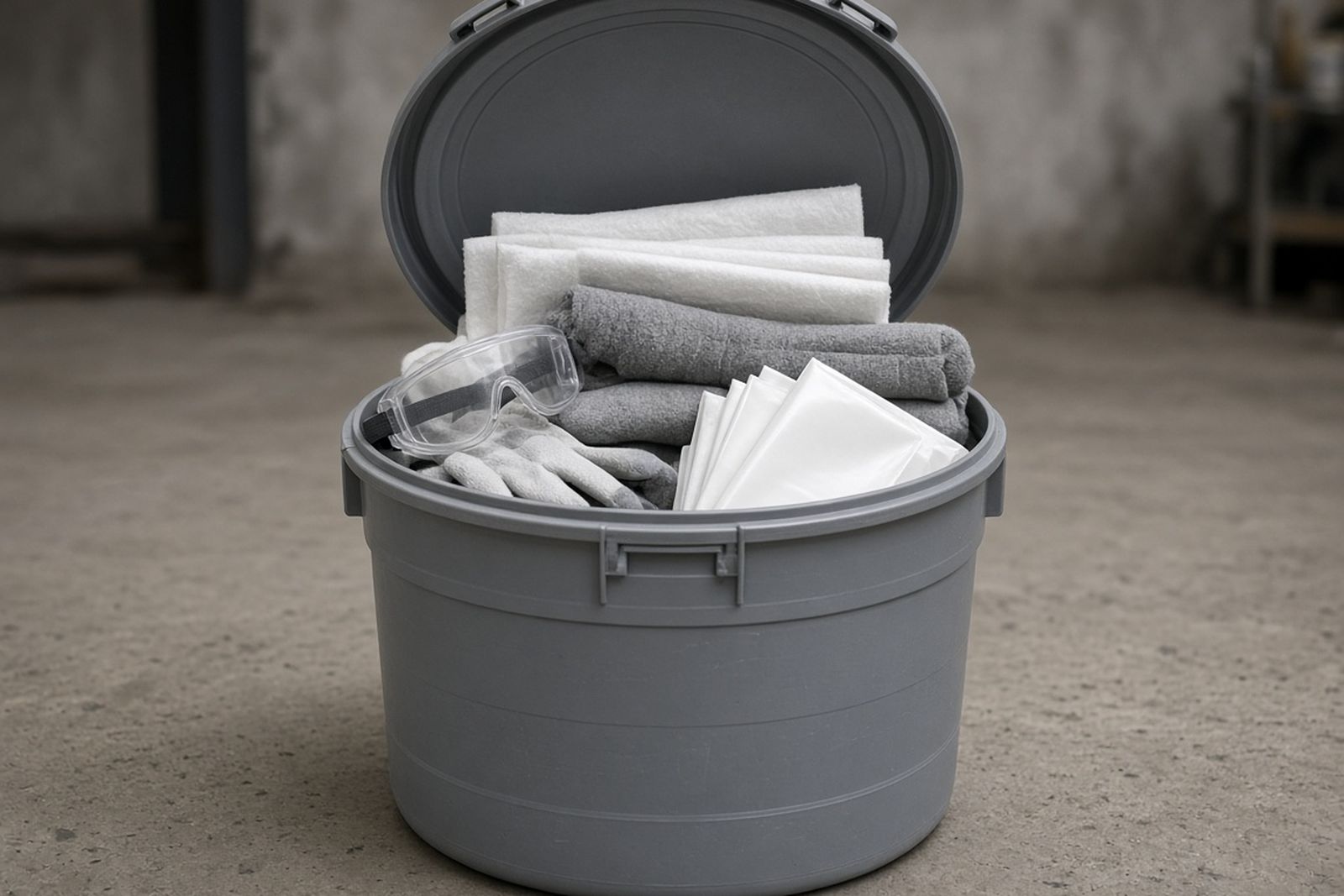
Open spill kit drum holding absorbent pads, goggles, gloves and disposal bags
Illustrative photo, not a job record. Open spill kit drum holding absorbent pads, goggles, gloves and disposal bags.

Hazmat Spill Response figures to keep in mind

National and research figures, not Arlington data. Local conditions, rules and providers vary; use these for scale and context only.

36.5%

36.5% overall sought medical care for odor-related symptoms.

Read with care: Reported symptoms and odor; not measured individual exposure doses.

Source: Behbod et al. (2014)204 household representatives surveyed in two distance zones, September 2012.

1,500 per year

About 1,500 transportation incidents involving undeclared hazardous materials occur each year, totaling 11,430 over the decade to 2023.

Read with care: Training-company summary of a PHMSA infographic; aerosols, lithium batteries and paint dominate.

Source: PHMSA data (via Lion Technology) (2023)United States, PHMSA incident reports, 2013-2023

1.2 million per day

More than 1.2 million hazmat shipments move every day in the United States, totaling over 3.3 billion tons valued above $1.9 trillion annually.

Read with care: Secondary source; the original DOT budget document was not fetched directly.

Source: DOT PHMSA (via Wikipedia, citing PHMSA FY2023 budget estimates) (2023)United States, all modes, PHMSA FY2023 congressional justification

These figures are public research and agency data, not this network's own job records. Keep each number with its population, year and limits; none of them predicts cost, timing or outcome at a specific property.

Plan before you reach out

Use the first 24 hours planner for immediate steps and the provider vetting checklist to confirm any Arlington provider's training, insurance and waste path in writing.

What research has found

Findings from published studies of people and properties in situations like this one. They describe what researchers observed in a specific group; they are not predictions for your case.

Approaching the following flood season revived anxiety.
Who was studied: 20 New Brunswick residents in focus groups and ten community-leader interviews.Limits: Local experiences; no prevalence estimate or fixed recovery timetable.Perceptions of Mental Health and Wellbeing Following Residential Displacement and Damage… (2019)
Nearer-zone residents reported greater odor severity.
Who was studied: 204 household representatives surveyed in two distance zones, September 2012.Limits: Reported symptoms and odor; not measured individual exposure doses.Community health assessment following mercaptan spill: Eight Mile, Alabama (2014)

Hazmat Spill Response community polls

Poll results

Every count is a real visitor vote; nothing is seeded or padded. One vote per poll per device, and you can change your answer.

Safety

How prepared is your site for a chemical or fuel spill right now?

No visitor votes yet
Your experience

In your most recent spill, what was the first action taken?

No visitor votes yet

Planning cleanup in Arlington?

Send a short message about the property to the follow-up inbox. A coordinator can reply by email with next steps.

Your request is sent to the follow-up inbox. A coordinator can reply by email.

If anyone is hurt or in danger, call 911 first.