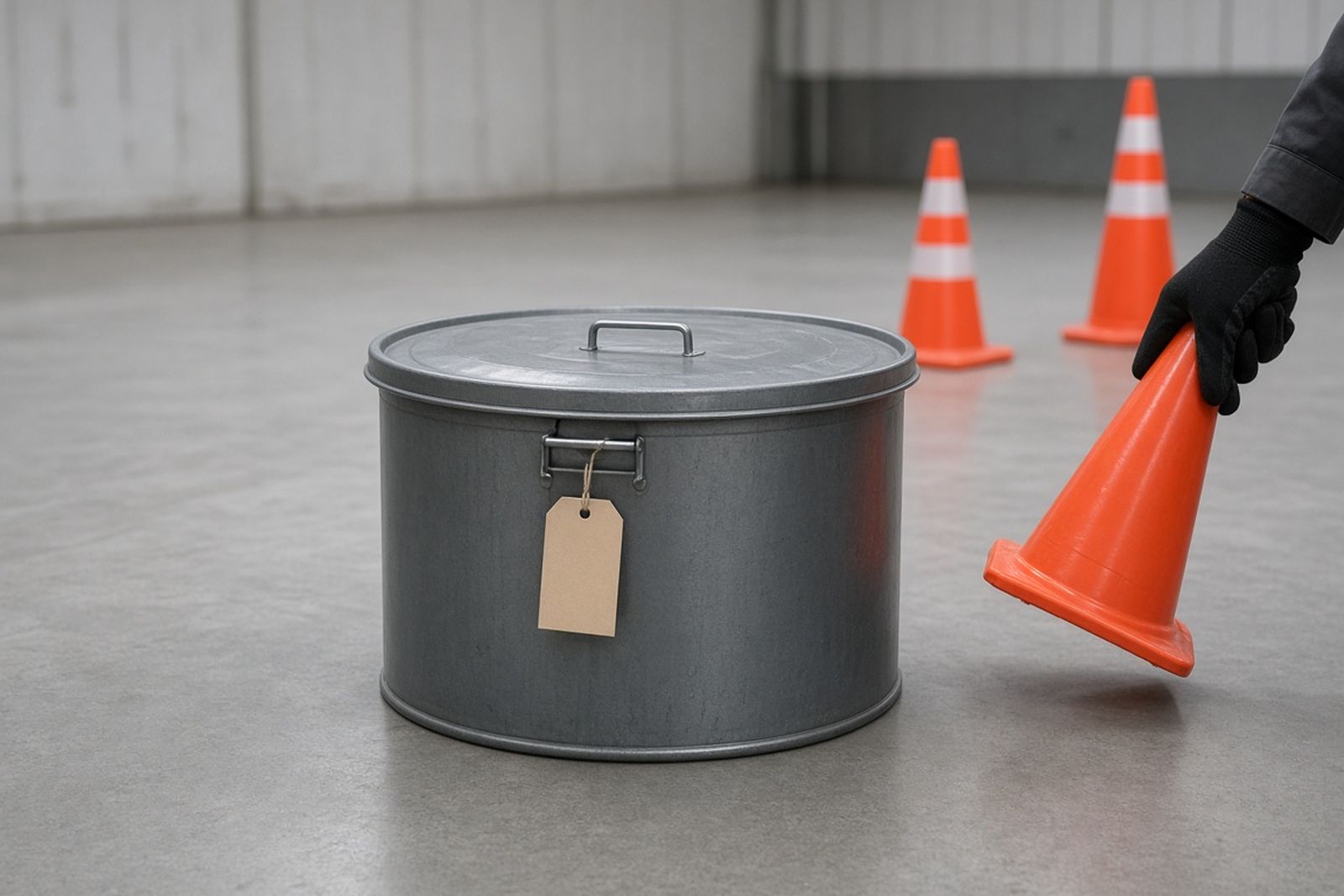
Los Angeles, CA

Hazmat Spill Response in Los Angeles, CA

What to do, who to contact, and what to ask in Los Angeles.

Fuel or chemical spill in Los Angeles? Pull people back, call 911, keep it out of alley grates and washes, and get air results before reopening.

Get an email reply about hazmat spill response

Send a short message to the follow-up inbox. A coordinator can reply by email. This form does not send emergency help; call 911 first if anyone is in danger.

Tell us what you need help with. Share a short description; please leave out medical details, access codes, and other sensitive information.

A request does not confirm a booking. For immediate danger, contact local emergency services.

Or email info@hazmatspillcleanup.online

The short answer for Los Angeles, CA

From a freight dock near the Alameda Corridor to a tuck-under apartment garage, a Los Angeles spill starts with the same moves. Pull people back, post plain keep-out notices in the languages they read and call 911 for leaks, heavy fumes or mystery liquids. After that, here is how alley grates and washes are protected and what you need to reopen.

What to do, step by step

  1. 1

    Pull people back and post keep-out notices people can read

    When a trailer is still leaking, fumes are heavy or the product is a mystery, pull your drivers and dock workers back and call 911. Keep your untrained staff and vendors out. Post plain notices in the languages your people use, without making up a chemical name. Leave idling rigs, grinders and forklift chargers alone until firefighters decide what to shut down. In an apartment building, keep tenants upstairs and away from the garage.

  2. 2

    Hand over shipping papers and stop any mixing

    Hand over your SDS sheets, bills of lading or contractor product lists from a safe place. Leave any tote you cannot identify sealed. On an Alameda Corridor apron, the hazmat team reads the hazard first and picks pads or a neutralizer second. On a crowded freight apron, the wrong neutralizer can set off heat, toxic gas or fire next to your trucks and workers. If someone is already mixing cleaner into the drip, stop them.

  3. 3

    Have alley grates and wash inlets blocked

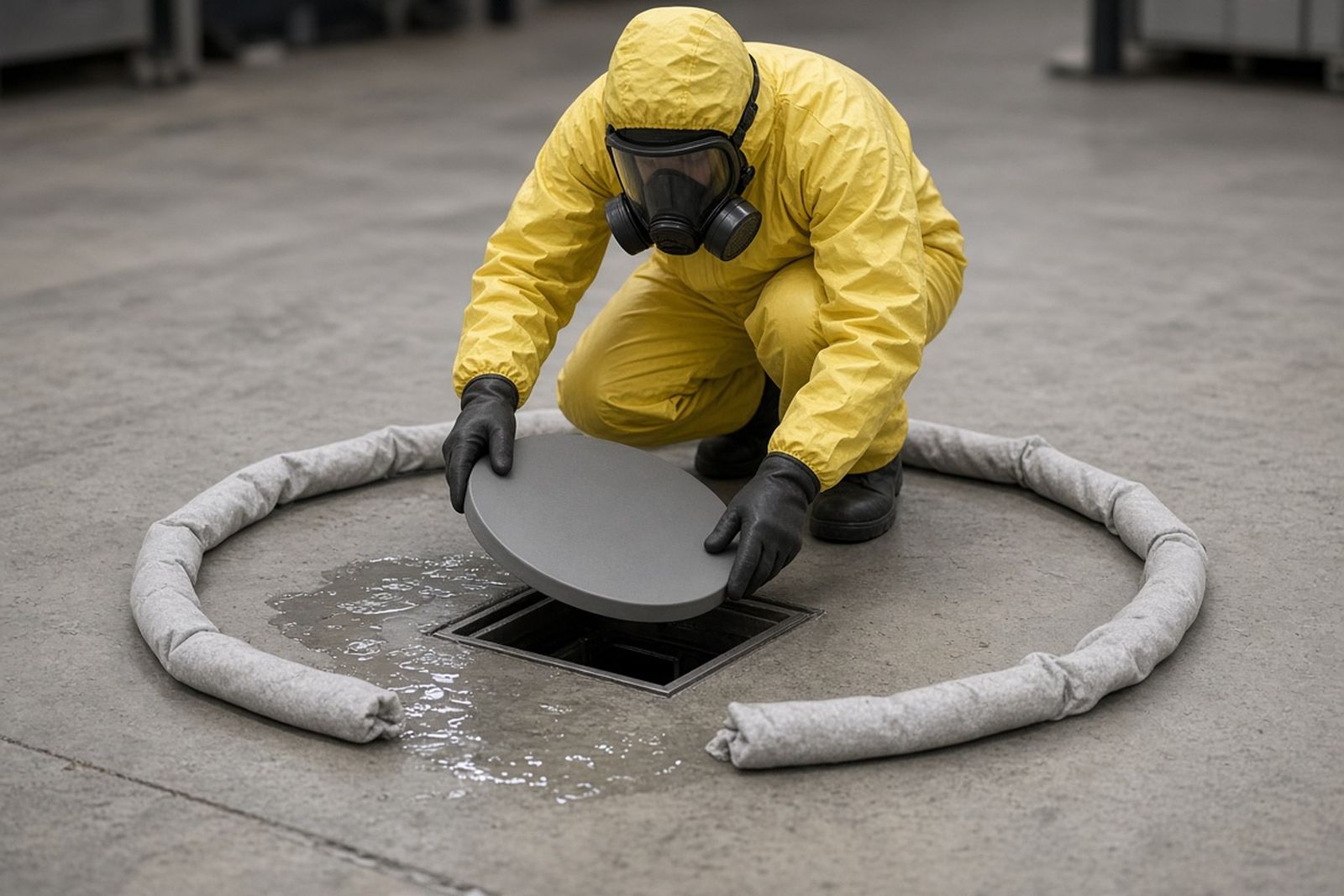
    A good crew blocks the paths from your site to alley grates and concrete washes early. If the product reaches a storm drain or bare soil, LAFD and the county hazardous materials program take the lead on notices. Oil or chemicals headed down a wash toward the river can also mean a National Response Center (NRC) call. For your file, record where barriers went compared to the wash inlets and how much product came back.

  4. 4

    Agree on air numbers before anyone returns

    Packing must suit legal transport, since federal hazmat shipping rules can apply once loads hit Los Angeles freeways. Your building or yard file should hold the shipping record for each load and name the site that received it. Agree on the air numbers before your tenants return to a soft-story deck or your workers to a dock. Looking clean is not clearance. Elevator pits, electrical rooms and air duct paths in a tower basement should be checked as well.

What cleanup is like in Los Angeles

Freight docks, soft-story apartment decks, hillside streets and mixed-use towers each set up differently, but the order you follow is the same. People come first. Then you keep others out, call for help and let trained crews name the product, hold it and dispose of it legally. Last comes proof that it is safe to reopen. If your workplace or building uses several languages, post plain notices in each one and do not make up a chemical name. Never ask untrained workers or vendors to handle the chemical while trucks sit idling. Film and nightlife areas bring crowds at odd hours, so rope lines matter early.

Concrete washes that lead to the LA River and the regional storm system can carry product a long way after one curb rinse. Hillside streets speed up runoff, and the sumps at your dock can feed alley grates. With vapor in the air or a mystery liquid on the ground, protect your people before anything else. SDS sheets, shipping papers and receiving logs help responders if you can get them without exposure. If a wash is carrying product toward the LA River, a federal report may be needed as well. California DTSC and the LA County Fire CUPA set hazardous waste rules across much of the county.

Claim and rule problems often show up after your slab looks clean. So record when the spill was found, which units or bays were closed, the spark-control steps, where booms went and how much was recovered. Add the waste test results, the waste shipping record and the air test targets. A full shipping schedule does not make the hazard smaller, and neither does a tenant who wants the garage back tonight. A good company will give you these papers as it goes. Ask for them if it does not.

What to expect for your type of home

  • Freight docks along the corridor: Keep barrier supplies where burnable goods or acids are received. Tell responders which door the load came through and what else is stored nearby.
  • Soft-story apartment decks: Write vendor rules that send a chemical sheen up the chain and away from mop crews. Tenants should know to stay upstairs.
  • Hillside driveways: Runoff speeds up on a slope. Do not rinse product downhill toward the concrete washes, and tell the crew where the nearest grate is.
  • Blocks where industry meets homes: One pad drip can mean notices to several properties. Share facts with your neighbors and let officials handle the rest.
  • Forklift charger rooms and coolant cages: These hold acids and oils that normal cleaning supplies cannot handle. Keep your cleaning staff out of them during a leak.
  • Businesses with a purchasing office: File spill jobs in their own folder, never mixed with everyday repair tickets. Claims go faster with a clean trail.
  • Buildings with alley access: Dumpsters staged in the alley can block fire trucks. Find a second way in before any absorbent loads arrive, and tell the dispatcher about it.

Papers and records to keep

  • When the spill was found, a map of bays or units and the keep-out steps taken
  • Photos from a safe distance of alley grates, hillside runoff and concrete washes
  • Any bill of lading, SDS or contractor list the fire crew received, with a note that no drum was opened
  • LAFD and county fire hazardous materials case numbers
  • Where barriers went compared to the wash inlet and what was recovered
  • Waste test results, the shipping record, hauler licenses and the receiving site for each load
  • Air or wipe results used as proof to reopen a tower basement
  • Copies of plain notices to workers or residents in each language used

Local offices and official help

Common questions in Los Angeles

Trucks are stacking up and my supervisor is mixing cleaner into an unknown drip. How do I step in?

Stop the mixing right away. Unknown products can react violently. They can make heat, toxic gas or fire, and push the spill toward alley grates that feed the concrete washes. Pull the crew off the dock and call 911. If the dock office has the SDS or bill of lading, bring it out by a route that stays clear of the drip. Note which supervisor stopped the cleanup and when 911 was called.
Our soft-story garage has a fuel sheen and tenants speak several languages. What do we tell them?

Do not send mop vendors into the sheen. Tape off the parking deck and call 911. Keep tenants upstairs, and grab a product sheet only if it is in the office. Send plain notices in the languages tenants actually read. Say which areas are closed, that responders are in charge and not to enter. Do not make up a chemical name or promise a reopen time before air test targets exist.

What file shows the waste left our freight yard legally?

Your yard office should hold the lab profile, a count of drums and a waste shipping record for each truck that left the gate. Take pictures of the packed drums before the truck comes, and hold on to the SDS pages the lab used. When recovered material leaves an Alameda Corridor yard on public roads, federal shipping and hazardous waste rules may apply. A missing shipping record stays a rule and claim problem long after the dock looks clean.

Is a hillside spill handled the same way as one at a flat freight yard?

Yes, on the basics: safety first, the SDS, no home-made neutralizing, drain protection, legal waste and proof before reopening. What differs is how fast the spill moves and where crews can set up. Hillside runoff can reach the concrete washes faster. Freight docks may have sumps and shared storm lines. Both need barriers once safe methods are set, and both may bring reporting duties when product leaves the pad.

When can our tower basement reopen after fumes?

Once written air or surface targets for that product are met and on paper. No visible liquid is not enough. Elevator pits, electrical rooms and air duct paths need to be checked, not covered with fragrance. Log who approved turning the ventilation back on and the readings behind it. If smells or symptoms continue, the keep-out zones stay. Clip the air results to the waste shipping records.

A car is leaking fuel in our tuck-under garage. What should tenants do?

Leave the garage and keep others out. Do not start cars, use switches or smoke nearby. If fuel is pooling, the smell is strong or it is reaching units above, call 911. Then tell the building manager. Tenants should not try to clean it up with kitty litter or rags. Keep windows closed if fumes are rising into your unit. Wait for the manager or responders to say it is safe.

Do Santa Ana winds change the risk?

Yes. Hot, dry, windy days raise the fire risk around fuel and solvent spills, and wind can carry fumes toward neighbors quickly. If a spill happens in these conditions, move people upwind and keep sparks and flames away. Call 911 early. Do not run gas-powered equipment nearby. Before fire weather, check your fuel storage for leaks and keep it away from dry brush and hot surfaces.

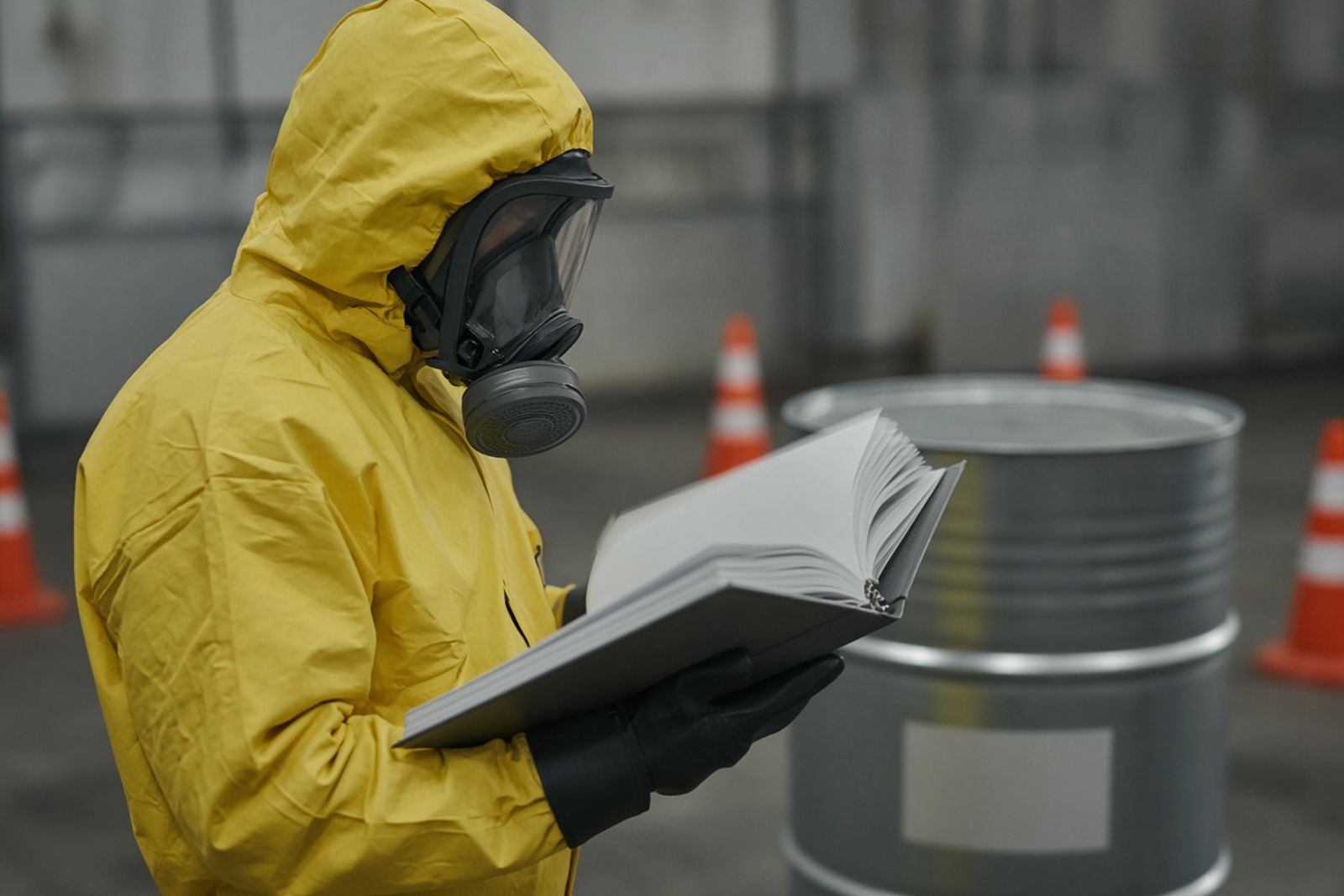
Technician in a yellow suit and respirator reading a safety data sheet binder beside a drum
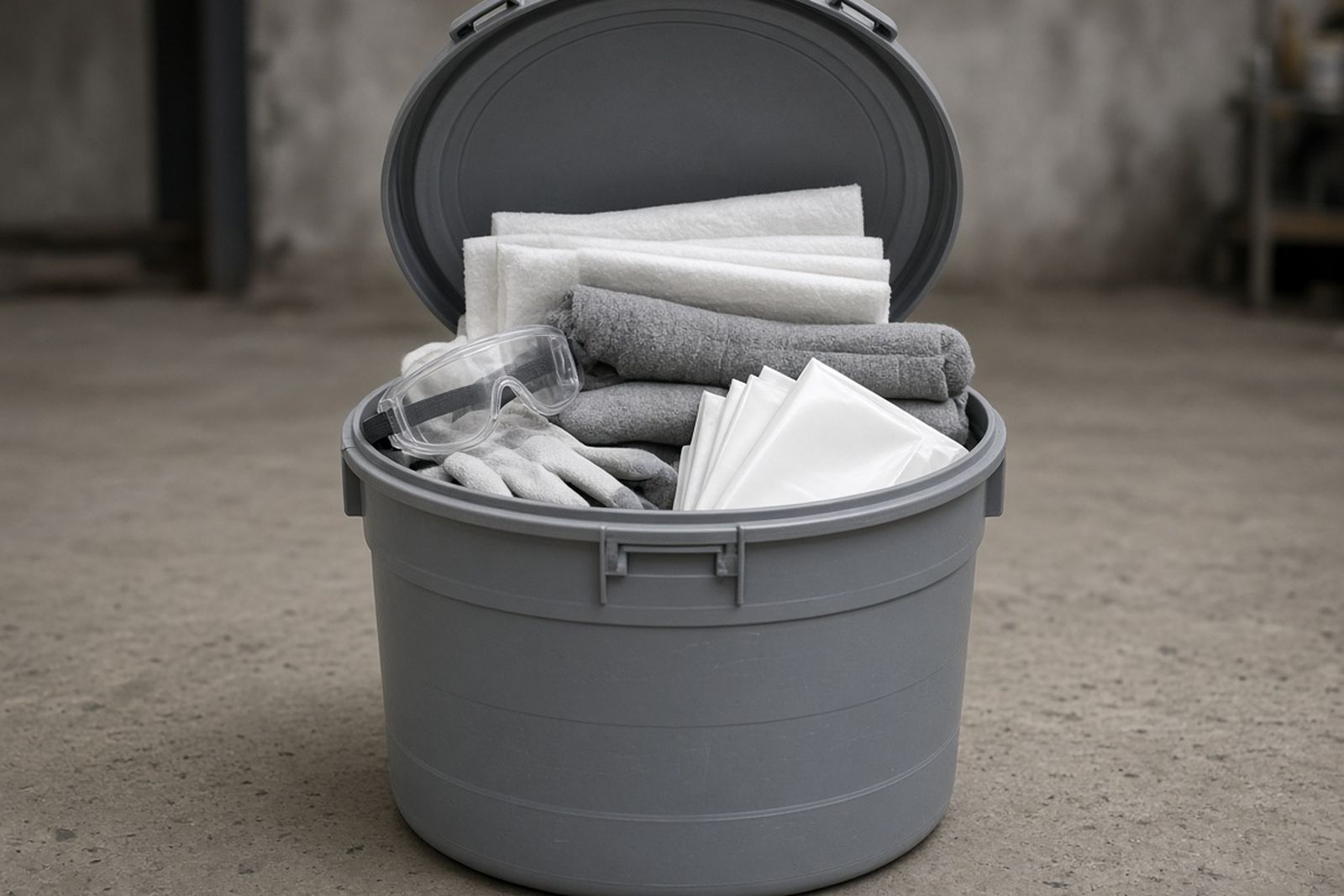
Open spill kit drum holding absorbent pads, goggles, gloves and disposal bags

Facts worth knowing

  • In a September 2012 survey of 204 households near a chemical odor incident, 36.5% said they sought medical care for symptoms they linked to the odor.

    Why it matters: If your site releases a strong odor, expect neighbors to seek medical care; tell them quickly what was released and what to do.

    Source: Behbod et al., 2014

  • After a 2014 spill in West Virginia, people who got information quickly were more likely to follow the recommended safety steps.

    Why it matters: If your site has a spill, tell affected people fast and clearly; delays may mean fewer follow your safety instructions.

    Source: Savoia et al., 2015

  • Sites must report qualifying accidental chemical releases to the Chemical Safety Board within 8 hours; PG&E paid a $45,273 penalty in 2025 for reporting late.

    Why it matters: Know before an accident who at your site will make this report, because the deadline is short.

    Source: EPA/CSB (via Spencer Fane), 2025

Tools that help right now

What would you do?

Poll results

Vote to see how other people answered. You can change your answer at any time.

Safety

How prepared is your site for a chemical or fuel spill right now?

Be the first to vote
Your experience

In your most recent spill, what was the first action taken?

Be the first to vote

Need help in Los Angeles?

Send a short message about the property to the follow-up inbox. A coordinator can reply by email with next steps.

Your request is sent to the follow-up inbox. A coordinator can reply by email.

If anyone is hurt or in danger, call 911 first.