West · US

Hazmat Spill Response in Sacramento, CA

Planning hazmat spill response in Sacramento, CA

Sacramento inland spill guide: keep-out zones in heat, SDS not kitchen chemistry, protect Delta-linked drains, EMD CUPA context, disposal paperwork. This is planning guidance, not a claim of a local office or crew in Sacramento.

Get an email reply about hazmat spill response

Send a short message to the follow-up inbox. A coordinator can reply by email. This form does not send emergency help; call 911 first if anyone is in danger.

Tell us what you need help with. Share a short description; please leave out medical details, access codes, and other sensitive information.

A request does not confirm a booking. For immediate danger, contact local emergency services.

Or email info@prompartybuses.com

Direct answer

The short answer for Sacramento, CA

Sacramento has triple-digit valley afternoons and storm lines that run to the American River and the Delta. It also has Capitol visitor lots, pesticide sheds at the edge of orchards, and light industrial loading docks. Together they make an inland problem of fumes and drain paths. It should never be copied from coastal marina advice. This guide covers keep-out zones first. It says to rely on the Safety Data Sheet (SDS), not kitchen chemistry. It covers work with Sacramento County Environmental Management, which runs the local hazardous materials program (CUPA). It also covers disposal paperwork under federal hazardous waste law (RCRA) and written proof before reopening in summer. No Sacramento office, roster, or arrival clock is claimed.

Editorial guide · Biohazard Remediation NetworkUpdated 2026-07-22Location focus: Sacramento, CA

Local planning context

Sealed campus wings and apartment decks trap fumes when afternoon heat bakes products that give off vapor. Common triggers are strong pesticides in orchard-edge sheds, diesel for backup generators, solvents from tenant build-outs, and unlabeled contractor leftovers in janitor closets. Facility leads and homeowners usually hear complaints of stinging eyes or throats before they see liquid. Their job is to empty the wing, call emergency services, and stop custodians from making up a fix. It is not to name the chemical. Being inland does not lower the stakes when product reaches storm lines tied to the rivers or the Delta. Tule fog mornings can also trap fumes near ground-level loading wings, even though afternoon heat is the more common complaint.

Storm lines here link in the end to the American and Sacramento Rivers and the Delta. So rinsing a pad into a curb cut can do real harm. Product that leaves private paving can widen both reporting and cleanup. Shelter or leave as directed. Leave generators and light switches to the fire captain's call. Keep custodial teams out of keep-out zones. Bring the pest control or cleaning product sheets from the office. California DTSC and Sacramento County Environmental Management set state and local hazardous materials rules after the fire department's emergency phase.

Employers near the Capitol and managed campuses often push to reopen visitor parking fast. A visitor parking deadline must not override how responders sorted out the hazard. Record when the spill was found, building letters or lot IDs, temporary dike steps, waste test results, disposal paperwork, and proof for reopening. This guide stresses care with fumes in the heat, the link to the Delta, and legal waste handling. You will find no talk of a valley crew parked nearby, and no minute count. Parcels near the Folsom South Canal and the American River Parkway should map which curb cuts feed sensitive storm lines, before a pad rinse is even discussed in drills.
Property considerations

Storm lines tied to the Delta turn curb cut rinses into water problems, even far from the Pacific.

Sealed decks in triple-digit heat pack fumes into the air. Using leaf blowers while the product is unknown is not safe.

Pesticide sheds at orchard edges with gas cans next to them should be treated as unsafe mixes until the SDS papers are found.

Capitol visitor lots need a named person who can post keep-out notices without debating chemistry in lobbies.

Valley warehouse docks store coolants and battery acid that cleaning supplies cannot safely touch.

Tag emergency spill purchase orders apart from routine facilities tickets in the claim file.

Visitor screening at state offices can slow fire truck escorts. Name a facilities escort who stays outside the keep-out zone.

Response-planning framework

Empty hot wings before anyone “airs it out”

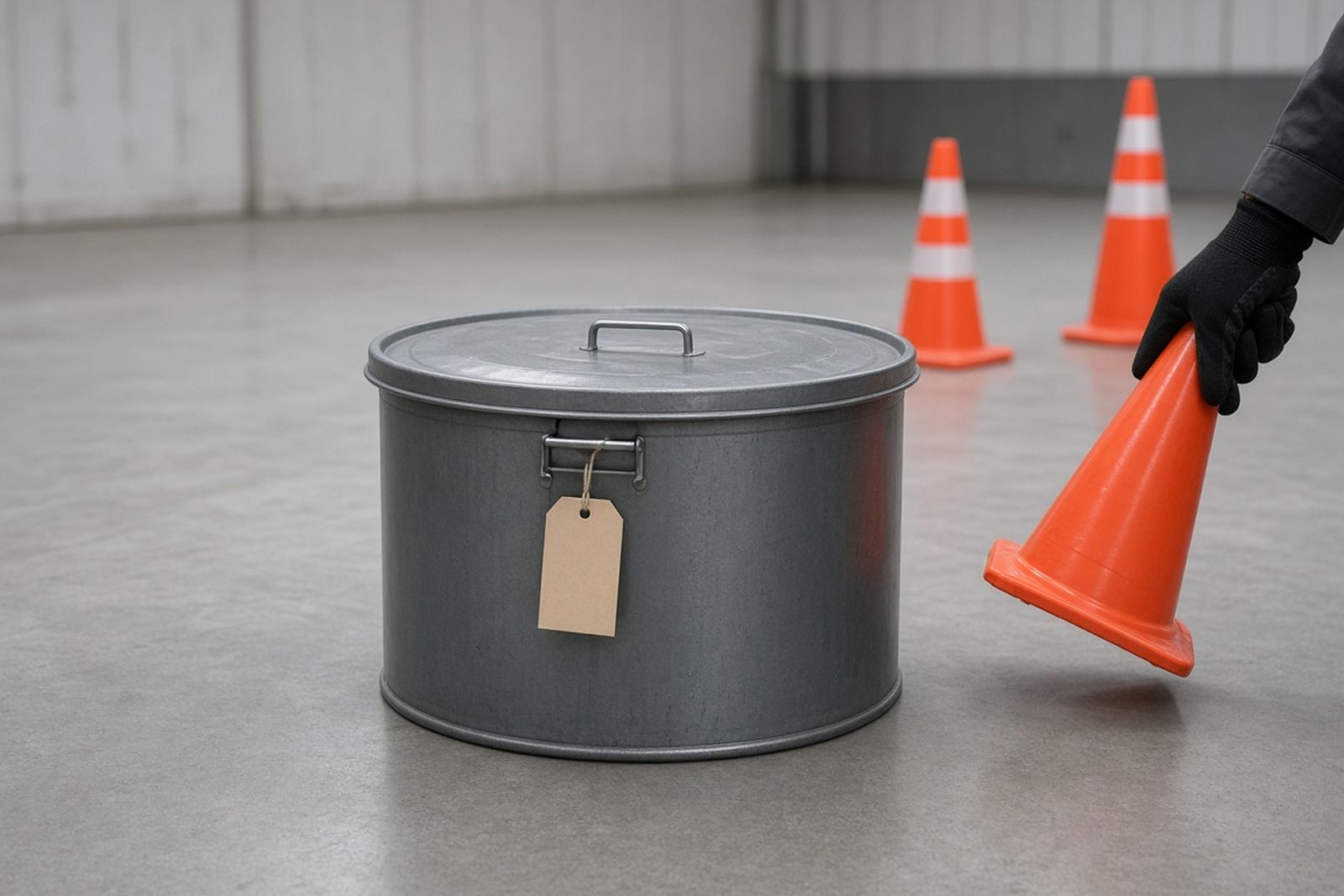
In the heat, fumes build fast. Tape off the area and call 911 for anything still leaking, smelling strong, or unknown. Heat can make products give off more vapor, so the perimeter and spark control matter even more. Staff and visitors matter far more than the spilled product.

Hand over SDS—ban kitchen chemistry in the closet

Do not crack faded jugs to check the label if that could expose you. When a jug from an orchard shed or a bottle from a janitor closet has lost its label, trained crews sort it out in the field. Pads and any neutralizer wait on that answer. No one on site should invent household mixes.

Temporary dikes toward river-linked curb cuts

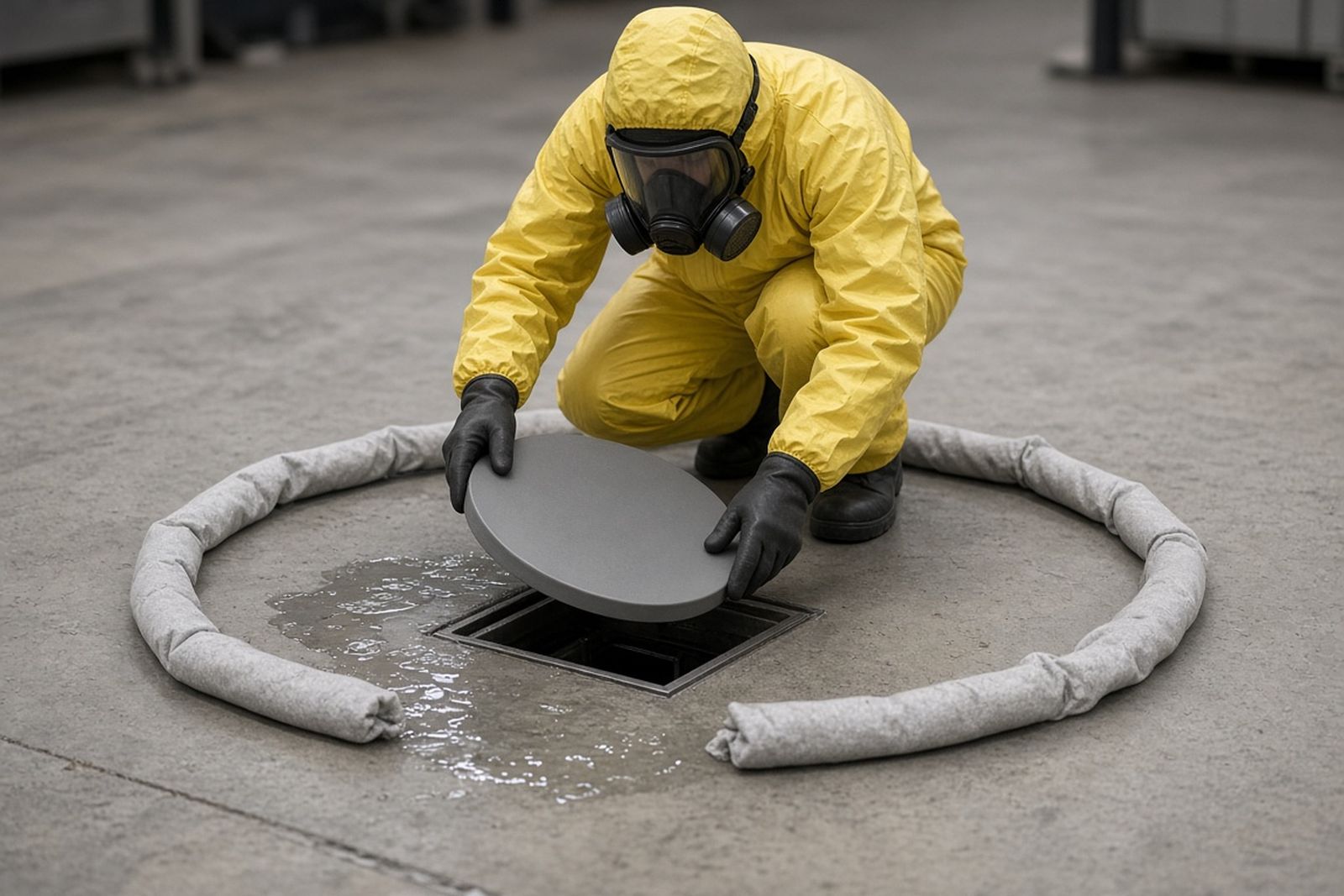
Once the product is known, stop it from reaching gutters early with temporary dikes, drain socks, and matching pads. The fire department and the county environmental management office decide who else is told. A National Response Center (NRC) report may apply for certain releases that head for the rivers. Log how much was recovered. Being inland does not erase the duty to report when water is at risk.

Disposal paperwork and summer reopen proof

Used pads and booms from a Sacramento spill need testing, and federal hazardous waste rules may apply. Pack the waste for legal transport, keeping in mind that federal hazmat shipping rules can apply once it rolls onto valley highways. Keep the disposal paperwork and destination details. Set air or sample targets before reopening decks, docks, or campus wings. A dry-looking slab is not proof to reopen after solvent or fuel fumes.

Documentation checklist

  1. 1Capitol campus building letters, lot IDs, the time the spill was found, and keep-out signs posted
  2. 2Photos from a safe distance of orchard-edge or campus curb cuts on storm lines that feed the Delta
  3. 3SDS binders or purchase records gathered without cracking open unknown jugs
  4. 4Fire and county environmental case numbers
  5. 5Logs of temporary dikes, drain socks, or booms, with estimates of gallons recovered
  6. 6Waste test results, tote counts, hauler insurance details, and signed disposal paperwork
  7. 7Air readings from experts used as proof to reopen in summer
  8. 8Visitor lot notices that stick to facts and avoid made-up chemical names

Official resources

Questions for this location

Why is “rinse it to the planter” especially bad on a Delta-linked inland campus?

Planters and curb cuts often connect to storm lines that feed the rivers and the Delta. Rinsing a private pad can turn a small drip at a home or campus into an environmental release that may have to be reported. Turn off the hose and move staff back from the planter. Photograph the flow path from a safe distance. Inland campuses should not copy coastal marina wording. But they still have water at risk. Planning should record the actual storm line that was threatened.

A custodial lead wants to fog fragrance through a solvent smell on a 105°F day. Allow it?

No. Fragrance does not tell anyone what the hazard is. Fans can push unknown fumes toward sparks or into wings where people work. Heat can make products give off more vapor, which makes guessing even more dangerous. Clear the wing and phone emergency services. Fetch the SDS only if the path is clear of fumes. Once 911 crews step back, a spill contractor with OSHA hazmat training cleans up and packs the waste. That holds even in triple-digit heat when staff want to finish fast. Update vendor tickets so chemical smells go up the chain instead of becoming odor jobs. Written scopes should forbid kitchen chemistry and curb cut rinses. Reopen only when written targets are met, not because it smells better.

Orchard-edge pesticide concentrate hits a landscape inlet. First calls?

Do not rinse it into the inlet or soil. Keep people and pets away and post a keep-out zone. Call emergency services if the product is strong, giving off heavy fumes, or not clearly known. Share the SDS or product labels from a safe spot if you have them. Pads for a pesticide spill get chosen only after the label or SDS is read. Strong pesticides are not an ordinary garden mess. Storm lines that lead to the river raise the stakes. Do not make up mixing recipes from internet advice. Photos of the inlet path, taken from a safe distance, belong in the file. Packing the waste legally after recovery is a job for pros, not household trash.

What disposal paperwork should a Central Valley receiving dock archive?

Save the waste test sheets, tote or drum counts, and the proper shipping names or waste codes as they apply. Save the hauler's insurance cards and the signed disposal paperwork that tracks the load to its final site. Take photos of sealed packages on the loading apron before pickup. Keep the SDS pages used for testing. Federal waste and shipping rules may cover the loads. Do not merge emergency waste into ordinary trash contracts. If digging grows past the emergency, write a clear handoff. That keeps the dock's emergency file from reading like a closed-out cleanup.

Employees want back into a fuel-fume bay before an evening shift. What is reopen proof?

Proof means the readings meet written targets and someone signs off by name. Heat and schedule pressure do not justify skipping that proof, or using fans that push unknown fumes toward sparks. A dry look is not enough. If the smell lingers, the bay stays closed. Reopening is based on test science, not a promised cleanup time.

How does valley tule fog or winter rain affect a Sacramento spill?

Winter rains can wash residue from parking lots and loading pads into storm lines that feed local rivers. Foggy, still mornings let fumes hang low around buildings. If a spill happens in wet weather, call for help early and mention the forecast. Keep people out of low areas like sunken docks and basements. Do not sweep or rinse product toward drains to beat the rain. Note the weather in your records.

Should Sacramento homeowners near farmland worry about pesticide drift or spills?

If you smell a strong chemical odor or see a spill from a nearby field, shed, or spray rig, go indoors. Close windows and turn off systems that pull in outside air. Call emergency services if anyone feels sick. For a concern that is not urgent, contact the county agricultural commissioner's office or environmental health office. Do not go near equipment or containers to read labels. Keep children and pets inside until the smell clears.

Contact

Get help by email

Send a short message for an email reply about hazmat spill response planning questions for the Sacramento area.

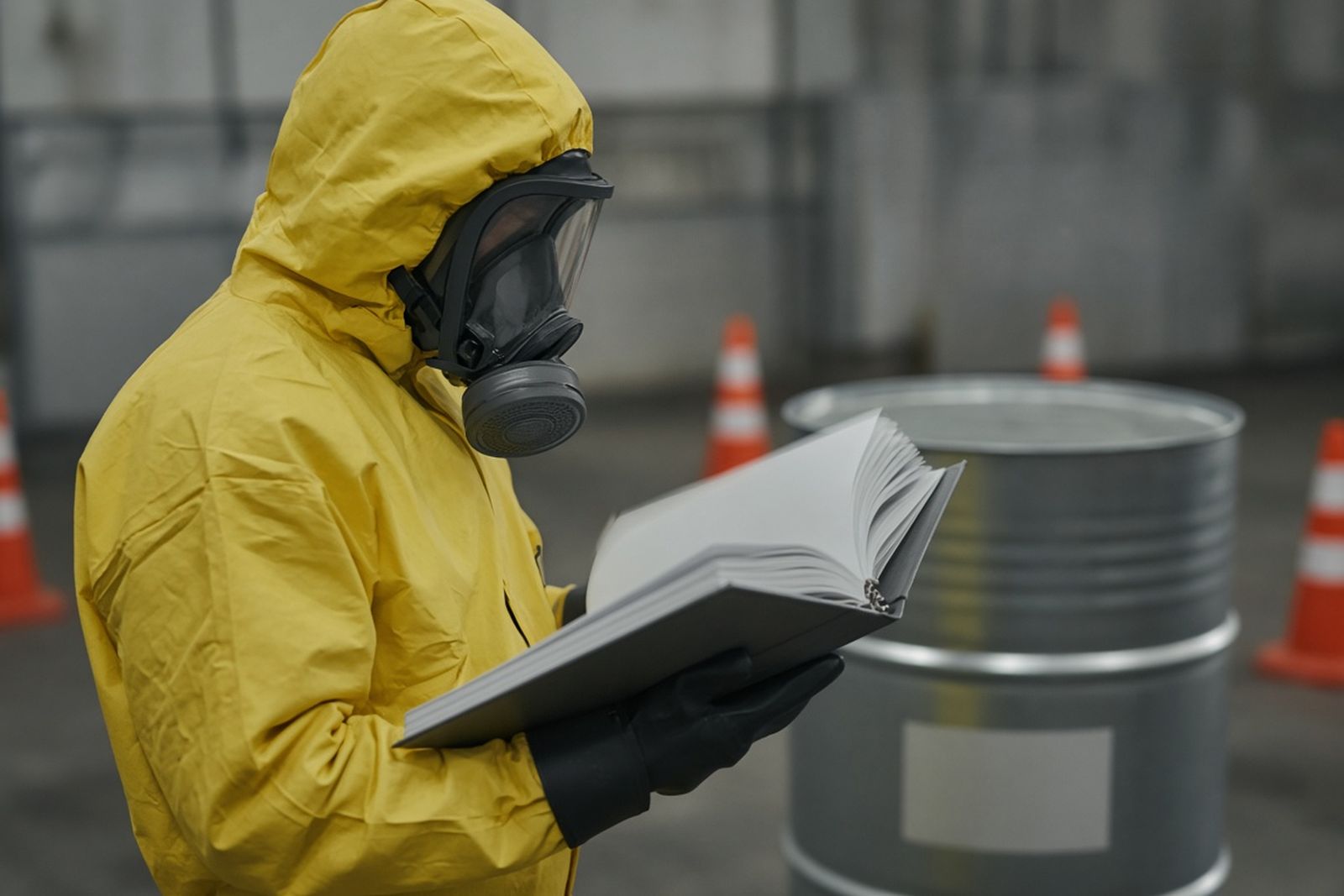
Technician in a yellow suit and respirator reading a safety data sheet binder beside a drum
Illustrative photo, not a job record. Technician in a yellow suit and respirator reading a safety data sheet binder beside a drum.
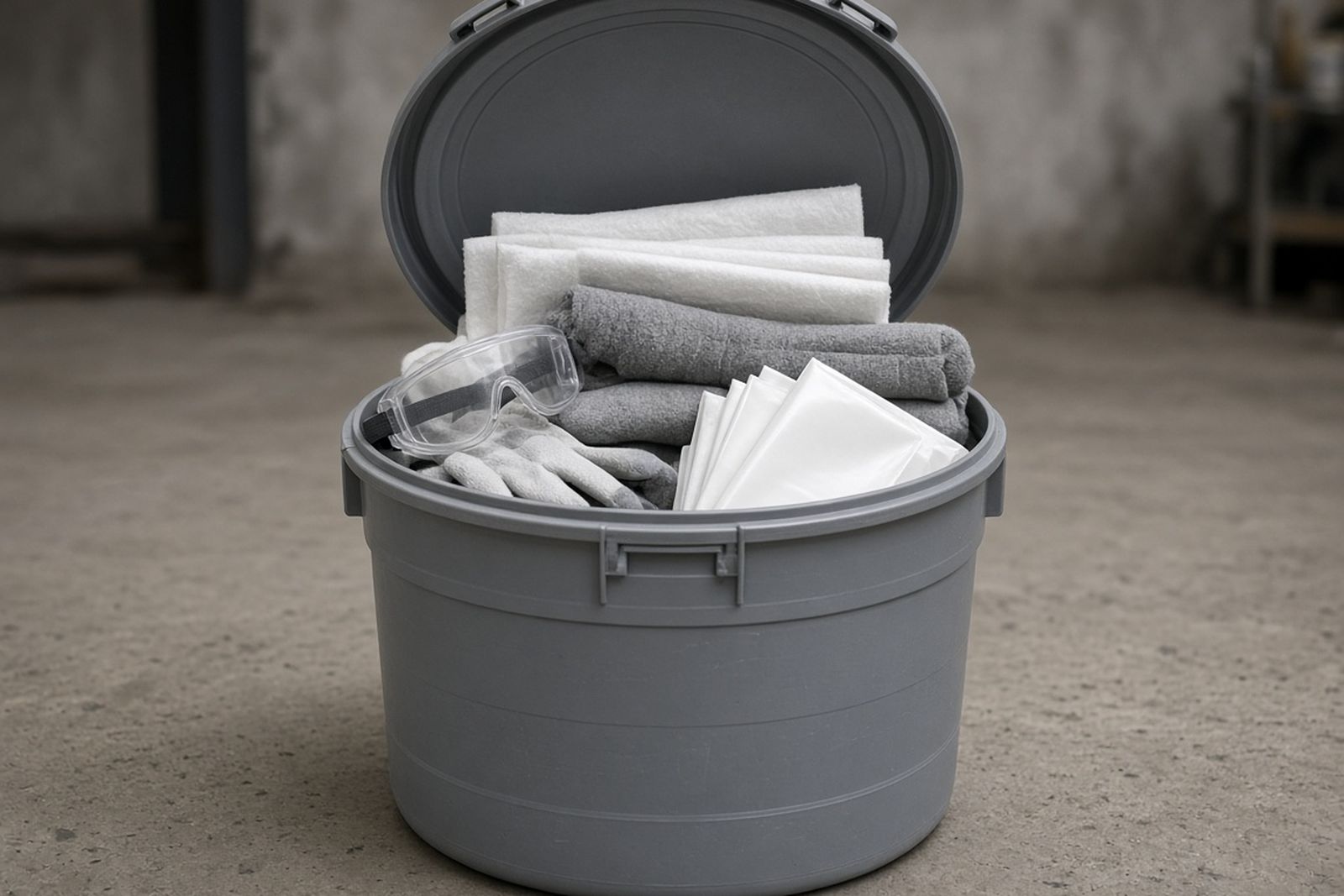
Open spill kit drum holding absorbent pads, goggles, gloves and disposal bags
Illustrative photo, not a job record. Open spill kit drum holding absorbent pads, goggles, gloves and disposal bags.

Hazmat Spill Response figures to keep in mind

National and research figures, not Sacramento data. Local conditions, rules and providers vary; use these for scale and context only.

12

Displaced residents without advance warning had higher depression and PTSD scores than those warned over 12 hours ahead.

Read with care: Related cohort to S059; associations, not proof displacement caused symptoms.

Source: Munro et al. (2017)622 English respondents whose homes flooded in 2013–2014; one-year survey.

78%

78% of insurance-related open comments were negative.

Read with care: Observational and self-selected; negative-comment denominator is comments, not all insured people.

Source: McKenzie et al. (2022)521 insured, inundated-household respondents from a 2,530-person survey six months after flooding.

4.31

Uninsured flooded respondents had higher adjusted odds of probable PTSD (aOR 4.31; 95% CI 1.31–14.20).

Read with care: Observational; some estimates imprecise; same wider cohort as S060. Depression estimate has a very wide confidence interval.

Source: Mulchandani et al. (2019)851 flood-affected/disrupted English respondents surveyed two years after 2013–2014 flooding.

These figures are public research and agency data, not this network's own job records. Keep each number with its population, year and limits; none of them predicts cost, timing or outcome at a specific property.

Plan before you reach out

Use the first 24 hours planner for immediate steps and the provider vetting checklist to confirm any Sacramento provider's training, insurance and waste path in writing.

What research has found

Findings from published studies of people and properties in situations like this one. They describe what researchers observed in a specific group; they are not predictions for your case.

Greater perceived risk was associated with compliance.
Who was studied: 690 West Virginia adults surveyed online in February 2014, including affected and unaffected areas.Limits: Self-reported behaviour; event-specific communications.Public response to the 2014 chemical spill in West Virginia: knowledge, opinions and beh… (2015)
Nearer-zone residents more often reported eye irritation, breathlessness and agitated behaviour attributed to exposure.
Who was studied: 204 household representatives surveyed in two distance zones, September 2012.Limits: Reported symptoms and odor; not measured individual exposure doses.Community health assessment following mercaptan spill: Eight Mile, Alabama (2014)

Hazmat Spill Response community polls

Poll results

Every count is a real visitor vote; nothing is seeded or padded. One vote per poll per device, and you can change your answer.

Safety

How prepared is your site for a chemical or fuel spill right now?

No visitor votes yet
Your experience

In your most recent spill, what was the first action taken?

No visitor votes yet

Planning cleanup in Sacramento?

Send a short message about the property to the follow-up inbox. A coordinator can reply by email with next steps.

Your request is sent to the follow-up inbox. A coordinator can reply by email.

If anyone is hurt or in danger, call 911 first.