Short answer
To research waste rules after a hazmat spill, first list every waste the cleanup made. Then decide whether each one is a hazardous waste under EPA's RCRA rules. A waste can be hazardous because it is on an EPA list or because of how it behaves. Use safety data sheets, what you know about the product and lab tests. Check whether the spill changes your waste-maker category. Check whether other programs apply, such as used oil or wastewater rules, and what your state adds. Write down each choice and the reason for it.
Why spill waste needs its own research
When a chemical spill is under control, the emergency ends, but the paperwork does not. Used absorbent pads, soiled dirt, rinse water, damaged containers and used protective suits are all waste. The business that owned the spilled material is usually treated as the one that made the waste.
Spill waste is harder to sort than everyday waste. It is a mix of the original chemical, whatever it touched and whatever was used to clean it up. Take a solvent you ship all the time as a known waste. It may become a very different waste once it has soaked into gravel and been mixed with absorbent.
Getting the category right matters. Waste put in too loose a category can end up at a site that is not allowed to handle it. Waste put in too strict a category can cost far more to get rid of than it should. A careful, step-by-step approach lowers both risks.
Time adds pressure. Drums of spill debris sitting behind a building fall under storage rules from the moment they are filled. These include labels, closed lids and time limits tied to your waste-maker category. Research that drags on for weeks can create a second rule problem on top of the spill itself.
An inventory of what the cleanup produced
Start by listing every type of waste the cleanup made, even small amounts. Your spill company can help. But confirm the list yourself, because you will likely sign the shipping papers.
Keep different wastes apart where you can. For example, mixing soiled soil with used protective gear can make both harder to sort. It may also raise disposal costs.
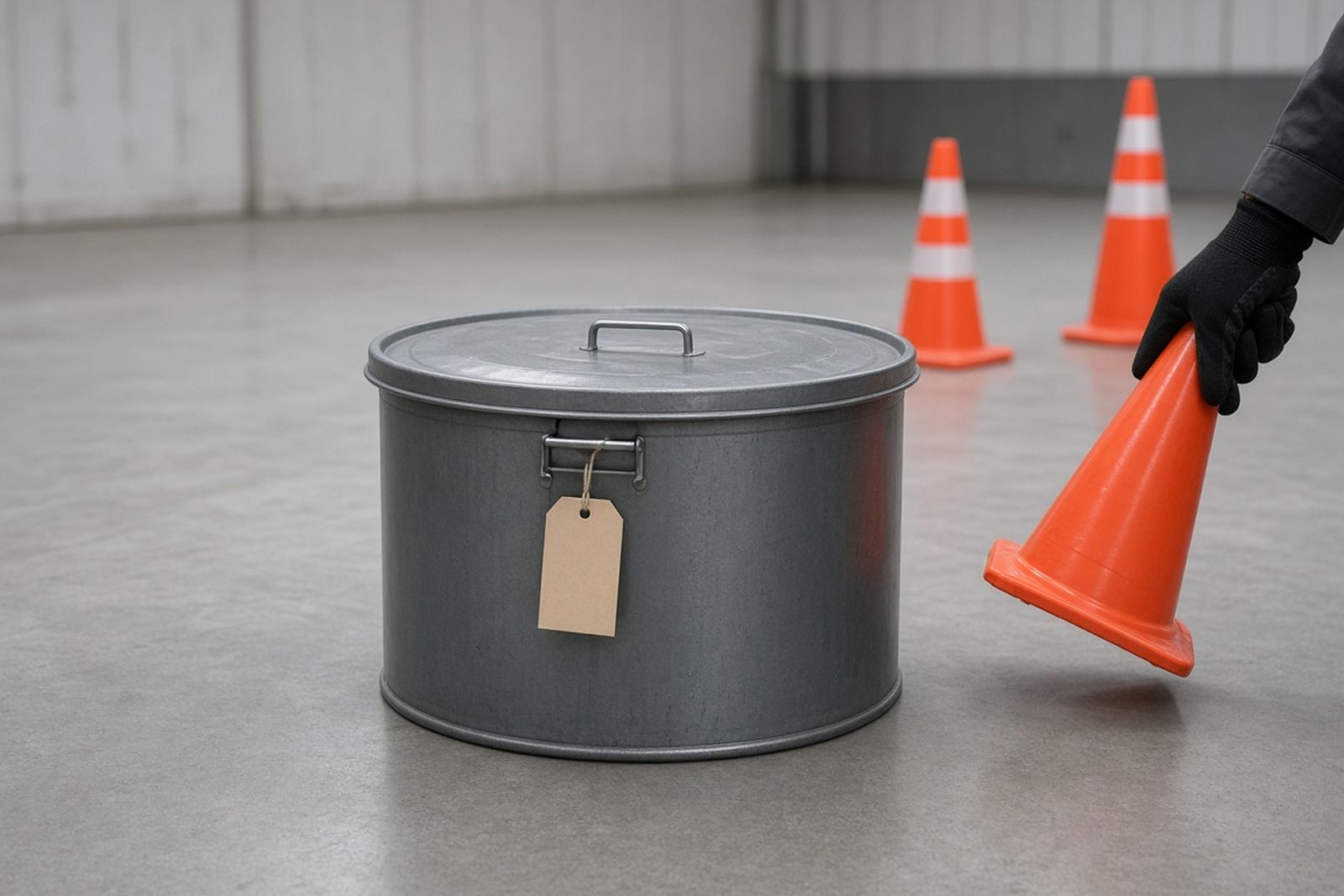
Label each container as it is filled. Write what it holds, where it came from and the date. A row of unlabeled drums is one of the most common problems found after a spill. It makes sorting much harder later, because no one remembers which drum holds gravel and which holds recovered liquid.
- Spilled product recovered in drums or large tanks
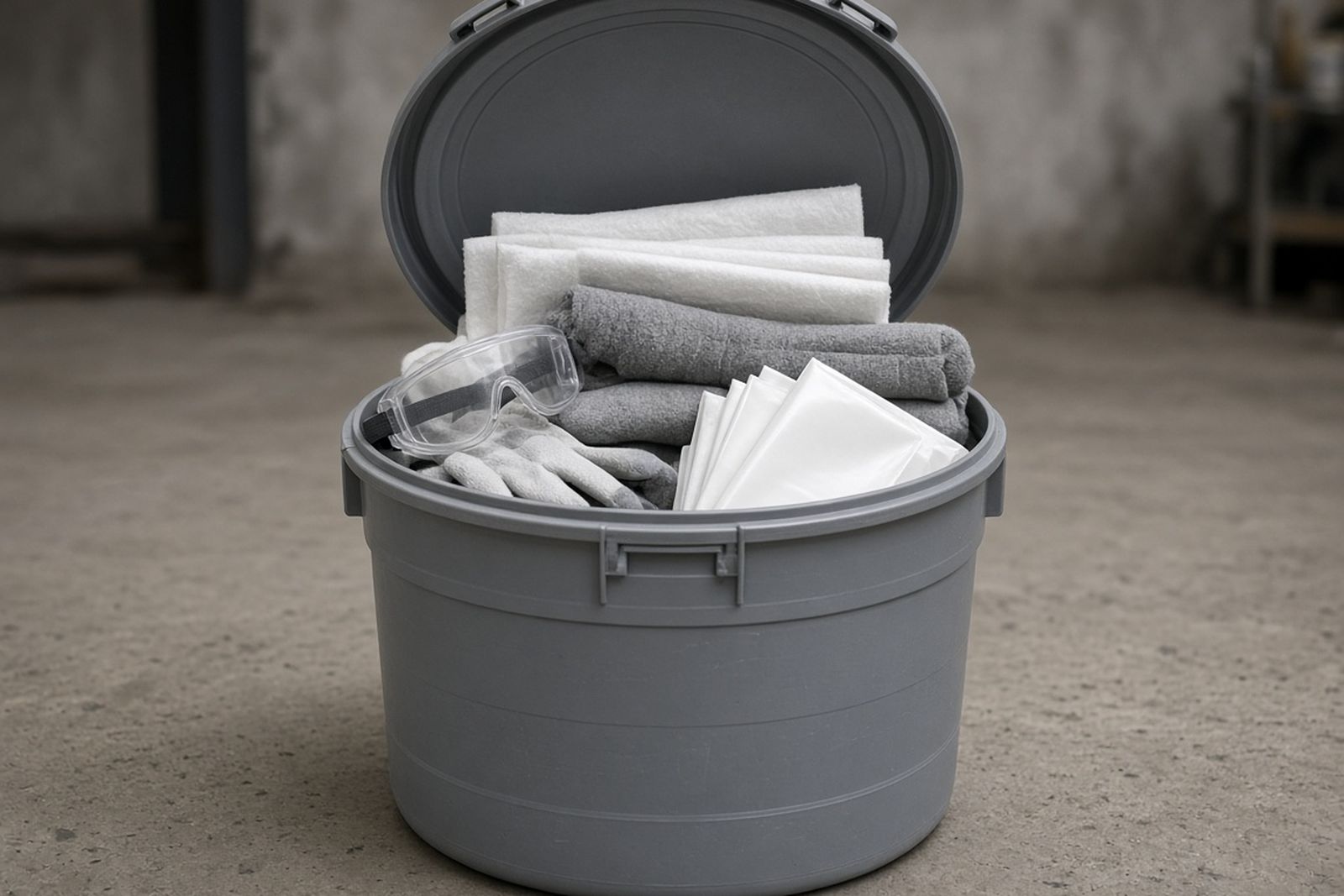
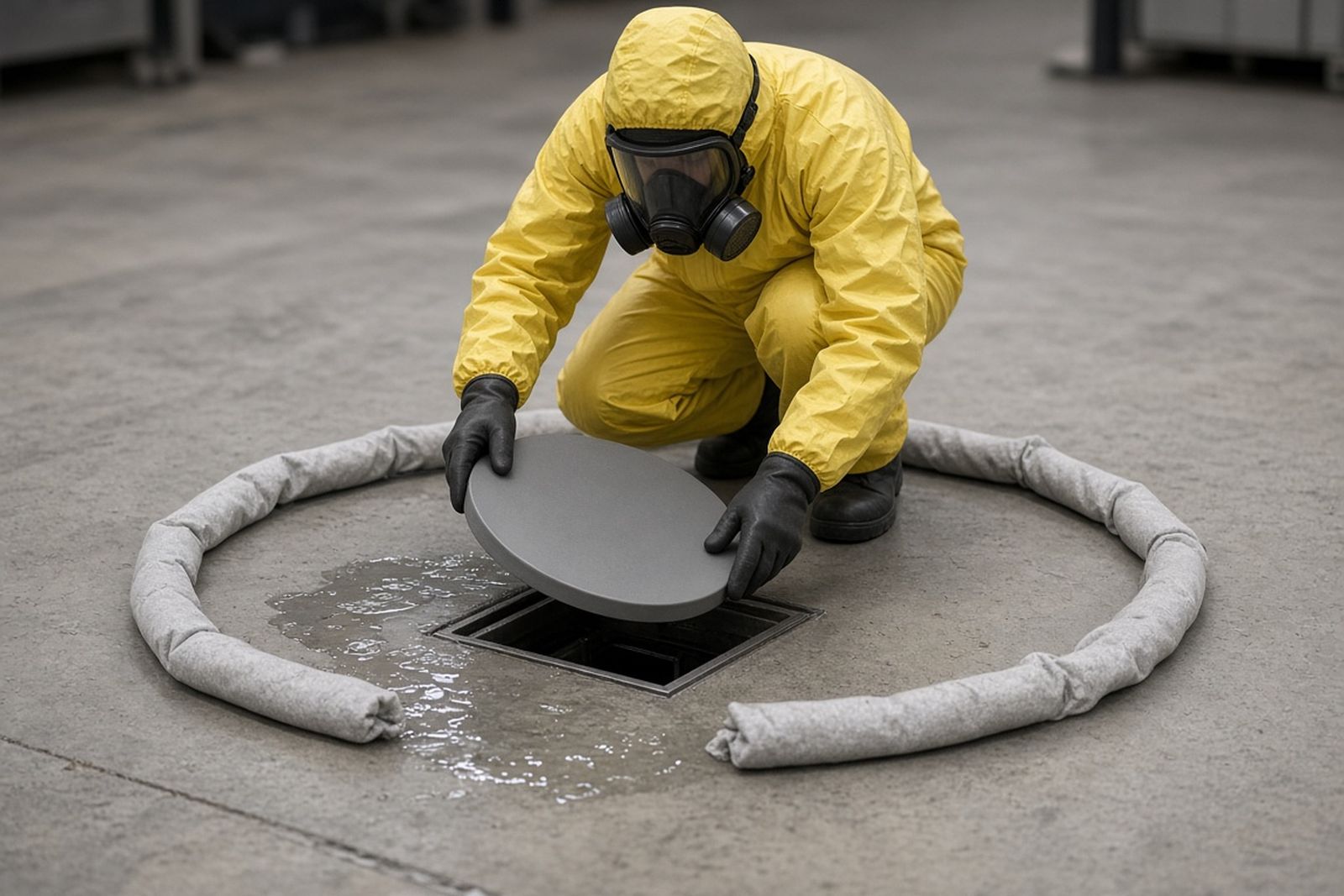
- Absorbent pads, booms, socks and loose absorbent
- Soiled soil, gravel or sediment
- Rinse water and cleanup wash water
- Damaged or leaking original containers
- Used protective clothing, gloves and respirator cartridges
- Leftovers from neutralizing the spill
- Soiled tools or gear that cannot be cleaned
How do you tell whether spill debris is hazardous waste?
Under EPA's Resource Conservation and Recovery Act (RCRA) rules, a waste is hazardous in two cases. It may be on one of EPA's hazardous waste lists. Or it may have a hazardous trait: it catches fire easily, eats through materials, reacts violently or is toxic. Many spilled store-bought chemicals are on the lists. Many spill wastes have one or more of these traits.
Waste makers may use what they know about the spilled material to decide, such as its safety data sheet and what it is made of. When that knowledge falls short, lab tests fill the gap. Section 13 of a safety data sheet covers disposal and is a good place to start, but rarely the final answer for product mixed with debris.
Soiled natural materials, such as soil or groundwater, follow special EPA policies. Under these, the soil or water is treated as containing hazardous waste if it holds a listed waste or shows a hazardous trait. States may read these policies differently. So check your state agency's guidance before you assume how soiled dirt will be handled.
Keep in mind that treating spill waste on site to change its category may itself be regulated. Neutralizing is one example. Ask your state agency before you try to treat waste to make it non-hazardous, even with a product sold for that purpose.
Can a spill change your generator category?
Yes. EPA sorts businesses that make hazardous waste into categories. The category depends on how much they make in a calendar month. A site that usually makes very little hazardous waste can jump into a higher category in the month of a spill. That brings stricter storage limits, more paperwork and more training duties.
The limits are specific. EPA's 2024 guidance says sites making 1,000 kg or more of hazardous waste a month are Large Quantity Generators and may store it on site for no more than 90 days. A large spill that fills several drums with hazardous debris can push a small waste maker toward that limit.
EPA's rules include terms for one-time events, such as unplanned spills. They let some smaller waste makers handle a one-time rise without changing their category for good. To use them, they must follow the conditions and notice steps. Check whether your state has adopted those terms. You will also need an EPA ID number to ship hazardous waste, if you do not already have one.
Other programs that can govern spill waste
Not all spill waste falls under the hazardous waste program. Several other federal and state programs may apply, based on what spilled.
Oil spills, for example, often leave used oil or oily debris that falls under separate rules. Spills from some electrical equipment may involve PCBs, which a different federal law covers. Rinse water may go down a sewer only under a wastewater permit or with the local treatment plant's approval.
States can also regulate wastes that are not hazardous under federal law. Some states have their own lists of state-regulated wastes. Others have special waste categories that need specific handling.
- Used oil and oily debris rules
- Universal waste rules for batteries, lamps and some devices
- PCB rules for some electrical equipment and older materials
- Wastewater discharge permits and local sewer approvals
- Hazardous or special waste categories that only your state uses
- Solid waste rules for debris that is not hazardous
Where to find the rules and guidance
EPA's hazardous waste web pages explain the federal definitions, the waste-maker categories and the system of waste shipping records. Your state environmental agency's hazardous waste program will have its own rules and guidance. These may be stricter or cover more. Many states also run small business environmental help programs that offer free, private advice.
Disposal sites are another source of hands-on information. Before they accept waste, they usually require a waste profile. This describes where the waste came from, what is in it and any lab results. What they will accept can tell you what extra testing you need.
Your spill company may prepare the profiles and the waste shipping records. But review them before you sign. The waste maker's signature states that the information is correct.
When you contact an agency, have your facts ready. Know the chemical, the amount spilled, the wastes made and any lab results. Specific questions get specific answers. General questions often just get a pointer back to the rule you already read.
Who is responsible once the waste leaves the site?
Under RCRA, hazardous waste is tracked from the business that made it to its final stop. This is done with a waste shipping record. The waste maker, the hauler and the receiving site each sign it. The waste maker should then get a final copy that confirms the waste arrived. EPA's electronic tracking system now handles many of these records.
Waste makers usually stay responsible for their hazardous waste even after it leaves their property. That is why it matters so much to choose a permitted hauler and disposal site. It is also why you should keep copies of all shipping records and profiles.
Large events show how quickly spill waste can pile up. EPA reports that 20 of the rail cars in the February 2023 East Palestine, Ohio derailment held hazardous materials. The cleanup that followed made large amounts of soiled soil and liquid. All of it needed careful sorting and tracking.
Working through a small spill
Here is a made-up example. A school district maintenance shop spills a solvent-based parts cleaner on a concrete floor near a doorway. Some of it runs onto the gravel outside. The spill company recovers the liquid, puts absorbent on the concrete and digs up the stained gravel.
The facilities manager lists four wastes: recovered liquid, used absorbent, gravel and used protective gear. The safety data sheet shows the cleaner catches fire easily. It also contains a solvent that is on EPA's lists. Using that knowledge, the manager and the spill company class the liquid and absorbent as hazardous waste.
The gravel is less clear, so the spill company sends samples to a lab. The results guide the category and the choice of disposal site. The manager also sees the spill will push the shop past its usual waste-maker category for the month. So the manager checks whether the state has adopted EPA's terms for one-time events.
The district already has an EPA ID number. So the manager reviews and signs the shipping records and files copies with the lab results. The manager then confirms that the final signed record came back from the disposal site.
How should you document your decisions?
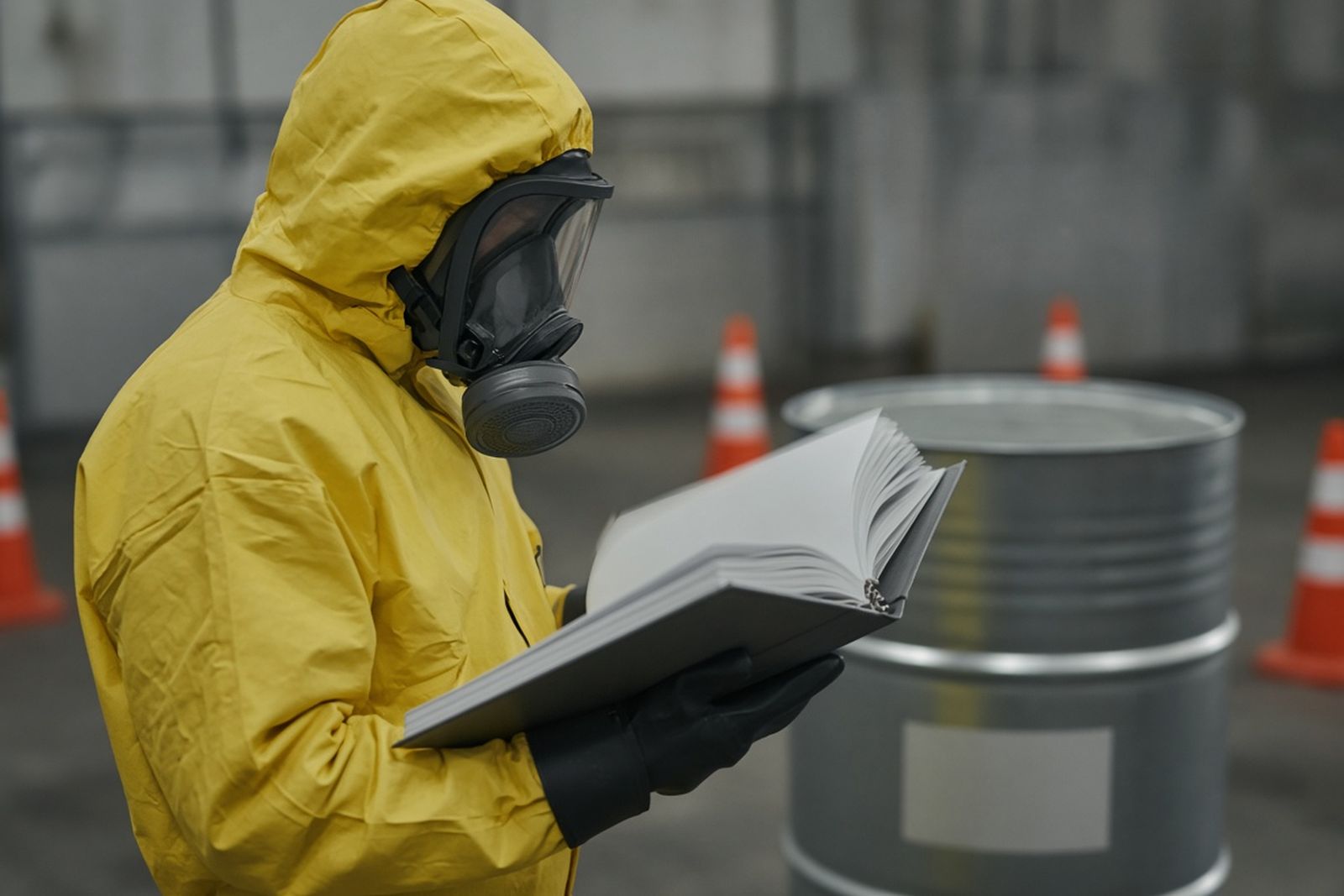
For each waste, write down what it is, how it was sorted and why. Also record the hauler, the disposal site and the shipping record number. Keep safety data sheets, lab results, profiles and letters or emails with the agency together.
That file answers questions later from inspectors, insurers and your own team. Rules vary by state and county; verify with the local authority.
Afterward, look back at what the spill taught you. Suppose the shop had kept a few matching drums and labels on hand, or had known which lab to call. Then the research would have gone faster. Add those lessons to your spill plan so the next cleanup starts further ahead.