Short answer
Hazmat spill response depends on role-specific training under OSHA's HAZWOPER standard, a qualified on-site supervisor, a respiratory protection program with fit testing, DOT hazmat training for anyone preparing waste for shipment, and records of monitoring, waste profiles, and manifests. Ask a contractor which training level each worker holds, who supervises, and what documentation you will receive, then verify what you can.
Why training is central
Spilled chemicals can burn skin, damage lungs, catch fire, or react with other materials. The same spill can be manageable for a trained crew and dangerous for an untrained one. That is why federal workplace rules tie the work to specific training rather than to general experience.
Training also shapes the outcome for your property. A trained team identifies the material, chooses compatible absorbents and protective equipment, keeps the spill away from drains and soil, and handles the waste in a way that will not come back to you later. Without that foundation, even a well-intentioned cleanup can widen the problem.
Unlike some trades, spill response usually does not have a single state license you can look up. What you can check is the training behind each worker, the safety programs the employer maintains, and the documentation the company produces.
Your own staff may need training as well. If employees are expected to handle small, known spills with a kit, or to take defensive steps before a contractor arrives, they may fall under emergency response training requirements. Ask a safety professional which level fits their duties, since the answer depends on what you expect them to do.
HAZWOPER and its levels
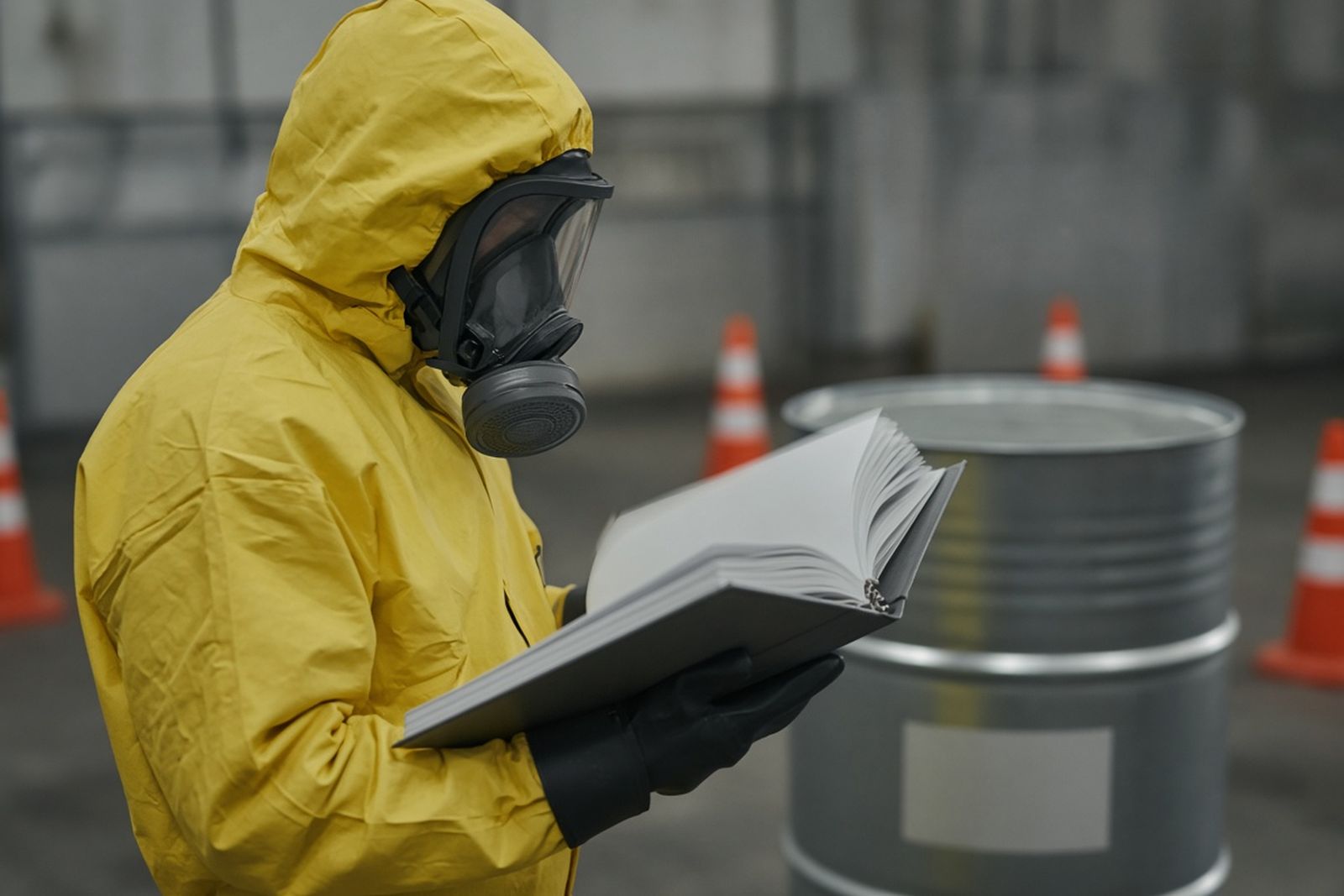
HAZWOPER stands for Hazardous Waste Operations and Emergency Response, the OSHA standard at 29 CFR 1910.120. It covers workers at hazardous waste cleanup sites and workers who respond to releases of hazardous substances. The required training depends on the worker's role and exposure.
Some roles need less classroom time than the full site-worker course. Workers with occasional or low-exposure site duties need at least 24 hours of HAZWOPER instruction plus one day of supervised field experience, according to OSHA's 2024 text of the standard.
Emergency response roles have their own tiers. OSHA's 2024 text says emergency responders at the first-responder operations level require at least 8 hours of training, and hazardous materials technicians at least 24 hours. Knowing these distinctions helps you ask a contractor which level applies to each person it sends, rather than accepting a general statement that the crew is trained.
- Site workers with regular exposure: full HAZWOPER course plus supervised field time
- Occasional or low-exposure site workers: shorter course plus one field day
- First responder operations level: defensive actions to contain a release
- Hazardous materials technician: hands-on work to stop or plug a release
- Annual refresher training to keep each level current
Why does the on-site supervisor's training matter?
Every spill response needs someone in charge who understands the hazards, sets the work zones, decides on protective equipment, and has authority to stop work if conditions change. That person's training is more demanding.
OSHA's 2024 text of 29 CFR 1910.120 states that on-site HAZWOPER supervisors need the 40-hour course, three days of field experience, and at least eight additional hours of specialized training. The additional hours focus on managing the site, including the safety and health program and air monitoring.
Ask each contractor who will supervise your job and what training that person holds. If the answer is that the crew works it out among themselves, you have learned something important. A named supervisor is also the person you should talk to about schedules, reentry, and changes in the plan.
Supporting safety programs and waste training
HAZWOPER training does not stand alone. A qualified spill contractor also maintains a written safety and health program, a site-specific plan for significant jobs, and several supporting programs.
Respiratory protection is one of the most important. Workers who wear respirators should be medically evaluated, fit tested for the specific model they wear, and trained in its use and limits. Hazard communication training helps workers read labels and safety data sheets. Medical surveillance tracks the health of workers exposed to certain chemicals.
You do not need to review these programs line by line. Asking whether they exist, and hearing a clear description, is usually enough to tell a professional operation from a company that bought equipment without the systems behind it.
Decontamination procedures belong on this list too. Workers leaving a spill zone should pass through a set process to remove contamination from their protective equipment and tools. A crew that walks straight from the spill to its truck, or into your break room, can carry residue into clean areas.
Spill cleanup produces contaminated absorbents, protective gear, soil, and recovered liquid. Depending on what spilled, some of that waste may be hazardous waste under federal and state rules, and some may be regulated as hazardous material when it is shipped.
People who characterize waste, prepare shipping papers, package containers, or load trucks need the right training for those tasks, including DOT hazmat training for transport functions. A contractor should be able to explain who on its team handles waste profiling and paperwork, or which licensed partner does.
Ask how the contractor determines whether waste is hazardous. Good answers mention the safety data sheet, knowledge of the process that generated the waste, and laboratory testing when needed. A contractor that assumes everything is nonhazardous without checking is guessing on your behalf.
What documentation proves the crew was qualified?
Records connect training to your specific job. A professional contractor should be willing to provide proof of current HAZWOPER training for the workers on site, often as training certificates or a roster maintained by the company.
The job file itself matters as much. Expect daily logs of who was on site, air monitoring results, photos of the spill area before and after, a list of materials and equipment used, waste profiles, and copies of manifests or shipping papers for anything that left the site. If agencies were notified, the file should note when and to whom.
Keep these records with your environmental files. They may be requested by an insurer, a landlord, a buyer, or a regulator, sometimes years after the spill.
- Training certificates or rosters for on-site workers
- Name and qualifications of the on-site supervisor
- Daily logs and air monitoring results
- Before-and-after photos of the affected area
- Waste profiles, manifests, and disposal confirmations
- Notes on any agency notifications
Trained work on the ground
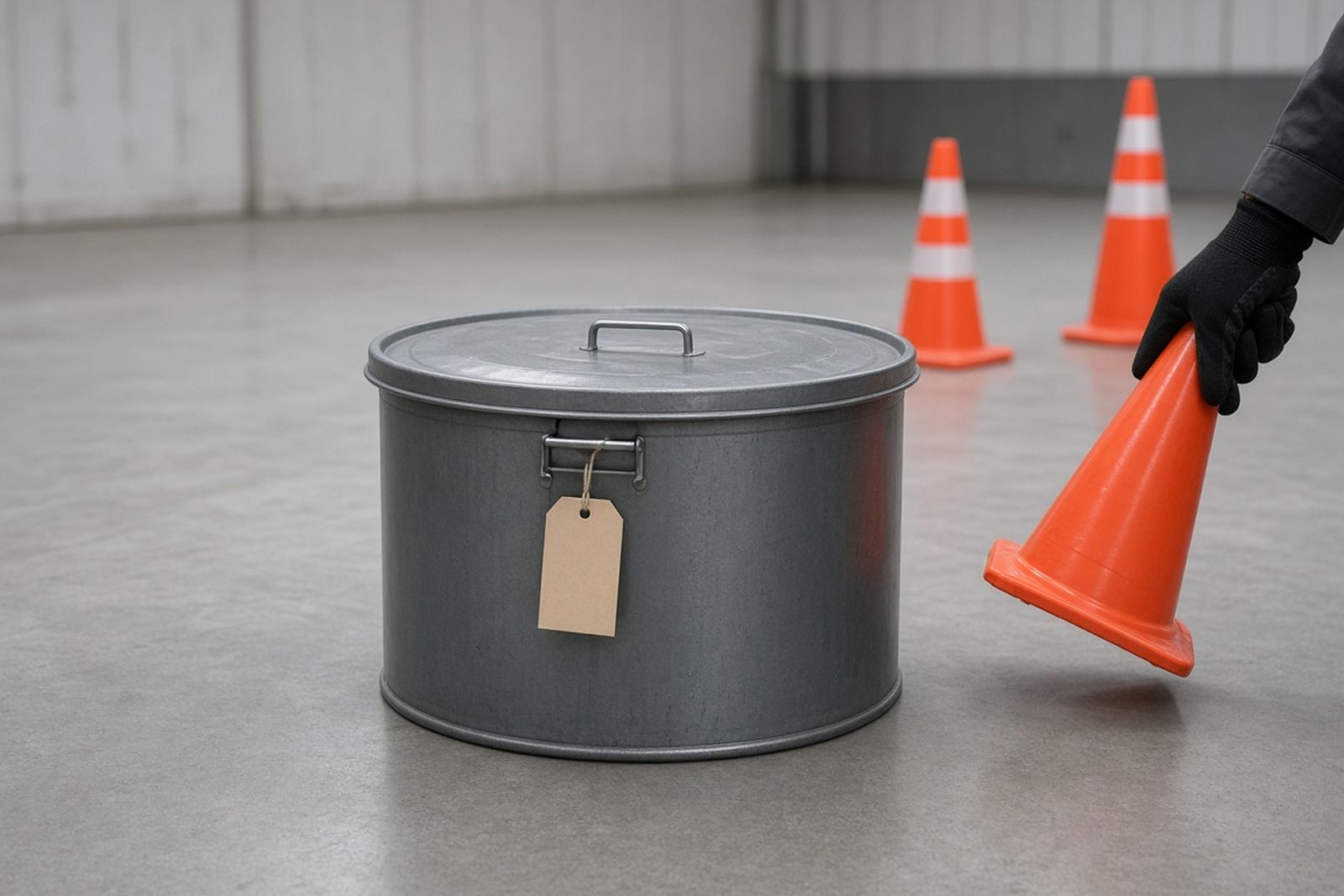
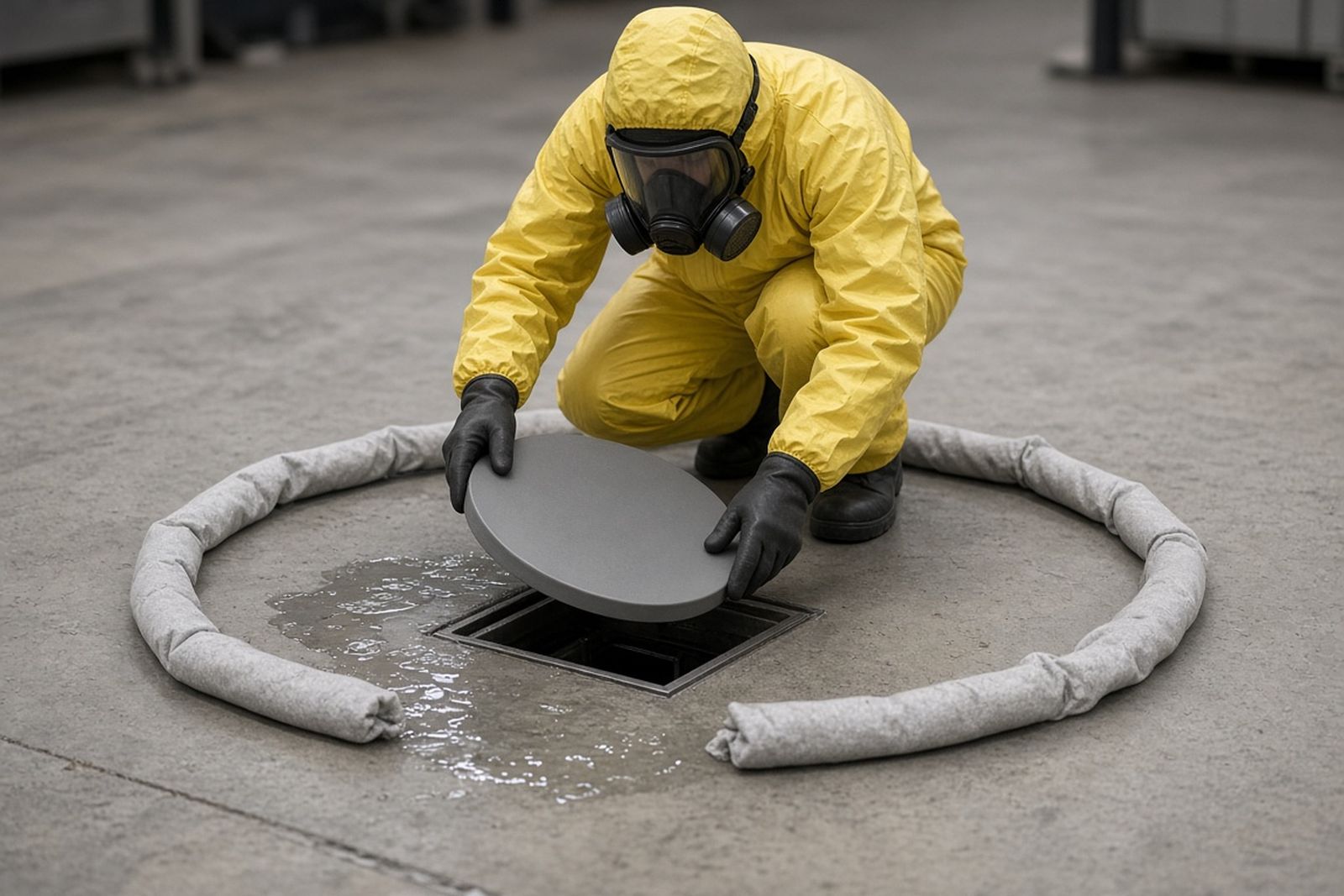
Training is easiest to recognize in the order of work. On a corrosive spill spreading toward a trench drain, for example, a trained supervisor confirms that no one is hurt, asks for the safety data sheet, and sets an exclusion zone before anyone approaches.
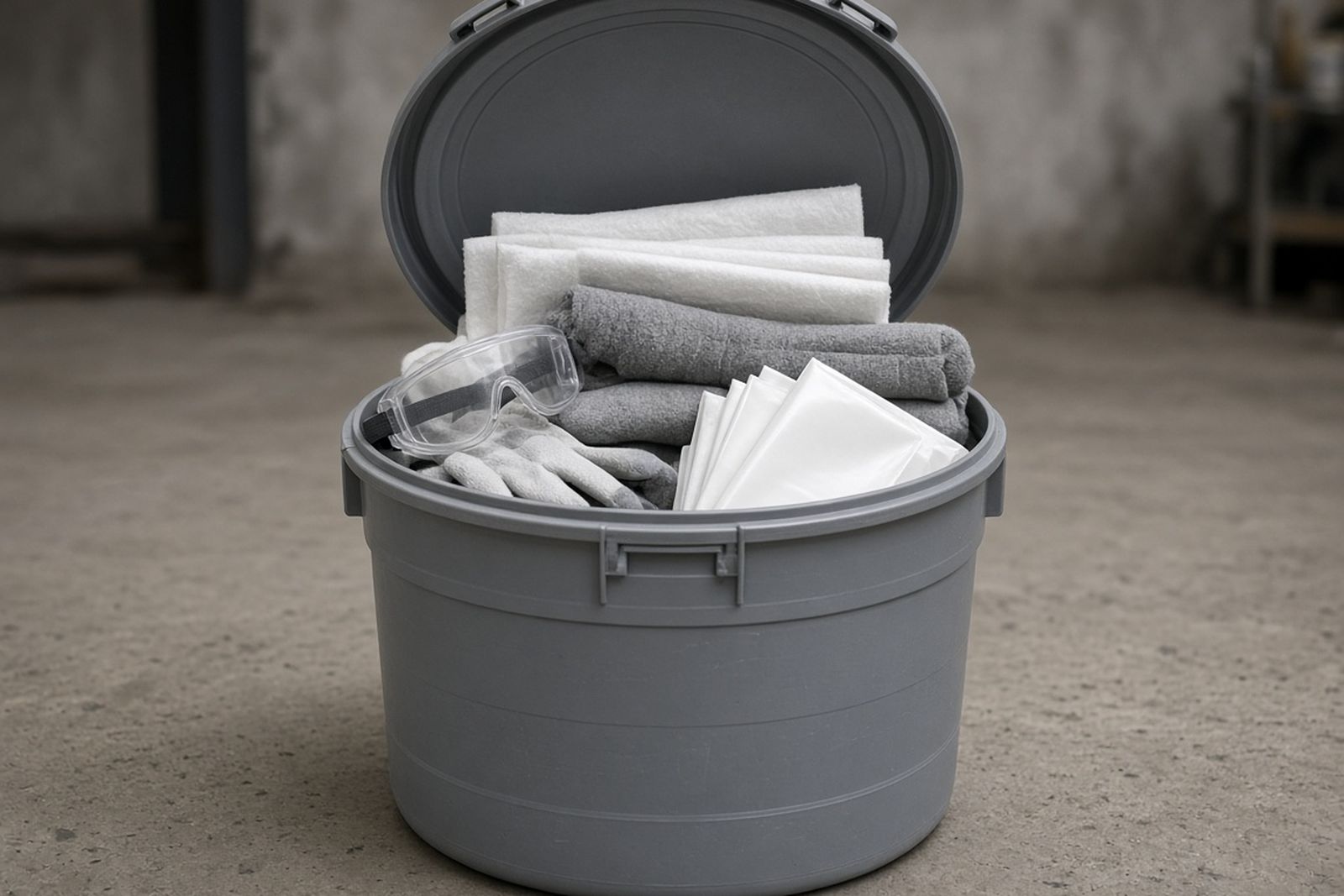
A technician checks the air before entry, and protective equipment is assigned to suit a corrosive rather than pulled from a shelf by habit. One technician places a drain cover while another begins containing the edge of the spill with a compatible absorbent.
Once the liquid is collected, the team neutralizes residue according to the product's guidance, rechecks the air, and packages the waste in labeled containers. The supervisor tells the site manager which records to expect, including the monitoring log and shipping papers, and flags whether any agency notification may apply. None of those steps should look improvised. Each one comes directly from training.
How can I verify a contractor's training before an emergency?
The best time to check is before you need help. Ask prospective contractors for a sample training roster, a description of their safety programs, and a certificate of insurance. Ask how often workers complete refresher training and how the company tracks it.
Ask for references from facilities similar to yours, whether that is a warehouse, a shop, a laboratory, or a property with fuel storage. A contractor experienced with your kinds of chemicals is more valuable than one with a general reputation.
Finally, ask how the contractor handles subcontractors such as vacuum truck operators or waste haulers, and whether they meet the same training standards. The whole response is only as strong as its least-trained participant.
Record what you learn in your emergency plan: the contractor's name, a 24-hour number, the training levels it confirmed, and the date you last checked. When a spill happens, anyone on your team can pick up the plan and call with confidence.
What to weigh when comparing contractors
Training is not paperwork for its own sake. It is how a crew knows which chemicals to keep apart, when to wear a respirator, and how to keep a spill out of the sewer. It is also how you end up with a job file that answers questions later.
When you compare contractors, weigh the training levels of the people who will actually show up, the qualifications of the supervisor, and the quality of the records alongside price and response time. A contractor that can explain all of this plainly is one you can rely on when a real spill happens.
If a contractor ever sends workers whose training does not match what was promised, it is reasonable to pause the job and ask for a qualified replacement. You are entitled to the crew you were told you would get.