Short answer
Hazmat spills can set off rules at every level. Federal law covers reporting hazardous substances and oil to the National Response Center. It also covers emergency notices to state and local planning groups, worker safety under OSHA and transport accidents under DOT. States often add their own reporting triggers, cleanup standards and permits. Local fire departments, emergency planners and sewer or storm drain offices have separate roles and notice rules.
One spill, many agencies
A chemical spill touches several concerns at once. These include people nearby, the workers responding, the air, the soil, the water and sometimes a highway or rail line. Each concern belongs to a different agency. Each agency has its own rules about when it wants to hear from you.
That is why a site manager can make one call to 911 and still miss several legal duties. The fire department handles the emergency itself, but it does not file your federal or state environmental reports. Your spill company can help. But in most cases, the duty to report sits with the site owner, operator or person in charge.
The best time to sort this out is before a spill. Once a spill is underway, deadlines can be short. The people you need to call may not be obvious.
It helps to split up the questions. Who needs to know right now so people are safe? Who needs to know within hours because a law requires notice? Who needs a written report later? And who decides when the cleanup is done? Different agencies answer each question. The answers depend on your chemicals and where you are.
Which federal environmental reporting rules can apply?
Several federal laws require notice of spills, and each has its own trigger. Many depend on whether a listed substance spilled above a set amount, called a reportable quantity, within a set time. Others depend on whether oil reached water. EPA publishes the substance list and amounts. Look up your own chemicals instead of relying on general advice.
Groups that look into chemical accidents have their own reporting rule. This comes from a summary of EPA and CSB enforcement. A 2025 Spencer Fane summary says facilities must report qualifying chemical accidents to the Chemical Safety Board within 8 hours, and PG&E paid a $45,273 penalty in 2025 for reporting late. That duty applies to spills that meet the board's standards, such as those causing serious injury or major property damage.
When in doubt, many environmental lawyers and consultants say to call instead of waiting. A report that turns out not to be needed is usually far less trouble than a missed one. The agencies that take these calls are used to notices that later prove minor.
- CERCLA: spills of listed hazardous substances at or above the reportable amount go to the National Response Center
- Clean Water Act: oil spills that reach water, often judged by a visible shiny film, are reported to the National Response Center
- EPCRA: some spills also require notice to the state emergency response commission and the local emergency planning committee
- Chemical Safety Board: qualifying chemical accidents are reported under its own rule
- RCRA: waste made during cleanup must be tested and handled as hazardous waste when it meets that definition
Federal safety and transport rules
OSHA's HAZWOPER rule covers workers who respond to or clean up spills. Its rules on chemical warnings and breathing protection usually apply as well. Those rules concern the workers, not the environmental report. But an OSHA inspection can follow a serious spill.
If the spill happens during shipping, DOT's hazardous materials rules require quick notice of some accidents and a written report. Carriers are in charge of those filings. Shippers and receivers may be asked for information.
Sites that store large amounts of certain very dangerous chemicals may also fall under EPA's Risk Management Program. EPA's 2024 final rule estimates that about 11,740 facilities hold current Risk Management Plans for handling extremely hazardous substances. Those sites must have programs to prevent accidents. They must plan their emergency response with local responders. Accidents must be recorded in their accident history.
What do states typically add?
States often go further than federal law. Many run their own spill hotlines. Many set reporting triggers lower than federal amounts. Some triggers cover substances the federal list does not, such as certain amounts of petroleum products. Some states require a report for any spill that reaches soil or groundwater.
States also usually set cleanup standards. After the emergency, a state environmental agency may decide how much testing is needed. It may decide what levels are safe in soil or water, and when a site can be closed. Waste made during cleanup must meet state hazardous or solid waste rules. These can be stricter than federal ones.
Where a state runs its own OSHA-approved plan, that state agency enforces worker safety instead of federal OSHA.
- State spill hotline and reporting triggers
- Deadlines for spoken and written reports
- Cleanup standards and steps for closing a site
- State hazardous waste and solid waste rules
- Permits for storage tanks or chemical handling
- State-run worker safety plans, where they exist
Fire departments and emergency planning committees
Local fire departments are usually the first government responders to a chemical spill. They take charge, decide whether people leave or stay inside, and call in special hazmat teams. Many enforce a fire code. It requires permits for storing hazardous materials above certain amounts. It also sets rules for storage rooms, spacing and spill containment.
Local emergency planning committees were set up under EPCRA. They bring together fire, police, public health, emergency management and industry to plan for chemical emergencies. Sites that store certain chemicals must report what they have to these committees and to the local fire department each year. This helps responders know what they may face.
Local permits and pre-incident visits
Build a relationship with both before you need them. A visit from the fire department before any spill can reveal access problems, missing labels or storage issues long before a real spill.
Local agencies may also hold you to terms in permits or plan approvals. Examples include a backup wall or tray around tanks, or rules against storing chemicals that react with each other side by side. Breaking those terms can come to light during a spill investigation.
Sewer and stormwater authorities
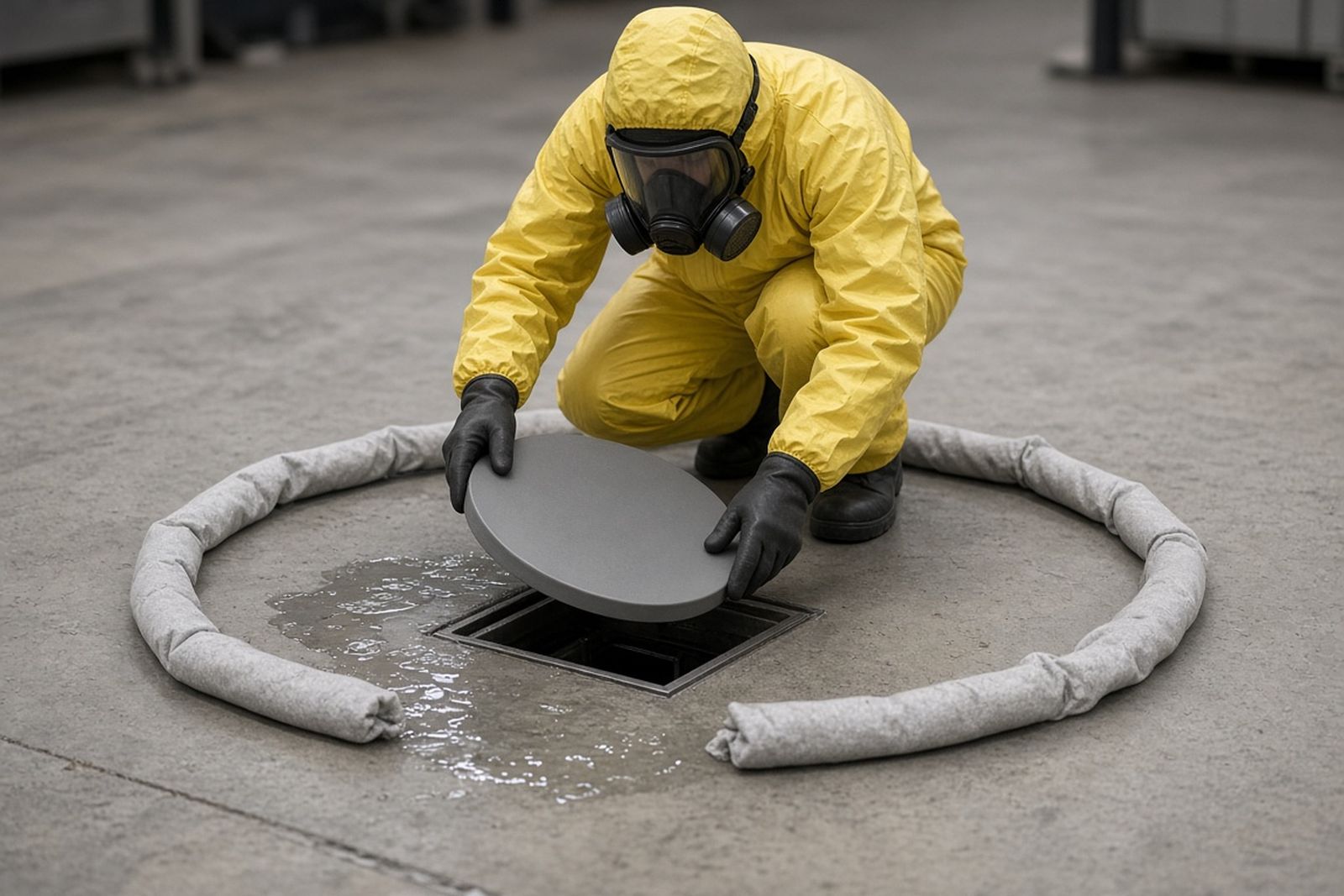
If a spill reaches a floor drain, it may be heading to a sewer system and a wastewater treatment plant. Many local sewer offices require quick notice of any spill that could harm the plant, its workers or its treatment process. Some industrial users hold permits that spell out exactly who to call.
Storm drains are different. They often lead straight to streams, lakes or ditches without treatment. City storm drain programs may require notice of illegal discharges. State or federal water rules may also apply if the material reaches surface water.
Know where your drains lead. A site map that marks floor drains, storm drains and outlets saves time. It helps responders stop a spill before it spreads.
Who is actually in charge at the scene?
Emergency responses in the United States usually use an incident command system. The first agency to arrive, often the fire department, takes command. As more agencies arrive, they may form a unified command. In that setup, people from each agency agree on goals together.
For the site, the key is to provide someone who knows the site to work with incident command. That person should bring safety data sheets and site maps and follow instructions. Your spill company should also report to incident command instead of working on its own.
Keep a record of who arrived, when and what each agency asked you to do. Those notes help later when you prepare written reports, answer questions from regulators or work through an insurance claim. They also lower the chance of clashing stories about the response.
How the layers stack up on one incident
To see the layers together, follow a made-up example. A tanker truck rolls over on a state highway just outside a small town. It spills diesel fuel into a roadside ditch that drains to a creek. The county fire department arrives first and takes command, while state police close the road.
The carrier reports the spill under its DOT duties. Diesel reached the creek and a shiny film is visible. So the carrier's spill company reminds the dispatcher that a report to the National Response Center is likely needed. The state environmental agency gets a call through the state spill hotline and sends a coordinator to the scene.
Downstream, the town's water utility checks whether its water intake could be affected. The county emergency manager keeps the local planning committee up to date. Once the emergency ends, the state agency oversees testing and digging along the ditch. The waste is shipped under state and federal rules.
No single agency ran the whole response. Each had its own trigger, report and role. The carrier's planning ahead helped it reach all of them quickly.
How can you map the rules that apply to your site?
Make a one-page reporting guide for your site. List your chemicals, the federal and state reporting triggers for each, the phone numbers to call and the deadlines. Include local contacts for the fire department, emergency planning committee, sewer office and storm drain program.
Review the guide each year with your spill company and after any change in chemicals or processes. Rules vary by state and county; verify with the local authority.
- Chemicals on site and their reportable amounts
- National Response Center and state spill hotline numbers
- Local emergency planning committee and fire department contacts
- Notice rules for the sewer and storm drain offices
- Who in your company makes each call
- Deadlines for written follow-up reports