Short answer
Environmentally responsible spill response keeps the release small: block drains and waterways first, recover material instead of washing it away, match absorbents and neutralizers to the chemical, avoid creating extra waste, profile what is collected so it reaches the right facility, and verify nearby soil and water. Speed and planning protect the environment more than any product.
Where a spill goes next
When people think about a chemical spill, they picture the puddle on the floor or the road. The bigger long-term concern is often where that liquid goes next. A few gallons of solvent that reach a storm drain can travel to a creek within minutes. Fuel that soaks into gravel can reach groundwater over weeks. Vapors drift beyond the property line.
Environmental damage is also harder and more expensive to undo than a stained floor. Digging out contaminated soil, treating groundwater, or restoring a stream bank can take far longer than the original cleanup. That is why the first environmental decision in any spill is containment, and it has to happen fast.
Industrial releases have been trending downward in the aggregate. EPA's 2023 Toxics Release Inventory National Analysis reports that chemical releases in 2023 were 21 percent lower than in 2014, with air emissions down 32 percent. Accidental spills are a separate problem from those permitted releases, and each one still needs to be managed well.
Protecting drains and waterways in the first minutes
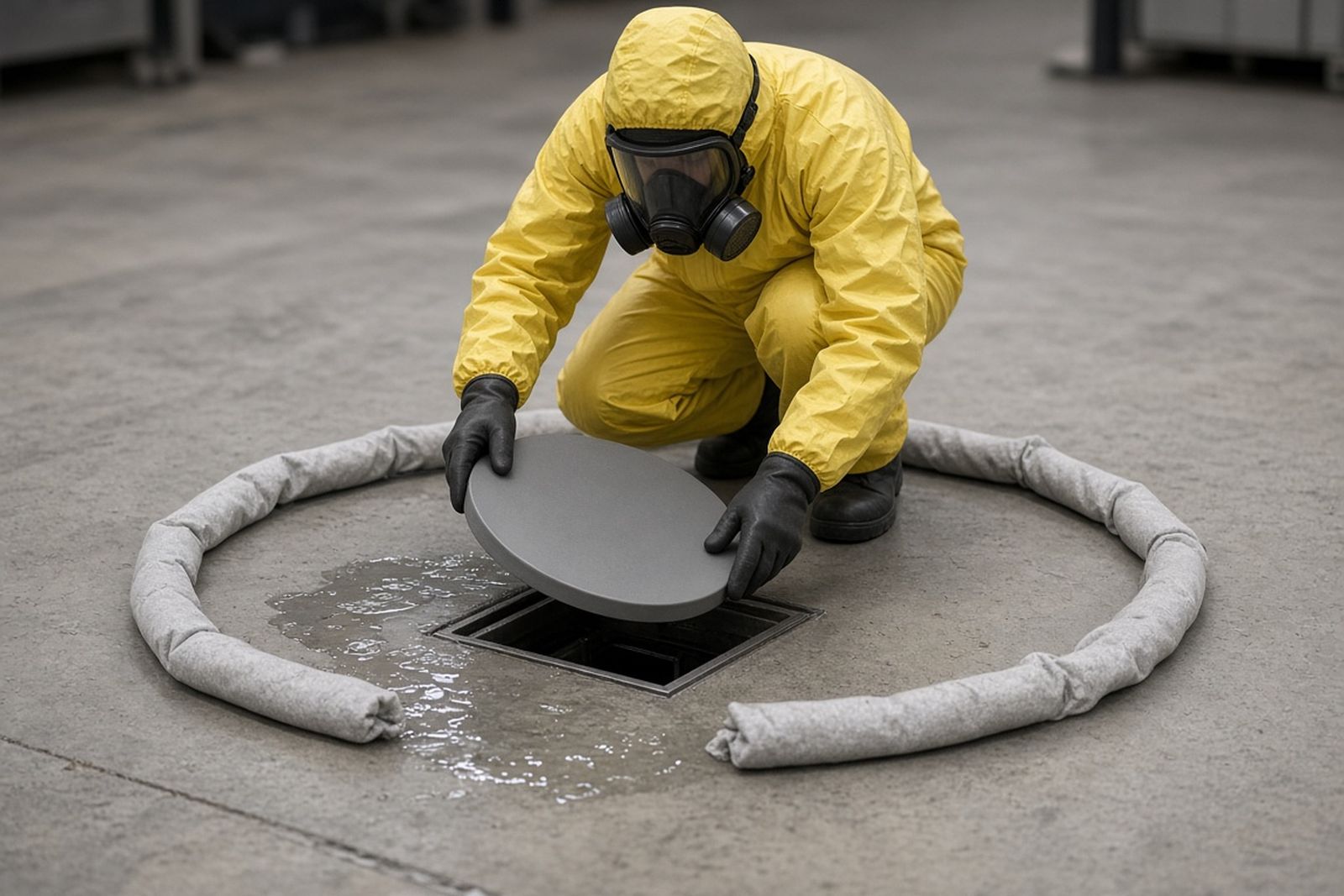
If it is safe to do so and the people on site are trained, the priority after protecting people is to stop the spill from reaching drains, ditches, and open water. Drain covers, absorbent booms, sandbags, or a simple berm of absorbent material can hold a spill in place until responders arrive.
Untrained bystanders should not approach a spill to do this. Their job is to leave, call 911, and tell responders where drains and water are located. Facilities that store chemicals should mark storm drains on their site maps and keep drain covers near loading areas.
Never hose a spill toward a drain to make it disappear. Water spreads most chemicals, increases the volume of contaminated liquid, and moves the problem to a place where it is much harder to recover.
- Identify storm drains, floor drains, and sumps near chemical storage
- Keep drain covers and absorbent booms where spills are most likely
- Know where your property drains after heavy rain
- Post the spill hotline and 911 instructions beside spill kits
Recovery, neutralization, and "green" products
Recovery is usually the cleaner option when it is possible. Pumping free liquid into a proper container, or skimming fuel off water, removes the material rather than transforming it on site. Recovered product can sometimes be recycled or reused, which reduces waste.
Neutralization has its place, especially for acids and caustics, where bringing pH toward neutral makes the residue safer to handle. But it must be done with a product matched to the chemistry, in the right amount, with monitoring. Adding the wrong neutralizer can generate heat, gas, or new hazards, and over-applying creates more waste.
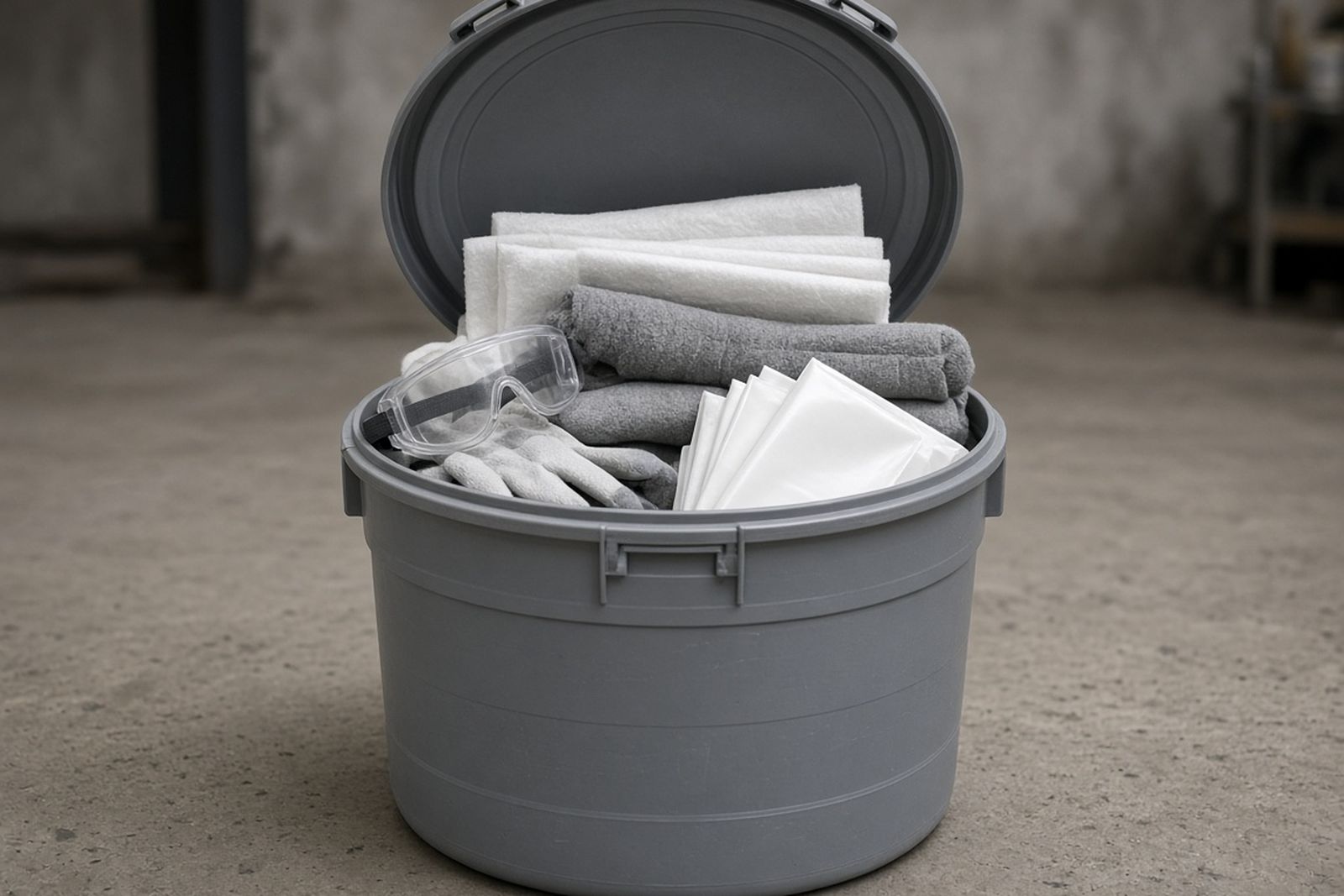
Absorbents are the workhorse for smaller spills. Choosing an absorbent compatible with the chemical, using only what is needed, and keeping saturated absorbent separate from clean material all reduce the volume that has to be disposed of.
Products marketed as green, plant-based, or biodegradable can be useful, but the label alone does not make them the right choice for a given spill. The first question is always compatibility with the chemical. An absorbent that works well on motor oil may be a poor match for a strong oxidizer, and some organic absorbents can react with certain chemicals.
The second question is what happens after use. A biodegradable absorbent saturated with solvent is still solvent-contaminated waste. It will not break down harmlessly in a landfill, and it may need the same disposal as any other contaminated material. The environmental benefit, if any, comes from the product's manufacture or from using less of it, not from its fate after a spill.
Some products claim to digest or break down petroleum in place. Those can have a role in specific, approved situations, but they are not a substitute for recovering free product and should not be applied to soil or water without the relevant agency's knowledge.
The most reliable green practice is using the smallest effective amount of a compatible product and keeping contaminated material separate from clean material. That approach reduces waste regardless of what the packaging says.
How waste handling affects the environmental outcome
Every spill creates waste: recovered liquid, used absorbents, contaminated soil, protective equipment, and removed building materials. Where that waste ends up determines whether the environmental harm stops at your property or continues somewhere else.
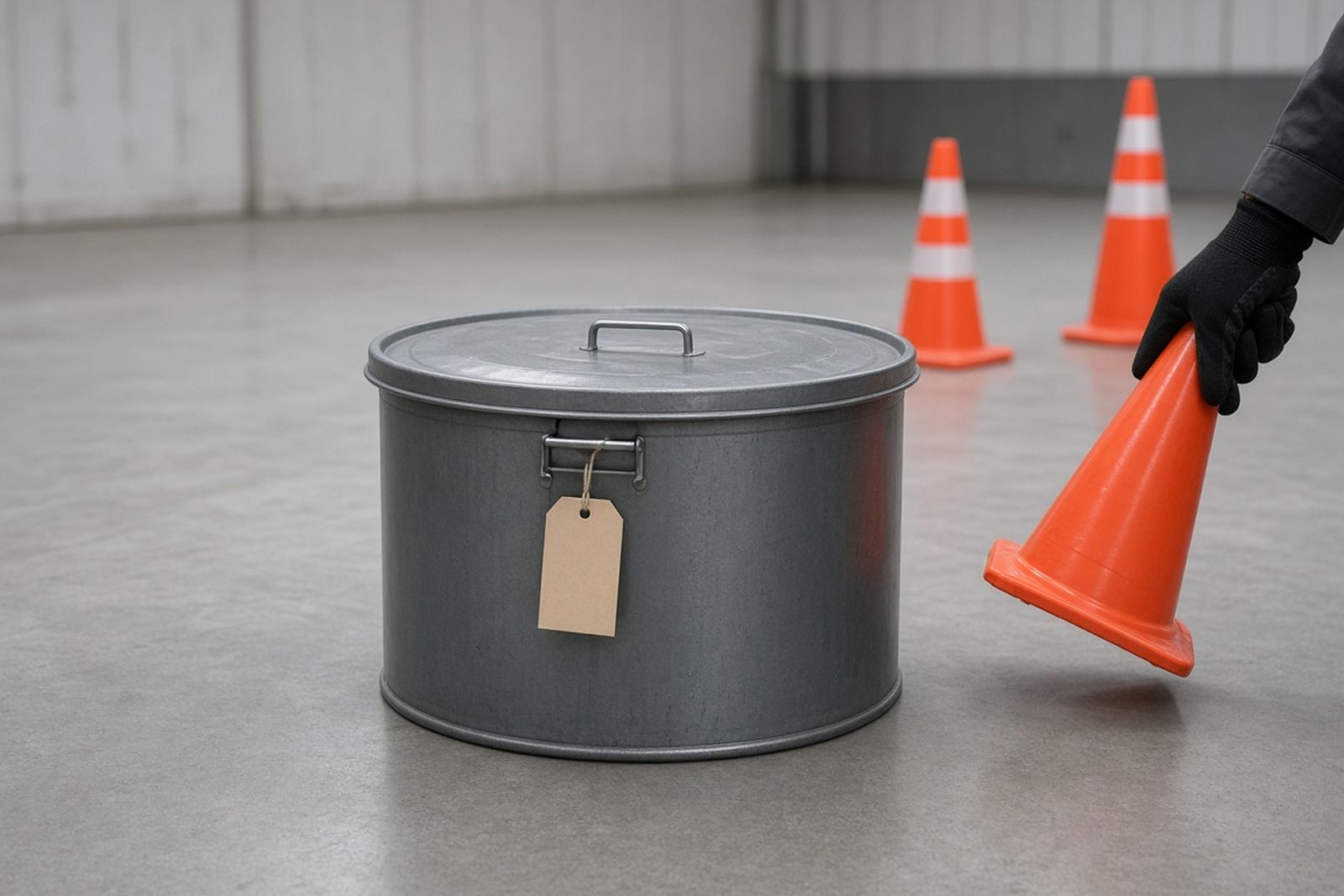
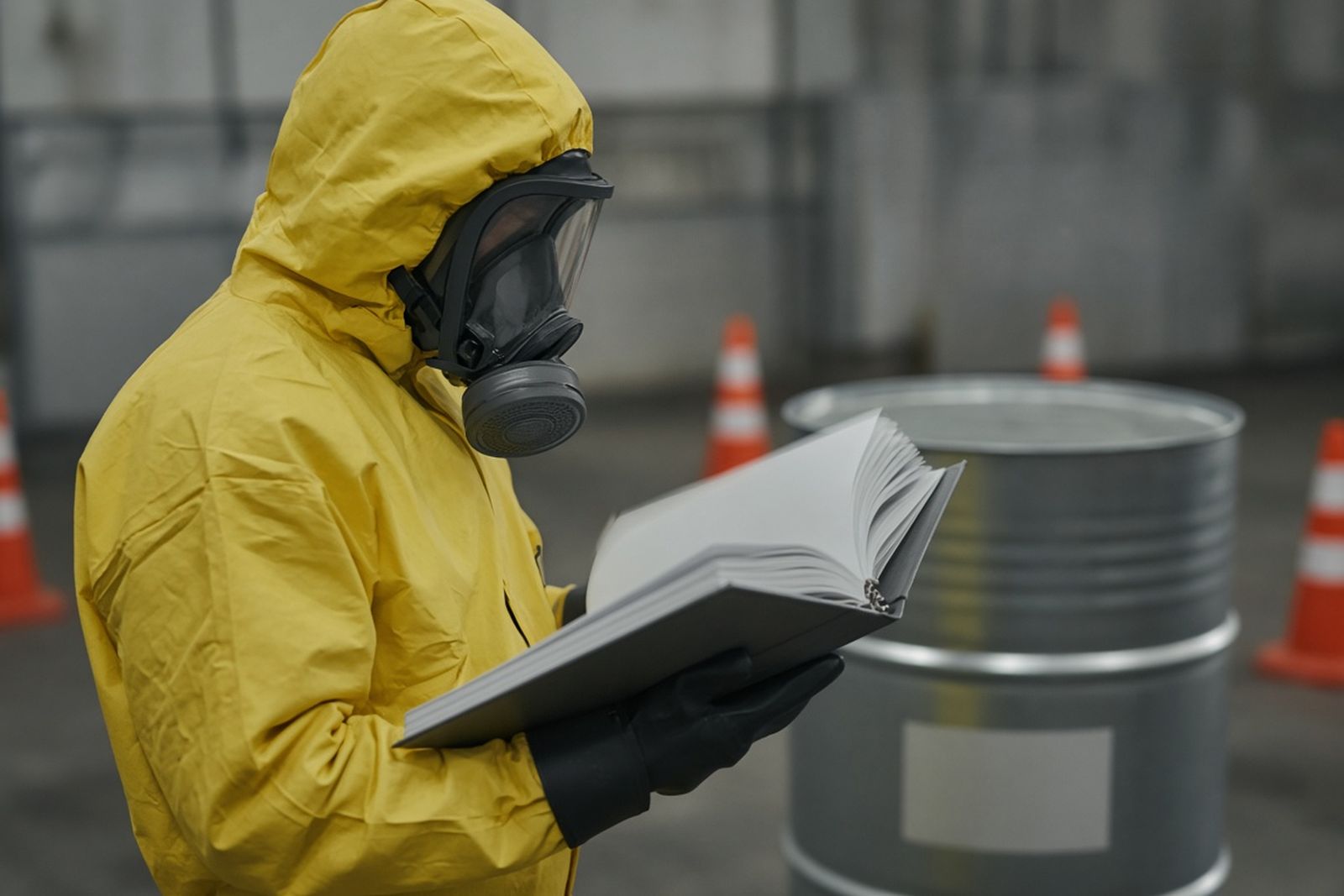
Responsible contractors keep waste streams separate so each can go to the right facility. They characterize the waste, often with sampling, so the disposal facility knows what it is receiving. They use licensed transporters and permitted facilities and give you the shipping papers and disposal records.
Watch for shortcuts, such as mixing contaminated debris with ordinary trash, leaving drums on site indefinitely, or dumping rinse water into a sanitary sewer without permission. Those shortcuts shift harm to landfills, treatment plants, and neighbors.
When a spill reaches soil or water
Once a chemical enters soil, surface water, or groundwater, the response usually expands. State environmental agencies may become involved, and cleanup can follow a formal program with sampling plans and cleanup targets. Environmental consultants often design and oversee that work.
Large incidents can grow into community-wide soil, surface water, and air monitoring, but the principle is the same for a small release. If there is any sign that a release reached soil or water, report it as required and bring in qualified environmental help rather than trying to manage it as a surface cleanup.
How can I tell if a contractor takes environmental protection seriously?
Ask about the steps above. A contractor who puts drain protection and containment first, prefers recovery over washing, matches products to chemistry, and can explain its waste path from your property to a permitted facility is demonstrating environmental competence.
Ask how it verifies that nearby soil or drains are clean, and who sets the target. Ask what it does with recovered product and used absorbents. Ask whether its crews carry drain covers and booms on every truck. The answers should be specific, not general promises of being green.
Environmental responsibility also shows in paperwork. A closeout package with waste manifests, disposal receipts, and any sampling results is evidence that material went where it should.
A responsible response, start to finish
The following example is invented to show the sequence. A delivery truck's saddle tank is punctured by a curb in the parking lot of a suburban office park. Diesel begins flowing across the asphalt toward a storm drain that empties into a small retention pond and then a creek.
The building's facilities technician, who has been trained under the site's spill plan, calls 911, grabs a drain cover and absorbent boom from the loading dock, and places them on the drain and downslope edge of the flow from a safe position. The fire department arrives, stops the leak, and confirms the site is stable.
The cleanup contractor recovers pooled fuel with absorbent pads and a small pump into a drum, rather than spreading granules across the whole lot. It checks the drain inlet and pond outfall for sheen and finds a thin film at the inlet, which it removes with sorbent pads. The property manager, advised by the contractor, notifies the state spill hotline, and the trucking company's carrier makes its own report.
The drummed fuel, used pads, and a small amount of stained asphalt go to a permitted facility with manifests. A follow-up check of the pond the next day shows no sheen. The quick drain cover did more to protect the creek than anything that happened afterward.
Preventing the next spill
Prevention is the most environmentally responsible step of all. Store chemicals in original, labeled containers, away from drains and in secondary containment where possible. Inspect tanks, lines, and fittings for corrosion. Keep incompatible chemicals apart. Buy only what you need, so there is less to spill.
Businesses should review their spill plans after any incident, restock supplies, and retrain staff. Homeowners with heating oil tanks should have them inspected, and anyone with a pool should store sanitizers and acids separately and dry.
Finally, dispose of unwanted chemicals through household hazardous waste programs or licensed vendors rather than letting old containers corrode in a shed. A container that never leaks never needs a response.