Short answer
Microbial and enzyme products fit a narrow set of hazmat spills, mostly petroleum hydrocarbons such as fuel, motor oil, and hydraulic fluid, after free product has been recovered. They can help break down residual films on pavement or, under agency oversight, in soil. They do not work on acids, caustics, heavy metals, or many industrial chemicals, and they never replace containment, recovery, or proper disposal.
What bioremediation means in a spill context
Bioremediation uses living organisms, usually bacteria or fungi, to break down contaminants into less harmful substances such as carbon dioxide and water. Many microbes naturally consume petroleum hydrocarbons, and products sold for spill cleanup either contain selected microbes or nutrients that encourage native microbes to grow.
Enzyme products are related but different. They contain proteins that speed up specific chemical reactions. In spill work, they are mostly used in cleaners that help lift oily residue from surfaces rather than to digest contaminants in place.
Both approaches have a real place in environmental work. The key word is fit: they work on some contaminants, in some settings, over some time frames, and not on others.
Much of the confusion comes from marketing. Products sold to consumers for driveway oil stains, commercial products for industrial floors, and engineered soil treatments designed by consultants all fall under the same broad label, yet they differ enormously in how they are used and what they can achieve. Knowing which category a proposal belongs to is the first step in judging it.
Good candidates and poor ones
Petroleum hydrocarbons are the classic candidates. Gasoline, diesel, heating oil, motor oil, and hydraulic fluid are made of compounds that many microbes can use as food. After the bulk of a spill has been recovered, microbial products may help break down the thin film or stain that remains on concrete, asphalt, or gravel.
In soil, bioremediation of petroleum can be effective when conditions support microbial growth: enough oxygen, moisture, nutrients, and a suitable temperature. Environmental consultants sometimes design treatment areas or add nutrients and air to speed the process, usually under a plan reviewed by the state environmental agency.
Some other organic substances, including certain food oils and biodegradable industrial fluids, may also respond. The decision should always start with the specific chemical and its safety data sheet.
Many hazardous materials cannot be broken down by microbes in any practical way. Acids and caustics need neutralization, not digestion. Heavy metals such as lead and mercury are elements and cannot be degraded at all; they must be removed. Strong oxidizers, pesticides, and many industrial solvents are toxic to the microbes themselves or break down too slowly to matter in a cleanup.
Some chlorinated solvents can be treated biologically in groundwater, but that work involves specialized designs, long timelines, and close regulatory oversight. It is not something a spill product from a bottle can accomplish.
If a contractor proposes a microbial product for a spill that does not involve petroleum or another clearly biodegradable substance, ask for the scientific basis in writing.
- Residual fuel or oil films on pavement after recovery
- Hydraulic fluid stains on gravel or asphalt
- Petroleum-affected soil under an approved remediation plan
- Some vegetable oils and biodegradable fluids
Why must recovery come first?
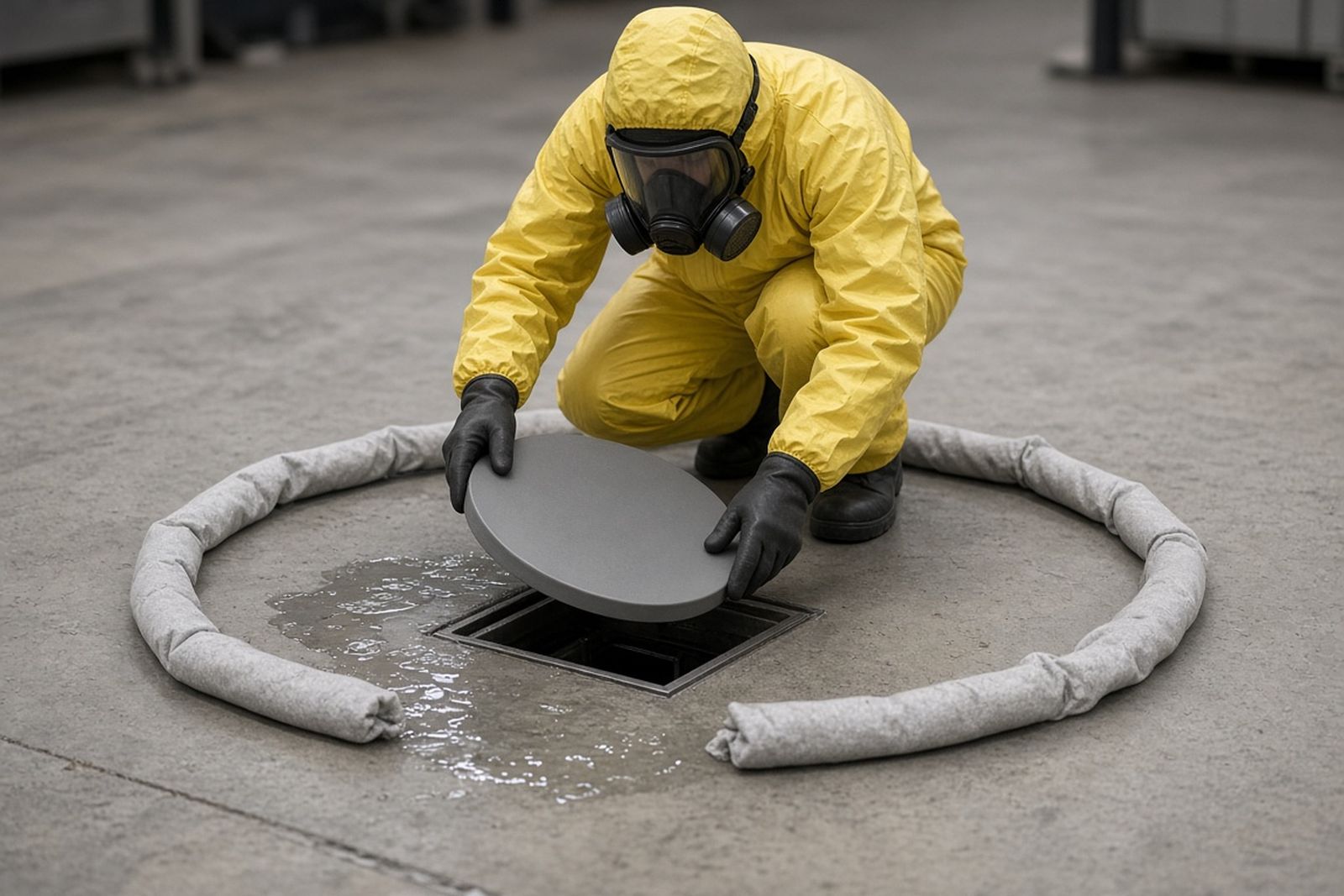
Microbes work slowly, over days, weeks, or longer. A spill that is still spreading, producing vapors, or pooling near a drain needs immediate containment and recovery. Spraying a microbial product on free liquid does not stop it from flowing to a storm drain or evaporating into a building.
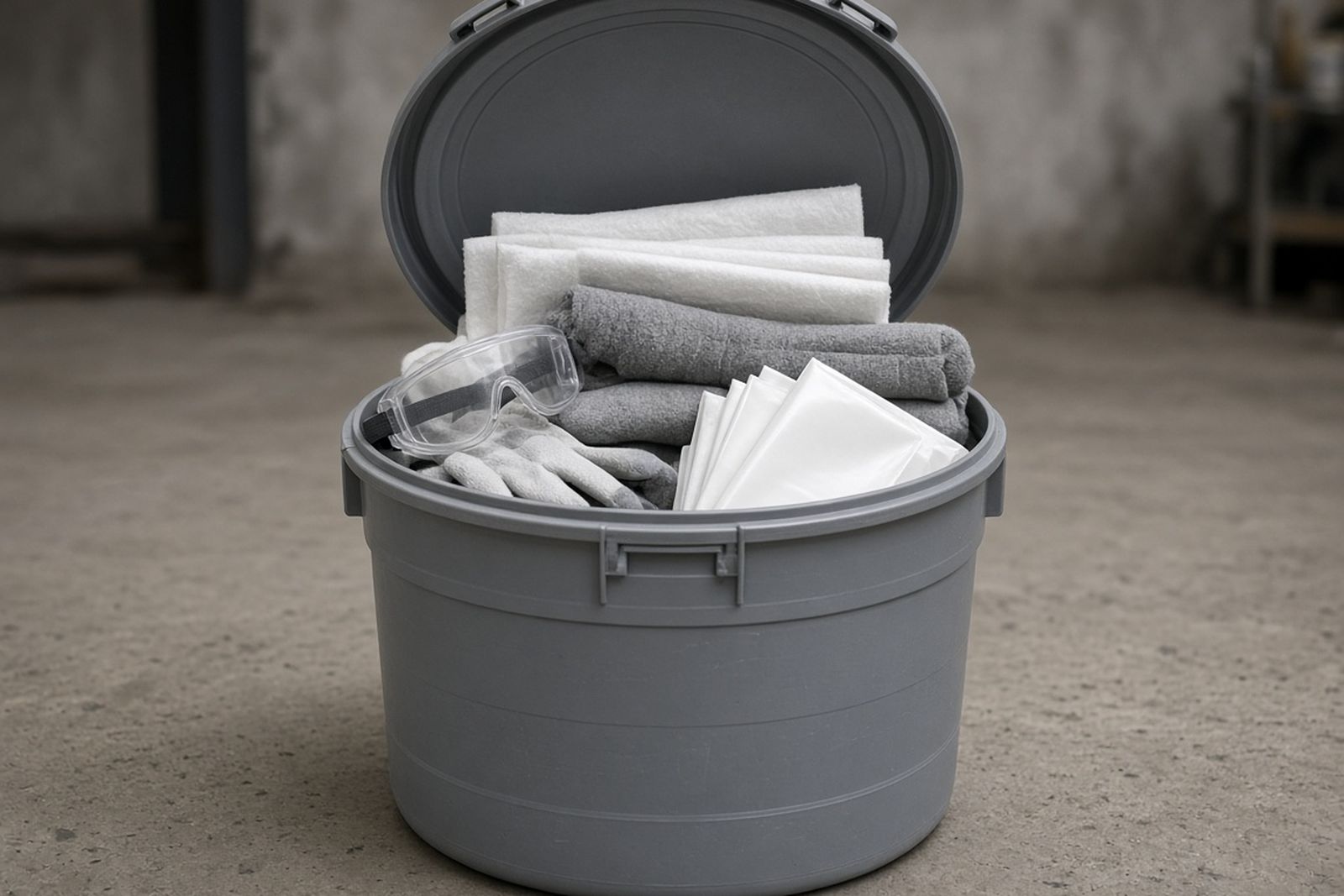
Recovery removes most of the contaminant quickly and reduces the amount left for any biological process to handle. Absorbents, pumps, and removal of saturated materials are the first tools. Bioremediation, if used, addresses the residue.
There is also a waste question. Saturated absorbents, soaked gravel, and removed materials still need to go to a permitted facility with the right paperwork. Treating a spill biologically on site does not make those recovered materials disappear, and a plan that skips their disposal is incomplete. Budget and schedule for both the recovery waste and any follow-up treatment.
Using a microbial product in place of recovery can also create a regulatory problem. Applying treatments to a spill that reached soil or water may require notice to, or approval from, the relevant agency, and your state environmental agency can tell you which applies before anything is sprayed.
Soil and water are a different step
Applying any product to soil, a waterway, or groundwater is a bigger step than cleaning pavement. Environmental agencies usually want to know what was released, how much, where it went, and what is being done about it. In many cases, a consultant designs the approach and samples to track progress.
For releases to navigable waters, federal response planning includes a product schedule that lists certain bioremediation agents, and use of such products is generally controlled by the responding authorities rather than chosen by a property owner or contractor on its own.
Workers involved in remediation at contaminated sites typically need hazardous waste operations training. Ask whether the crew proposing soil work has that background.
Indoor spills and lingering odor
Indoor spills raise a different set of questions. A fuel or oil spill in a garage, basement, or shop leaves residue on concrete, and people want the stain and smell gone. Some contractors use enzyme-based degreasers or microbial cleaners on sealed concrete after recovery, and these can help lift or break down the last traces of oil.
Porous materials are another story. Drywall, carpet, wood framing, and insulation that absorbed petroleum are usually removed rather than treated in place, because product cannot reach everything inside them and odor tends to return. A microbial spray on a soaked subfloor is unlikely to solve the problem.
Odor deserves care. A petroleum smell that persists after cleaning often means residue remains somewhere, such as in a slab crack, under a baseboard, or in a floor drain trap. Finding and removing that source works better than masking the smell or hoping microbes will reach it.
Indoors, ventilation and vapor monitoring matter as much as any product. Ask the contractor how it will confirm that vapor levels are acceptable before people spend extended time in the space again. Microbial products also need time, moisture, and warmth to work, so a cold, dry basement in winter may see little benefit from them.
A gravel yard, start to finish
An illustrative job shows the sequence. At a landscaping company's equipment yard with a gravel surface, a hydraulic hose on a skid steer fails and releases fluid onto the gravel. By morning there is a dark stain several feet across and a faint oily sheen in a puddle near the yard's edge.
The owner calls a spill contractor. The crew first checks whether the fluid has reached a drainage ditch at the property line. It has not, but the crew places an absorbent boom along the ditch as a precaution. Next, it removes the most heavily saturated gravel with shovels, drums it for disposal, and uses absorbent pads on the puddle.
With free product recovered, the crew discusses the remaining lightly stained gravel with the owner. Because the fluid is petroleum-based and the stain is shallow, the contractor proposes a microbial treatment on the remaining area, with periodic visual checks and a plan to remove more gravel if the stain persists. The owner's state environmental agency is informed of the release as the contractor advises, and the approach is noted in the report.
Over the following weeks, the stain fades. The drummed gravel and pads go to a permitted facility with a manifest. The microbial product handled only what recovery left behind.
Questions to ask, and the bottom line
A good contractor will welcome these questions and answer them in plain language. If the answers are vague, or the product is presented as a cure for everything, look elsewhere.
Keep the product's safety data sheet and instructions with your spill file, along with notes about where and when it was applied and how results were checked.
Bioremediation is a legitimate tool with a specific job: breaking down petroleum and some other organic residues after the main spill has been contained and recovered. It works slowly, depends on conditions, and has little to offer for acids, metals, and many industrial chemicals.
Treat it as a finishing step on the right kind of spill, used with the agency's knowledge where soil or water is involved. Containment, recovery, correct disposal, and verification remain the core of every spill response.
- Is the spilled material actually biodegradable by this product?
- Has free product already been recovered?
- Where will the product be applied, and could it reach a drain or waterway?
- Does applying it require agency notice or approval here?
- How will you measure whether it worked, and what happens if it does not?
- What waste will still need disposal?