Hazmat Spill Response: Industry Insights
Operational analysis of hazmat spill response documentation, property-type differences, technology limits, environmental decisions, and provider business models—without invented case histories.
Industry posts look at how hazmat response has changed and where it is heading. Articles cover new testing and detection tools. They cover growing attention to battery and alternative fuel incidents. They also cover caring for the environment when handling waste and recycling recovered product. You will also find views for property managers and comparisons of business and home spills. Planning examples show how a scope that holds up is built from site conditions, not guesswork. Posts also look at how contractors are changing their records as clients, lenders, and insurers ask for clearer proof that a site was restored.
Get an email reply about hazmat spill response
Send a short message to the follow-up inbox. A coordinator can reply by email. This form does not send emergency help; call 911 first if anyone is in danger.
Knowing where the field is heading helps you plan ahead. New materials on your site, changing insurance expectations, and changes in how agencies oversee cleanups can all affect your emergency plan. These posts help managers see those changes coming and update drills and spill kits. They also help you hold contractors to today's standards, not habits formed years ago. These articles also share lessons that sites in different fields have learned. Examples run from shipping hubs that handle diesel to labs that handle small amounts of many chemicals. Borrowing those lessons can make your own planning stronger. You do not have to wait for an incident to show the gaps in your plan.
How Hazmat Spill Response Practice Has Changed
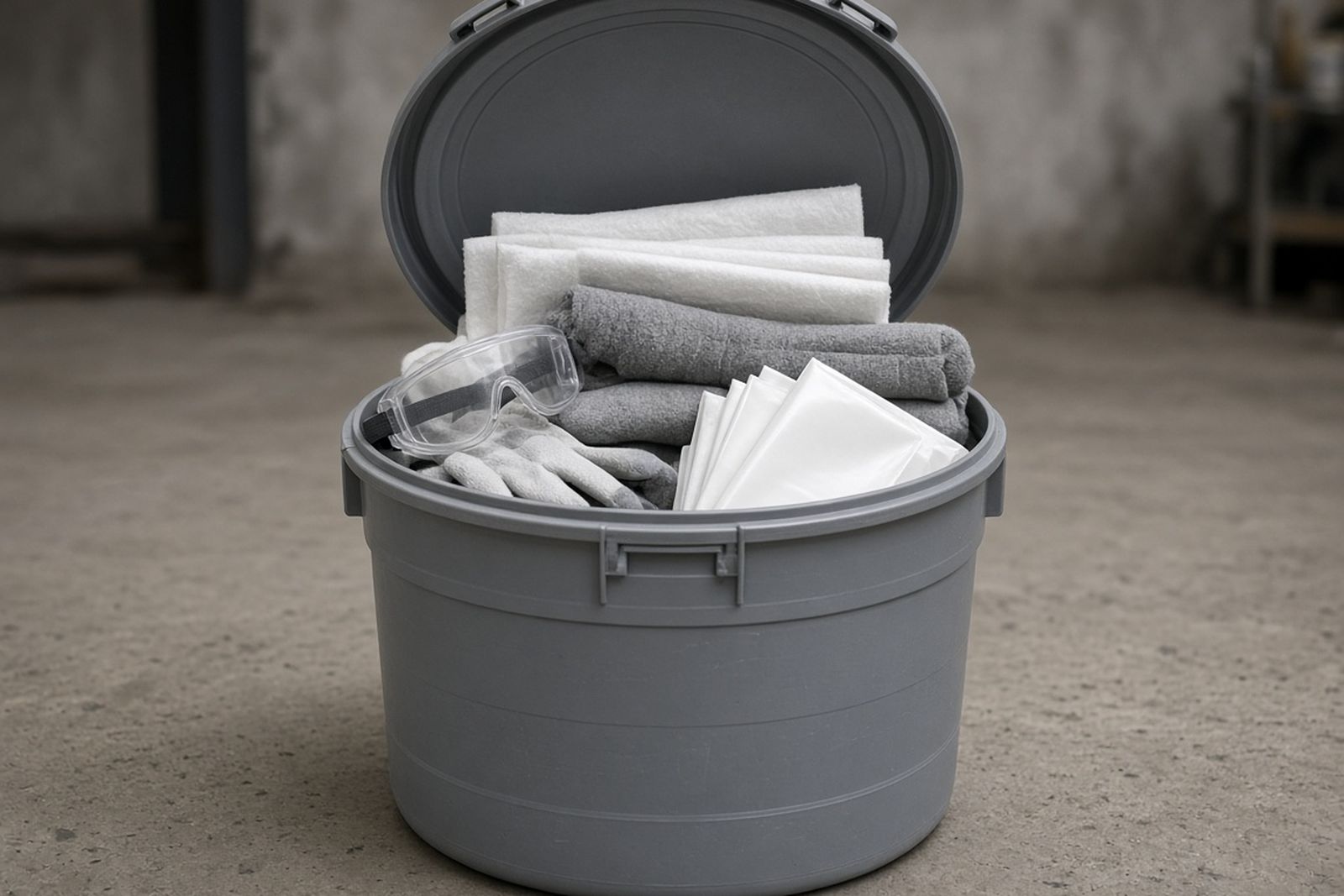
Spill response grew from firefighters with hoses into a trained field with HAZWOPER, incident command, air testing and waste tracking. Here is the story.
Hazmat spill response started with makeshift firefighting and washing chemicals down drains. It grew into a planned, skilled field. Federal cleanup and worker safety laws created HAZWOPER training based on each worker's role. Right-to-know rules gave communities facts about the chemicals near them. Incident command brought order when many agencies responded at once. Better air testing and protective gear made it safer to identify and contain spills. Today the focus is on identifying, containing and writing things down, not just watering spills down.
Hazmat Spill Response for Property Managers: What You Need to Know
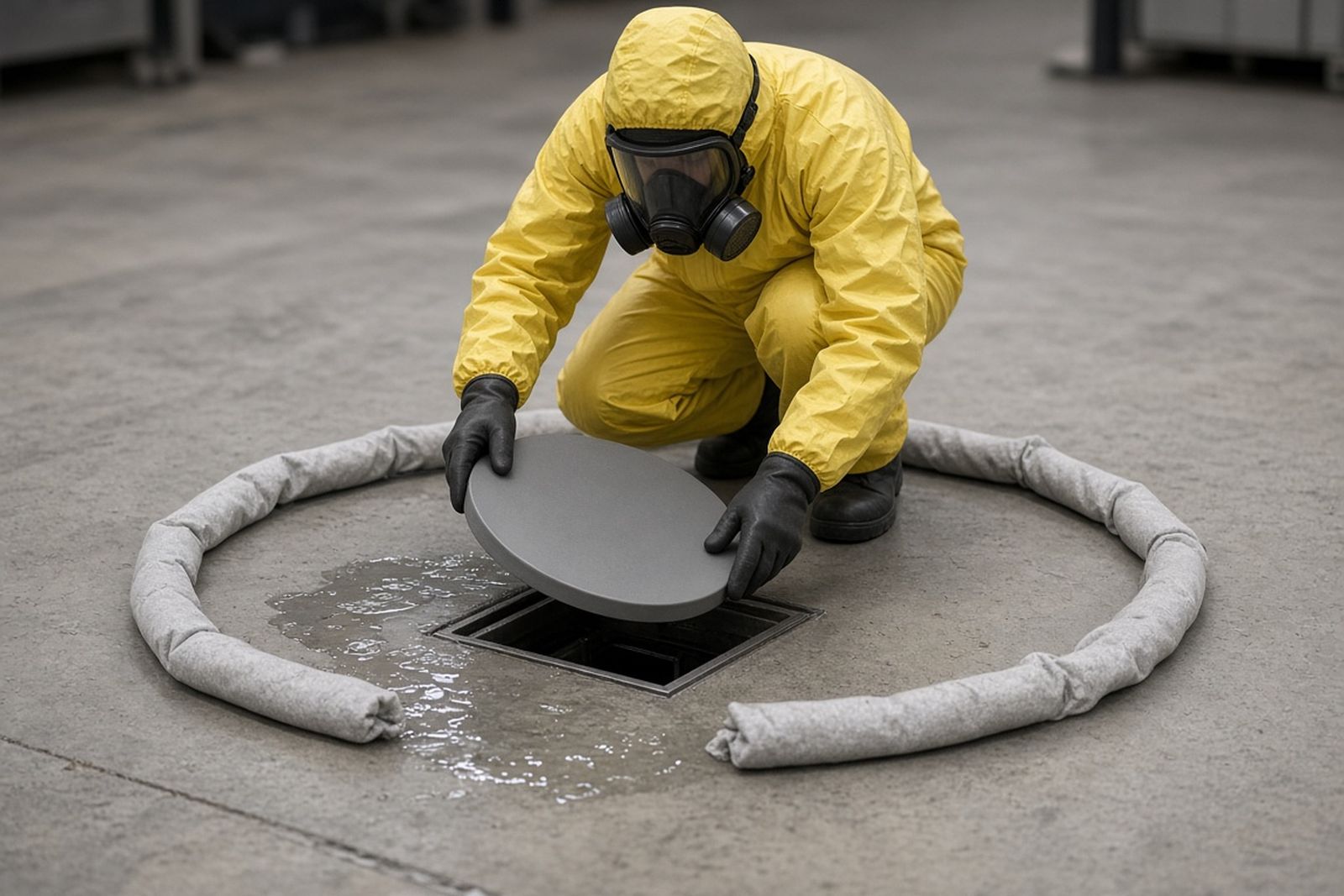
Pool chemicals, tenant drums, a leaking delivery truck in the lot: what property managers should do before, during, and after a chemical spill on site.
Property managers are rarely the chemists at a spill, but they control access, vendors, tenants, and records. Know what chemicals are stored on your property, keep safety data sheets and emergency numbers where staff can reach them, call 911 for any active release, hire a HAZWOPER-trained contractor for cleanup, and keep waste and reporting records.
Hazmat Spill Response Planning Example: Building a Defensible Scope
A hypothetical basement heating oil leak shows how to build a spill cleanup scope that holds up: hazard map, removal choices, waste path, testing, exclusions.
A defensible hazmat spill scope ties every task to a documented condition. It maps where the material went, states what will be cleaned versus removed, names controls and products matched to the chemical, describes how waste will be profiled and disposed of, sets a verification method and target, lists exclusions, and names who can approve changes. This hypothetical heating oil release shows each piece.
Commercial vs Residential Hazmat Spill Response
A leaking tote in a warehouse and a spilled gas can in a garage need different plans, people, and paperwork. Here is how business and home spill response vary.
Commercial spills happen where employers have legal duties to plan, train, and report, and cleanup often involves larger quantities, regulated waste streams, and agency oversight. Residential spills usually involve household products, heating oil, or pool chemicals, and homeowners rely on 911, poison control, and hired contractors. Both need the chemical identified before cleanup.
Environmental Responsibility in Hazmat Spill Response
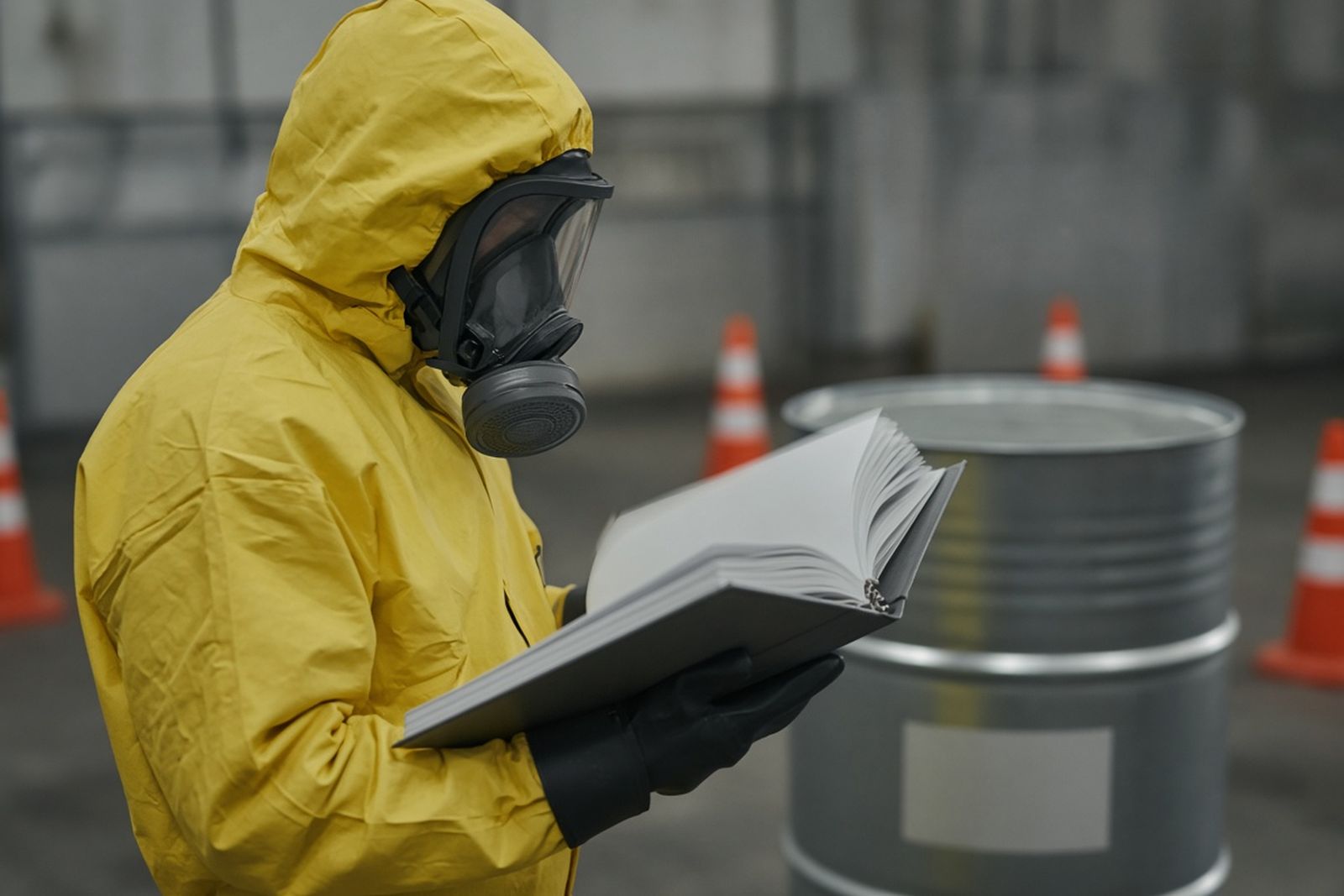
Keeping a chemical spill out of drains, soil, and creeks matters as much as cleaning the floor. Here is what environmentally sound spill response looks like.
Environmentally responsible spill response keeps the release small: block drains and waterways first, recover material instead of washing it away, match absorbents and neutralizers to the chemical, avoid creating extra waste, profile what is collected so it reaches the right facility, and verify nearby soil and water. Speed and planning protect the environment more than any product.
Sourced figures on industry insights
- 382
382 of 12,855 RMP facilities reported at least one accident during 2016-2020, about 3 percent of regulated sites.
Read with care: Only accidents meeting RMP reporting criteria are counted.
Source: EPA (2024)United States RMP facilities, 2016-2020
- 21%
TRI chemical releases in 2023 were 21 percent lower than in 2014, with air emissions down 32 percent.
Read with care: Trend covers routine permitted releases as well as accidental ones.
Source: EPA (2023)United States TRI facilities, 2014-2023, excluding natural gas processing
- 20 rail cars
In the February 2023 East Palestine, Ohio derailment, 20 of the affected rail cars contained hazardous materials.
Read with care: Single high-profile event; not representative of typical spills.
Source: EPA (2023)Norfolk Southern derailment, East Palestine, Ohio, Feb 3, 2023
These figures are public research and agency data, not this network's own job records. Keep each number with its population, year and limits; none of them predicts cost, timing or outcome at a specific property.
What research has found
Findings from published studies of people and properties in situations like this one. They describe what researchers observed in a specific group; they are not predictions for your case.
Message-presentation style had little impact in this experiment.
All ten homes had detectable water odors before and after plumbing flushing.
Industry Insights: common questions
How are electric vehicle batteries changing spill response?
Damaged lithium-ion batteries can overheat, catch fire again, or give off harmful gases long after an incident seems over. That calls for different setup, testing, and storage than a fuel spill. Fire departments and specialized responders are developing new methods. Fleet and parking facility managers should ask contractors and the fire department how they handle battery incidents.
What does a residential hazmat spill usually involve?
Home spills often involve heating oil tanks, pool chemicals, garage solvents, or leaking containers left by a past owner. The amounts may be smaller than at a plant. But basements, wells, and septic systems create their own concerns. Homeowners should call the fire department for emergencies. They should contact their state environmental agency for advice on reporting and cleanup.
Can recovered fuel or chemicals be recycled instead of disposed?
Sometimes. Recovered product that is clean enough may be reused. Some types of waste can go to recycling or be blended into fuel instead of going to a landfill or being burned. Whether that is allowed depends on how dirty the material is, the rules, and what the site will accept. Ask your contractor if recycling options exist for your material and how that choice will be recorded.
Why are more spill contractors offering pre-incident planning services?
Contractors have found that a short site visit, a drain map, and an agreement before an incident make responses faster and smaller. That helps both sides. More customers also want records for insurers and lenders. Planning services may include spill kit advice, staff training, and practice drills. Ask what is included and whether there is a charge.
How are large distribution warehouses changing spill risks?
Warehouses now hold more kinds of products, including cleaning concentrates, batteries, and household chemicals. They are often on mixed pallets and high racks. Faster handling and more forklift traffic raise the chance of punctured containers. Mixed storage raises the risk that products that should not touch will meet. These sites benefit from separate storage areas, drain protection at docks, and clear spill steps for every shift.
Why do some contractors focus mainly on transportation incidents?
Road and rail responses need equipment such as vacuum trucks and trailers of floating barriers. They also need teamwork with trucking companies and highway agencies, and the ability to travel fast over long distances. Some firms focus on that work through contracts with trucking companies. They may know less about fixed-site issues like indoor airflow or talking with tenants. So match the firm to your main risk.
What changes are happening in spill kit products?
Suppliers now offer more kits made for certain uses, such as battery storage areas, labs, and fleet vehicles. There are also absorbents that change color as they fill up and drain covers in more shapes. Some products claim to break down naturally. Choose kits by whether they are safe with your products and the size of your largest container, not by sales claims.
Related community polls
Every count is a real visitor vote; nothing is seeded or padded. One vote per poll per device, and you can change your answer.
How prepared is your site for a chemical or fuel spill right now?
In your most recent spill, what was the first action taken?
More on hazmat spill response
Hazmat Spill Response services
Learn how spill response works for chemicals, fuel, oil, and unknown products. It runs from closing off the area and reading the SDS to waste disposal and reopening.
Costs explained
What drives the price, published cost ranges, and how to read a written quote line by line.
Insurance and payment
Which policies may respond, how to document a claim, and what to do if coverage is denied.
Planning tools
Hands-on planners help you order the first day, judge staff risk, check contractors, sort spill waste, and organize a claim.
Community polls
Compare your spill planning and response choices with facility, fleet, and property managers who faced similar spills and learned from them.
Knowledge quiz
Check what you know about spotting hazards, who is in charge, containment, cleanup, waste, and records with a short quiz for managers.
City guides
Find learning resources and spill response contractor listings for your state, county, and city. See which agencies handle spill reports there, too.