Short answer
Before anyone approaches a hazardous materials spill, assess ten risks: an unidentified substance, toxic vapors, fire or explosion, incompatible chemical reactions, oxygen-deficient or confined spaces, skin and eye contact, heat stress in protective gear, spread into drains, soil, or water, damaged or pressurized containers, and exposure of the public nearby. Evaluating each one sets isolation distances, protective equipment, and the order of the response.
Assess before you act
The instinct after a spill is to clean it up fast. With hazardous materials, that instinct can get people hurt. The first job is to understand what could harm responders, workers, and neighbors, and only then decide how to approach the spill.
A quick but deliberate assessment answers basic questions. What is it? How much? Where is it going? What is nearby that could make it worse? Who could be exposed? The answers shape everything that follows, from how far back people stand to which suits responders wear.
The ten risks at a glance
Use the ten risks below as a checklist, whether you manage a facility, are planning for emergencies, or are reviewing a contractor's response plan.
The assessment is not a one-time event. Conditions change as the day warms, as wind shifts, and as containers are moved. Good responders reassess at each stage and are willing to pull back when readings or conditions change.
- 1. Unidentified or mislabeled substances
- 2. Toxic vapors and inhalation hazards
- 3. Fire and explosion
- 4. Incompatible chemical reactions
- 5. Oxygen-deficient or confined spaces
- 6. Skin and eye contact and protective equipment failure
- 7. Heat stress in protective gear
- 8. Spread into drains, soil, and water
- 9. Damaged, bulging, or pressurized containers
- 10. Exposure and confusion among the public
Risk 1: no one knows what spilled
An unknown substance is the most dangerous starting point, because every other decision depends on identity. Labels may be missing, faded, or wrong. Containers may have been reused for something else. Shipments may be undeclared.
Responders treat unknowns as highly hazardous until proven otherwise. They approach from upwind and uphill, use air monitors before entry, wear high levels of protection, and try to identify the material from shipping papers, placards, safety data sheets, or field tests.
You can reduce this risk long before a spill happens. Keep labels intact, store safety data sheets where responders can reach them, and dispose of old or unmarked containers through a licensed service.
If you are the first person on the scene, your role in this risk is simple. Do not open, move, or sniff the container. Note anything you can see from a safe distance, such as a placard number, a brand name, or the color of the liquid, and pass that on when you call for help.
Risks 2 and 3: vapors, fire, and explosion
Risk 2 is inhalation. Many chemicals give off vapors that irritate or damage the lungs, affect the nervous system, or cause poisoning. Some are dangerous before they can be smelled, and others dull the sense of smell at high levels. Only calibrated instruments can say whether air is safe.
Risk 3 is fire and explosion. Flammable liquids produce vapors that can ignite from a spark, a hot engine, a pilot light, or static electricity. Responders measure flammable vapors, remove ignition sources, and use tools and pumps rated for flammable atmospheres.
Risk 4: reactions between chemicals
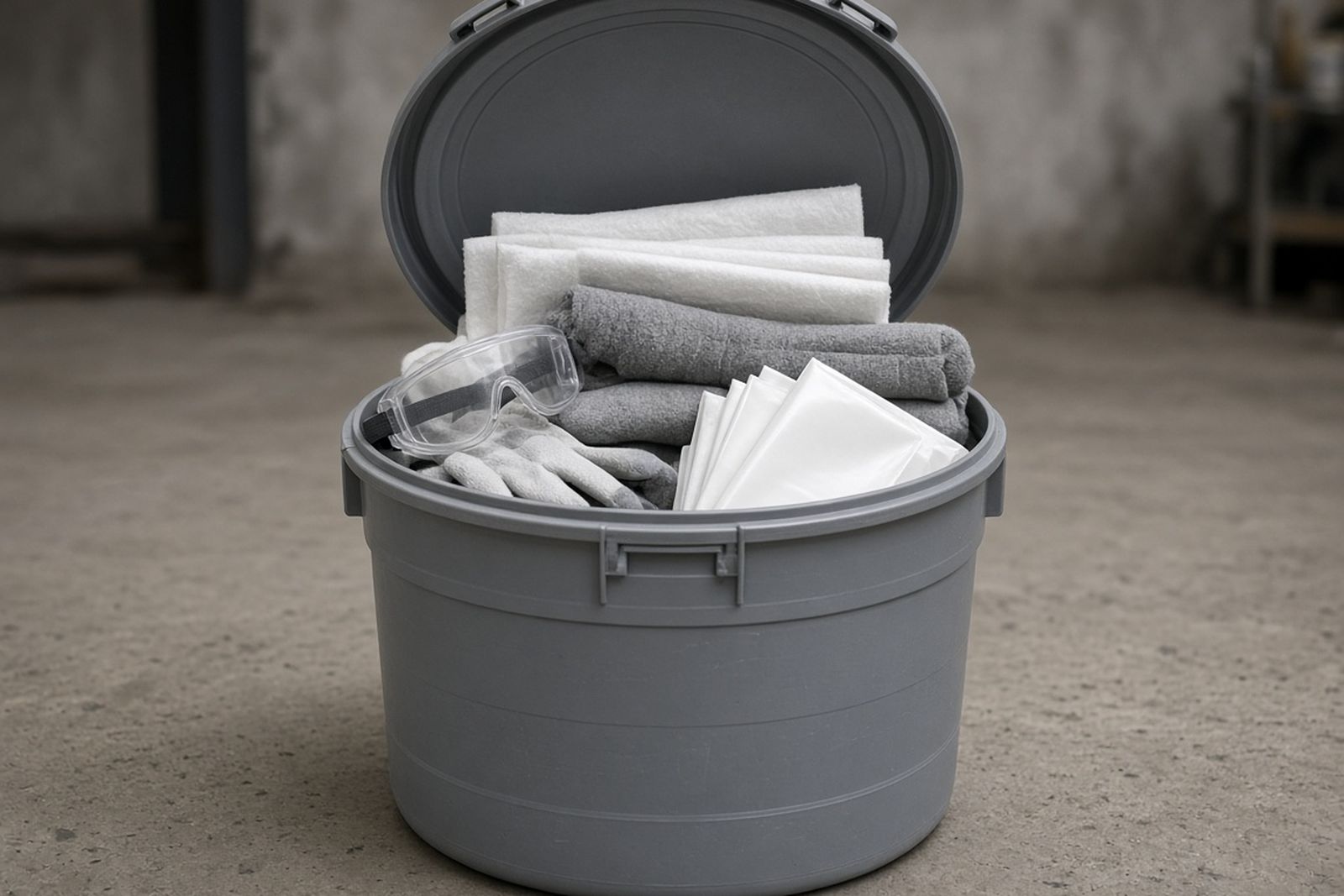
Risk 4 is reactions between chemicals. Acids and bases can react violently. Oxidizers can intensify fires. Some materials release toxic gas or ignite on contact with water. Before applying any absorbent, neutralizer, or water, responders confirm compatibility with every substance involved.
These three risks often travel together. A flammable solvent may also be toxic, and a reactive powder may release a gas that burns. Responders plan for the worst combination the evidence suggests rather than addressing one hazard at a time.
Risk 5: confined spaces and low oxygen
Heavy vapors sink and collect in basements, pits, trenches, sumps, and tanks. They can displace oxygen, create toxic or flammable pockets, or both. A person who enters without monitoring and protection can be overcome quickly.
Rescuers face the same danger. Many confined space deaths involve people trying to help someone who collapsed inside. Never enter a low area or enclosed space near a spill to rescue someone unless you are trained and equipped. Call for help instead.
Professional responders test the atmosphere before entry, use supplied air when oxygen is low or contaminants are unknown, and follow confined space procedures, including attendants and retrieval equipment.
Buildings can create confined-space conditions without looking like one. A small storeroom with no windows, a mechanical room, or a loading dock pit can trap vapors. Treat any enclosed, low, or poorly ventilated area near a spill with the same caution.
Risks 6 and 7: equipment failure and heat
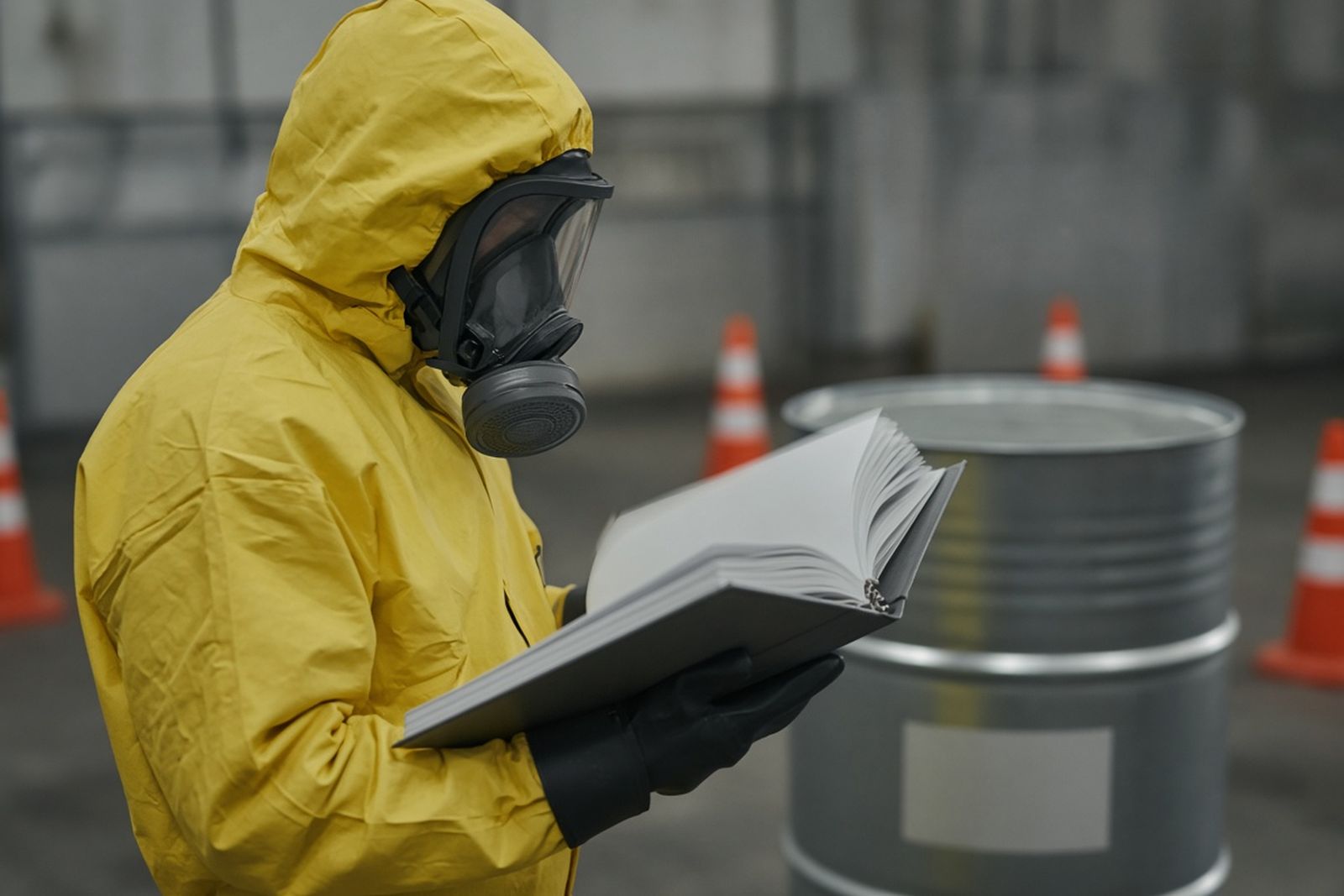
Risk 6 is contact with skin and eyes. Corrosives burn tissue, some solvents absorb through skin, and splashes can injure eyes in seconds. Protective equipment only works when it matches the chemical. Gloves and suits have breakthrough times, and the wrong material can fail quickly.
Responders check permeation data, inspect gear before use, and change it on schedule. Decontamination lines keep contaminated equipment from exposing others as crews leave the spill area.
Risk 7 is heat stress. Chemical suits trap body heat and sweat, and responders working in them can overheat quickly, especially outdoors in summer. Symptoms such as confusion or dizziness can be mistaken for chemical exposure. Work-rest cycles, hydration, cooling measures, and medical monitoring are part of a safe response.
Risk 8: where could the spill travel next?
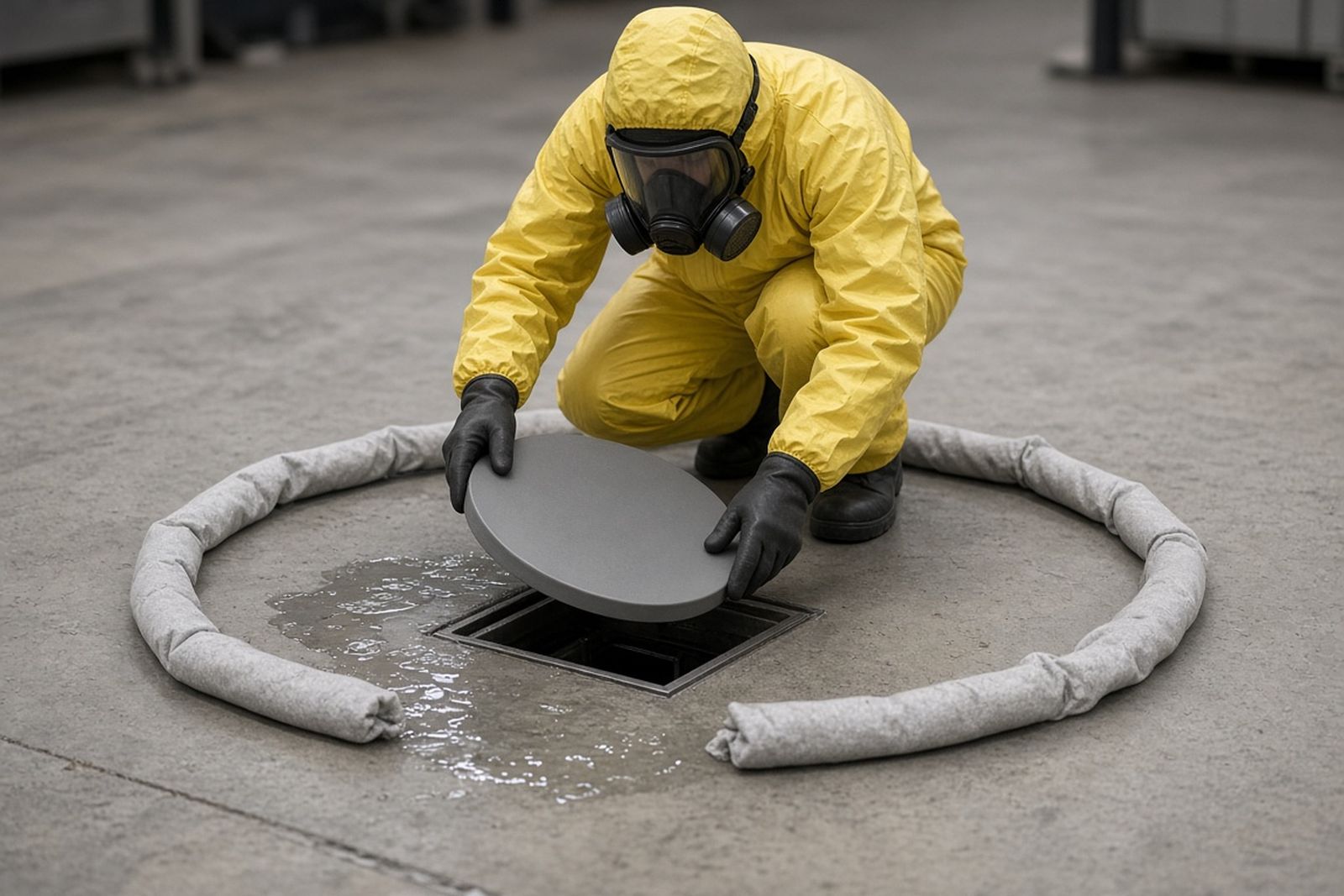
Spills follow gravity and water. Floor drains, storm drains, ditches, and cracks in pavement can carry chemicals into sewers, streams, and groundwater, spreading harm far beyond the original site.
Protecting drains and waterways is one of the first actions after safety. Drain covers, plugs, booms, and berms stop the spread. Responders avoid using water to wash spills away and collect decontamination water as waste.
Once material reaches soil or water, the response grows to include sampling, excavation, and coordination with environmental agencies. Knowing where your drains lead before a spill happens helps responders act quickly.
Weather adds to the risk. A rainstorm can carry a contained spill past a berm or into a drain that was dry an hour earlier. Responders watch forecasts and may add containment or cover materials before rain arrives.
Risk 9: damaged containers
A leaking drum is only part of the problem. Containers that are dented, bulging, corroded, or heated can fail further, and compressed gas cylinders can release their contents suddenly if a valve is damaged. Containers involved in a fire may rupture.
Transportation incidents carry particular risk because loads may be damaged in a crash and shifted in unpredictable ways. PHMSA data reported by CBS News in 2023 showed that over ten years, 52 people died and 160 were injured in hazmat incidents involving tractor-trailers in transit, with human error behind 18 percent of incidents.
Responders assess container condition from a distance, use overpack drums for leaking containers, and call specialists for pressurized or damaged cylinders. Untrained people should never try to right a tipped drum or tighten a leaking valve.
Risk 10: how are neighbors and the public protected?
Spills can affect people who never see them. Vapors and odors travel with the wind, and traffic near a roadside spill creates additional danger for responders and drivers. Clear, timely information helps people protect themselves.
Guidance only works if it reaches people. Some neighbors will not hear an alert, and others will hear it but not understand what they are being asked to do, so short, specific instructions repeated through more than one channel work best.
Facilities can help by keeping an emergency contact list for neighbors, schools, and businesses nearby, and by planning how they will share information during an incident. Coordinating messages with local officials keeps the public from receiving conflicting instructions.
Public officials decide on evacuation or shelter-in-place. If you receive an alert, follow it, and do not approach the scene to look.
How the risk review changes the plan
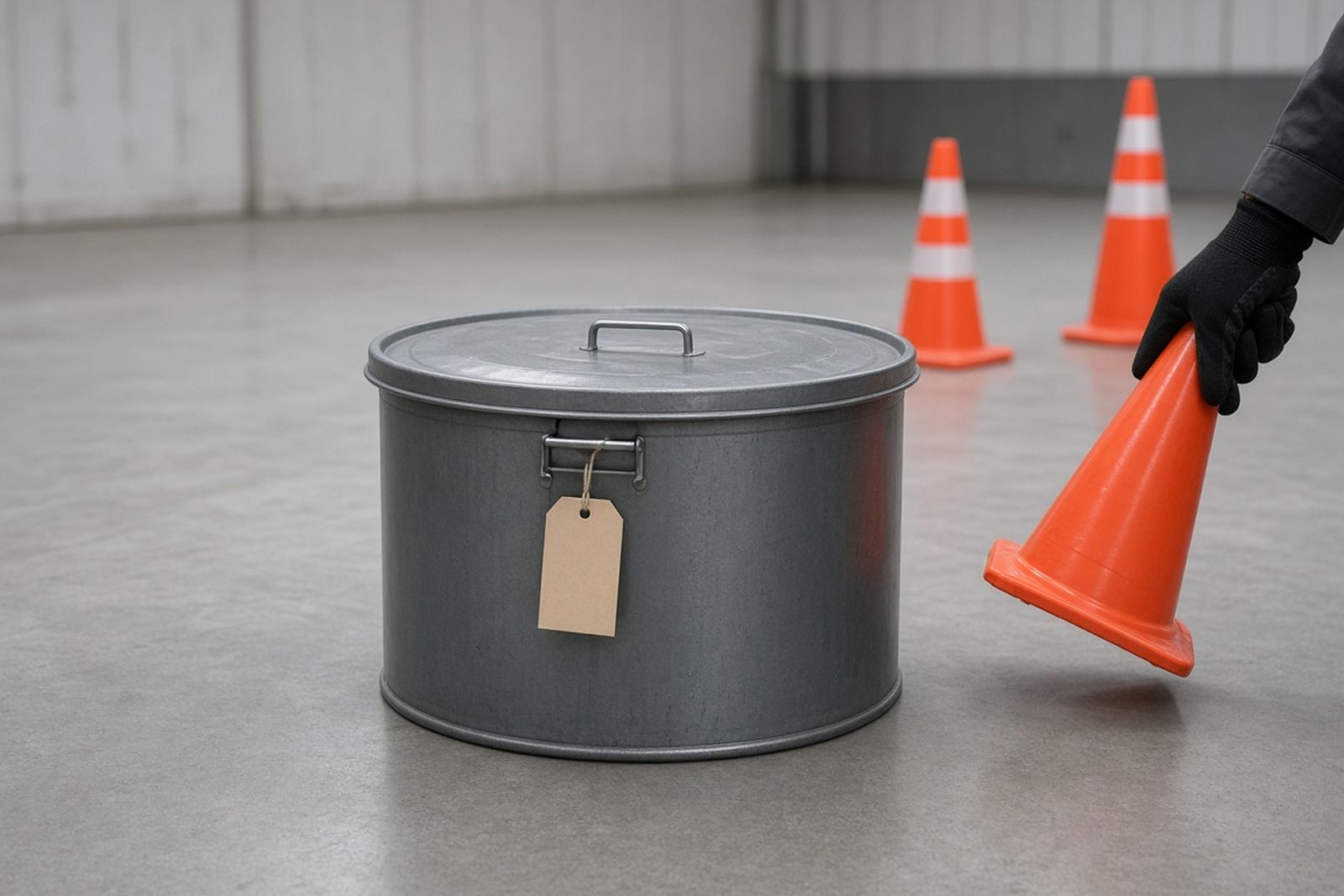
The ten risks are not a form to fill out once. They change the plan as information arrives, and the changes are usually visible within the first hour. A common case is a warehouse pallet that tips and splits several containers, one of which has a torn label and is leaking near a floor drain.
The unidentified container immediately becomes the controlling hazard. Responders review the inventory and safety data sheets for the known products but treat the unknown as the highest hazard present until it is identified. That single fact sets the protection level, often chemical-protective suits with supplied air, and the order of work: cover the drain, then separate the unknown from the other containers with absorbent barriers.
Field testing can then overturn the original plan. If the unknown turns out to be incompatible with the absorbent the crew intended to use, the crew switches materials. If vapor readings near the drain are elevated, monitoring there continues until they fall. If the day is hot, crews rotate more often, and if vapors could reach the next building, neighbors are advised to close windows.
The site reopens only when air readings are normal, waste is drummed, and the drain line has been checked. Reporting duties and cleanup standards depend on the product, so ask the contractor which agencies it expects to notify.