Short answer
DIY spill cleanup is reasonable only for small, known, low-hazard spills that you are trained and equipped to handle, such as a little motor oil on sealed concrete. Call professionals when you do not know what spilled, when the material is toxic, flammable, corrosive, or reactive, when vapors are present, when anyone feels ill, or when a spill reaches drains, soil, or water. Reporting duties may also apply.
Spills you can reasonably handle yourself
Some spills involve hazardous products but are small and predictable. A few ounces of motor oil on a sealed garage floor, a tipped can of latex paint, or a small amount of antifreeze on concrete can usually be handled with absorbent, gloves, and proper disposal.
The key conditions are that you know exactly what spilled, the amount is small, there are no strong vapors, it is on a surface that does not absorb it, it is nowhere near a drain or water, and you have the right absorbent and protective gear. If any of those conditions is missing, pause before you act.
Read the product label and safety data sheet first. They describe the hazards, what protective equipment to wear, and how to clean up a release. If the label warns of flammability, toxicity, or corrosivity, treat the spill with more caution than you would a household mess.
Dispose of the used absorbent correctly. Oily absorbent, paint waste, and antifreeze often cannot go in household trash in many areas, and pouring leftovers down a drain is almost never acceptable. Your local household hazardous waste program can tell you where to take them.
When should I stop and call for help?
Stop and call when you do not know what spilled, when the container is unlabeled or damaged, or when more than one chemical may be mixing. Unknowns are the most dangerous spills because you cannot choose protection or cleanup methods safely.
Call for help when vapors are strong, when your eyes, nose, or throat burn, or when anyone feels dizzy, nauseated, or short of breath. Leave the area first, then call 911 or your local emergency number.
Call when a spill reaches a storm drain, floor drain, ditch, creek, or soil, or when the quantity is more than you can contain with the materials at hand. Environmental reporting duties may apply, and delays can make the situation much larger.
When you call, share what you know: the product name if you can see it, the approximate amount, where it is flowing, and whether anyone has symptoms. Stay upwind and uphill while you wait, and do not go back in to retrieve belongings or check on the spill.
- Unknown, unlabeled, or mixed chemicals
- Strong vapors, fumes, or smoke
- Anyone with symptoms such as burning eyes, dizziness, or trouble breathing
- Flammable, toxic, corrosive, or reactive materials
- Spills reaching drains, soil, or water
- Quantities larger than your kit can contain
What goes wrong when untrained people respond?
The most common mistake is reaching for a hose. Water can spread a spill, carry it into drains, and react violently with certain chemicals. Washing a spill away usually moves the problem somewhere harder to clean.
Other mistakes include using the wrong absorbent, such as sawdust on an oxidizer, which can create a fire risk. Mixing cleaners with spilled chemicals, especially bleach with ammonia or acids, can release toxic gases. Entering a room with heavy vapors without respiratory protection can cause serious harm quickly.
Bystanders also get hurt trying to help. Well-meaning coworkers or neighbors may walk through a spill, track it into other areas, or become exposed themselves. Keeping people away is often the most helpful thing you can do.
Protective gear from a hardware store has limits too. Dust masks do not filter chemical vapors, and common household gloves can break down quickly in contact with solvents. Feeling protected can encourage people to stay near a spill longer than is safe.
Training and equipment you would not have
Professional hazmat responders train under OSHA's hazardous waste operations and emergency response standard. The required hours and field experience depend on the role, with more expected of technicians and supervisors than of workers with occasional, low-exposure duties.
Training covers hazard recognition, air monitoring, protective equipment selection, containment, decontamination, and emergency procedures. Responders practice with the suits, respirators, and tools they use in the field.
Employers who expect workers to respond to spills must provide appropriate training. If your employees are expected only to evacuate and call for help, their training can focus on that role, but they should know clearly where their responsibility ends.
Workplaces with hazardous chemicals often need a written emergency plan that says who responds and who evacuates. If you are a business owner and are not sure whether your plan covers spills, a safety consultant or your spill response contractor can help you review it.
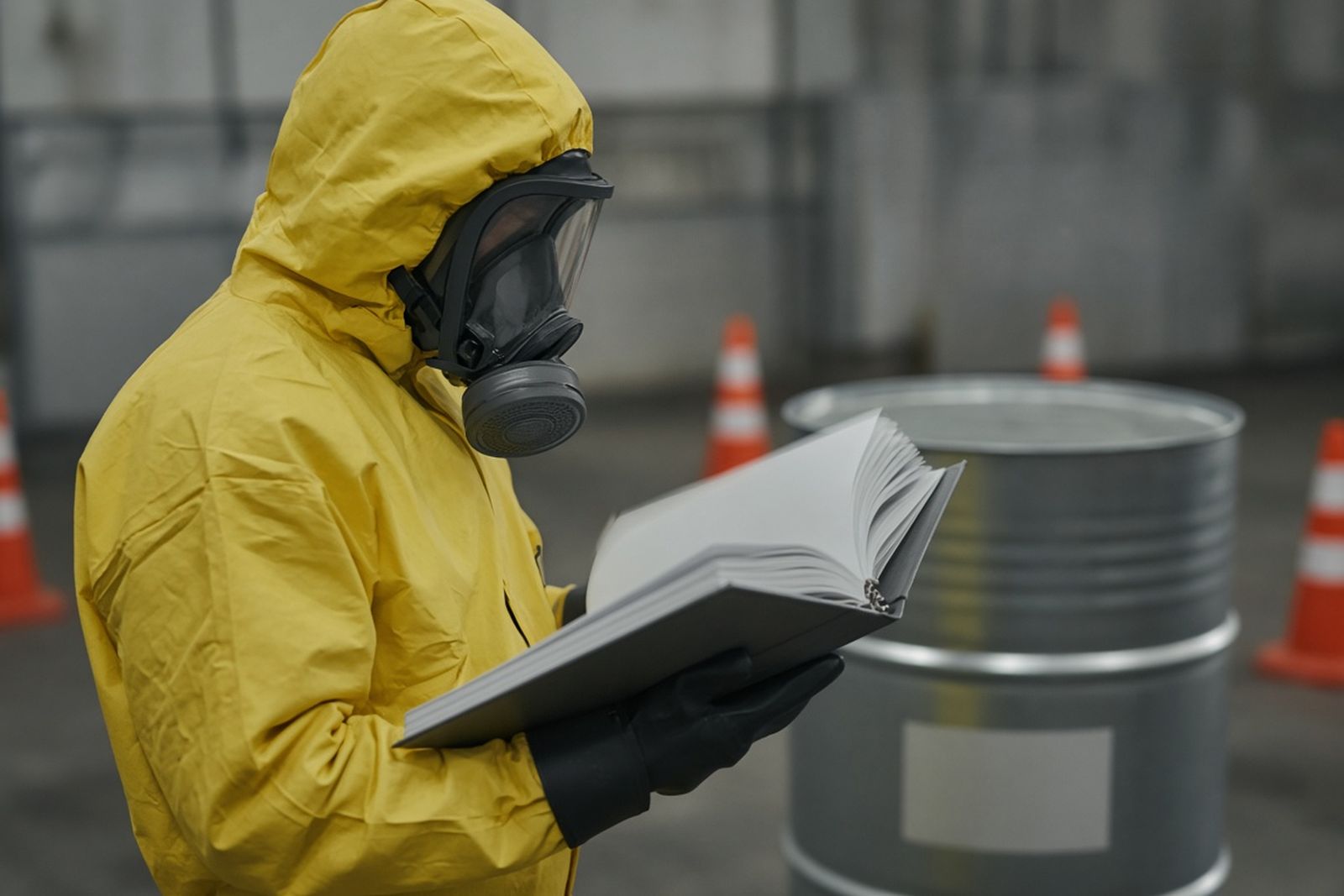
Professionals arrive with calibrated air monitors to measure oxygen, flammable vapors, and toxic gases. They carry chemical-resistant suits, gloves, and boots selected for the substance, along with respirators or supplied air where needed.
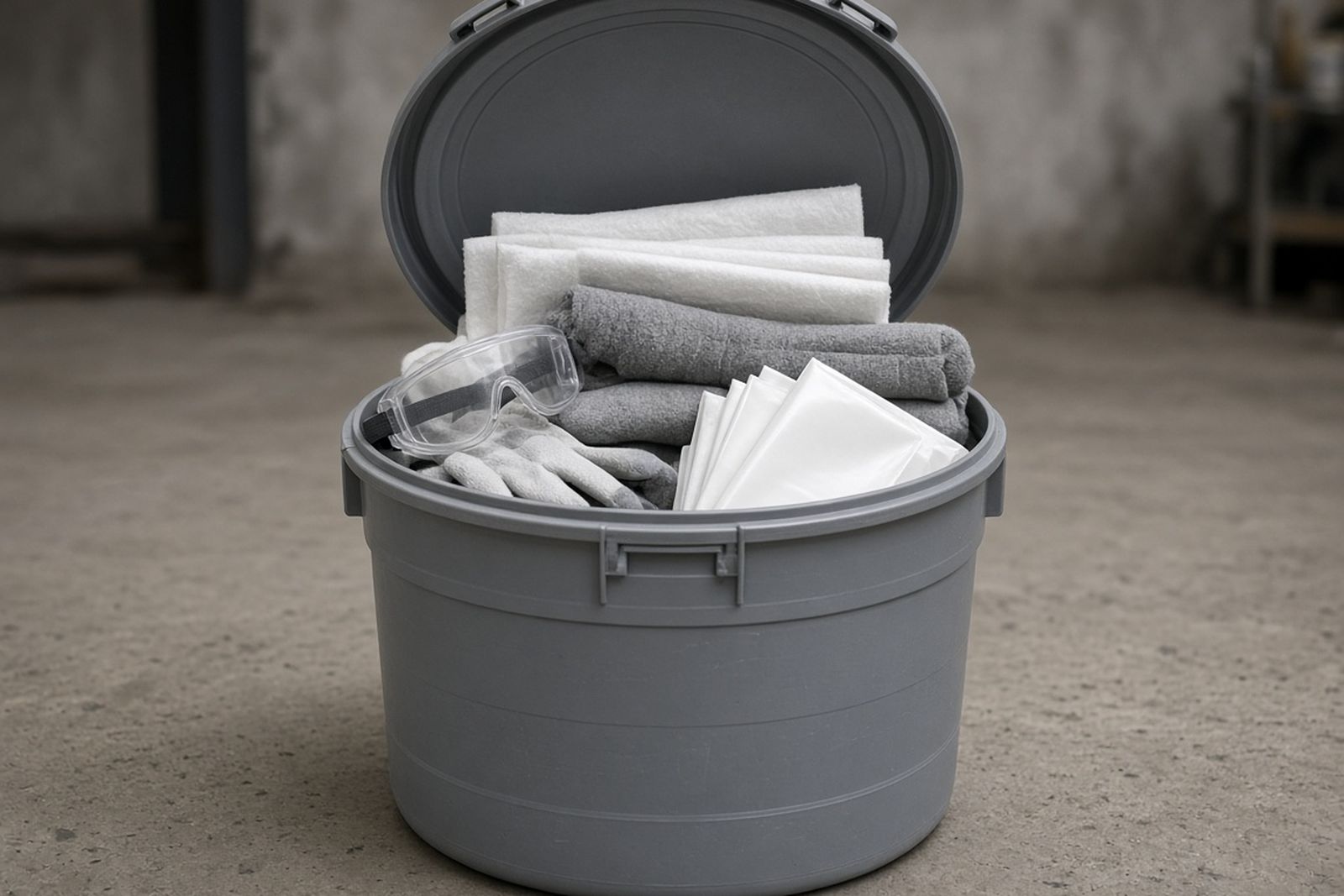
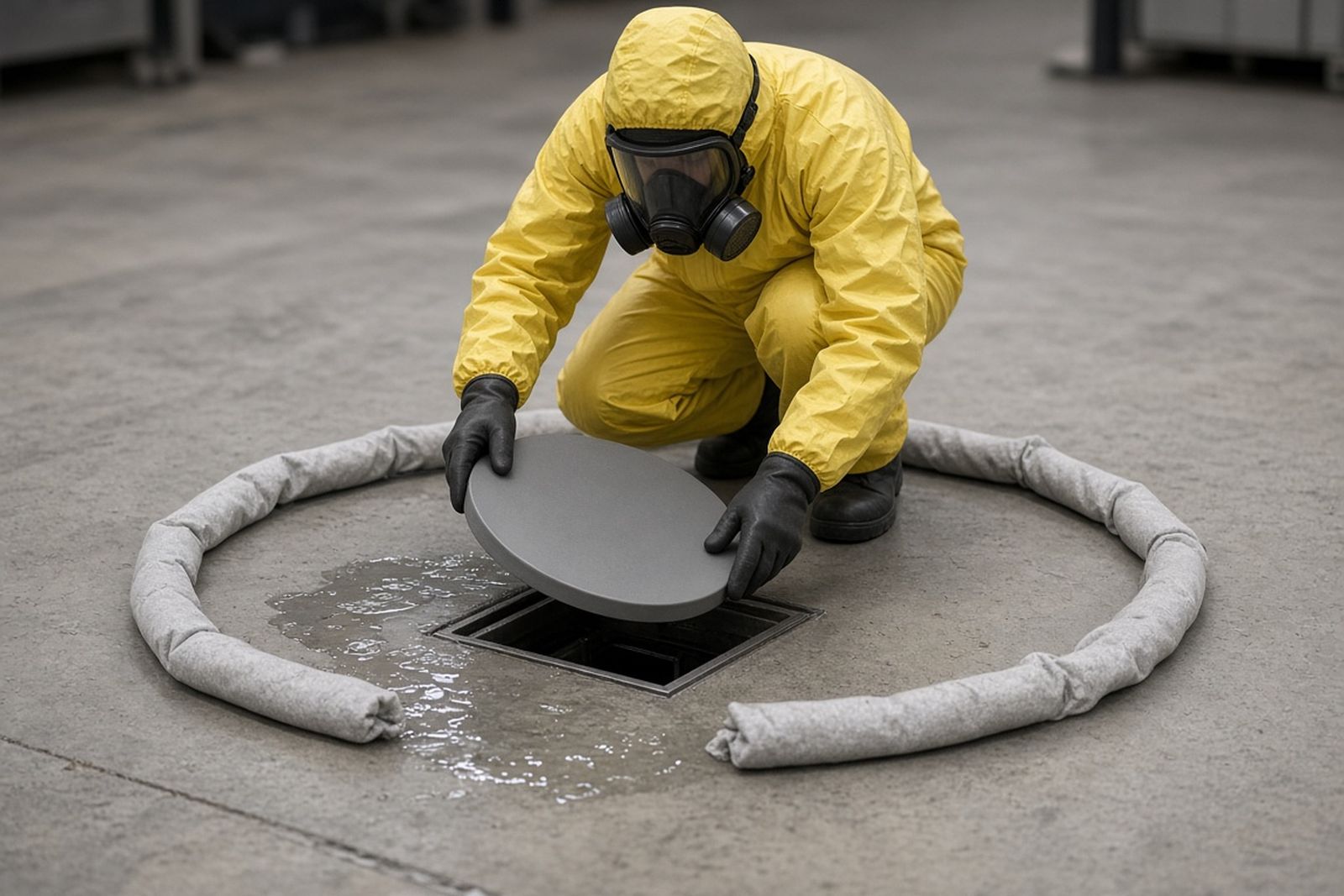
They also bring containment and recovery equipment in quantity: drain covers, booms, berms, compatible absorbents, neutralizers, pumps, overpack drums, and decontamination supplies. A typical household or small shop kit covers only a fraction of that.
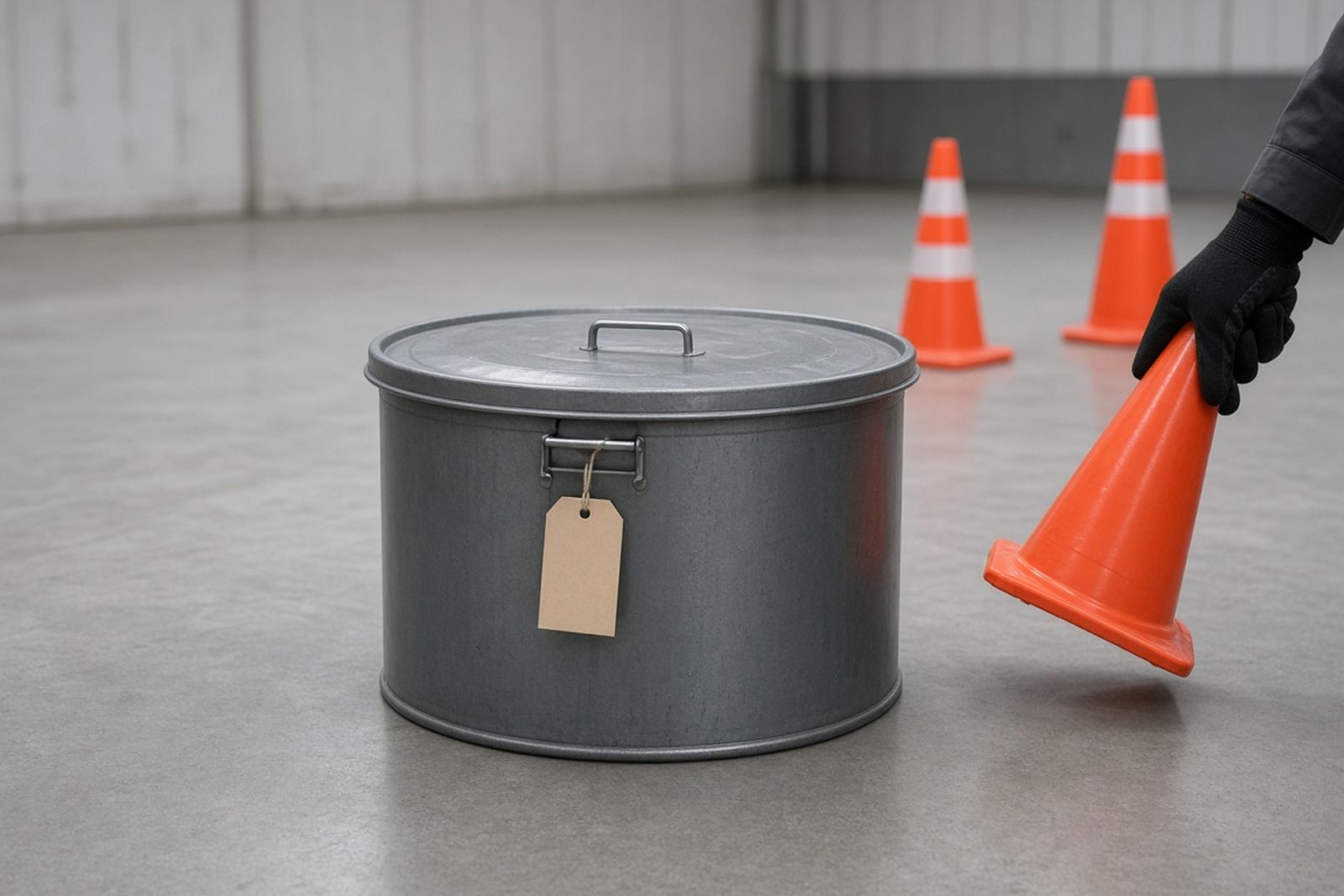
Most importantly, they bring a waste path. Recovered chemicals, used absorbents, and contaminated debris must be characterized, packaged, labeled, and shipped to a permitted facility, with records to show it was done.
They also know what not to do. A trained responder recognizes when a situation is beyond a cleanup crew and requires fire department support, specialized teams, or public protective actions, and makes that call early.
Why a small spill can still affect the neighbors
Chemicals do not stay politely within the spill area. Vapors drift with the wind, and odors can travel far beyond the source, alarming neighbors and sometimes causing symptoms. Strong-smelling compounds, such as the mercaptans added to natural gas, can make people feel unwell and afraid even at low levels.
That is one reason professional response includes communication. Responders coordinate with emergency managers and local officials who can advise neighbors whether to shelter in place, evacuate, or simply close windows.
How a small DIY cleanup grows
The pattern is familiar to anyone who responds to household spills. Someone clearing out an old garage or shed tips over a rusty can with a faded label, and a liquid with a sharp smell spreads across the floor. The instinct is to grab a garden hose to dilute the smell and push the liquid outside.
That single step moves the problem. The liquid runs down the driveway into the street gutter and toward a storm drain, and the smell often gets stronger rather than weaker as the wet area grows. If the person starts to feel lightheaded, the right move is to leave, call 911, and keep neighbors away.
Responders then have to identify the product from whatever label fragments remain, meter the air, and block the storm drain downstream. A job that could have stayed on the garage floor now includes the driveway, the gutter, the storm drain inlet, and possibly a notification to the local environmental agency.
None of this requires carelessness. It happens because unknown liquids and water rarely mix well, and because the urge to do something feels stronger than the urge to wait. Calling first is what keeps a spill small.
Does calling professionals mean a huge bill?
Costs vary with the chemical, the size of the spill, the surfaces involved, and waste disposal. A small, well-contained spill costs far less to resolve than one that has spread into drains or soil.
That is why early calls save money as well as risk. Containing a spill quickly shrinks the cleanup area, the amount of waste, and the testing that follows. For businesses, a contract with a spill response company can set terms in advance.
Some property or commercial insurance policies may cover certain spills, but coverage depends on your policy and the cause. Check with your carrier and keep records of the response.
If a spill happens at a rental property, notify your landlord or property manager promptly. They may have their own contractor, insurance requirements, or obligations to other tenants that affect who responds and who pays.
Preparing so the choice is easy
Keep safety data sheets for the chemicals you store, and store them where you can reach them without entering the spill area. Match your spill kit to the materials you actually have, and know where your floor and storm drains lead.
Take stock of old containers before they become a spill. Garages, barns, and basements often hold decades-old products with faded labels. Arranging disposal through a household hazardous waste event or a licensed contractor removes the unknowns before a can tips over.
Teach everyone in your home or workplace the simple rule: if you are unsure, get out, keep others away, and call. Keep a response contractor's number with your emergency contacts. If you are unsure whether a spill must be reported, your fire department's non-emergency line or your state environmental agency can tell you.