Short answer
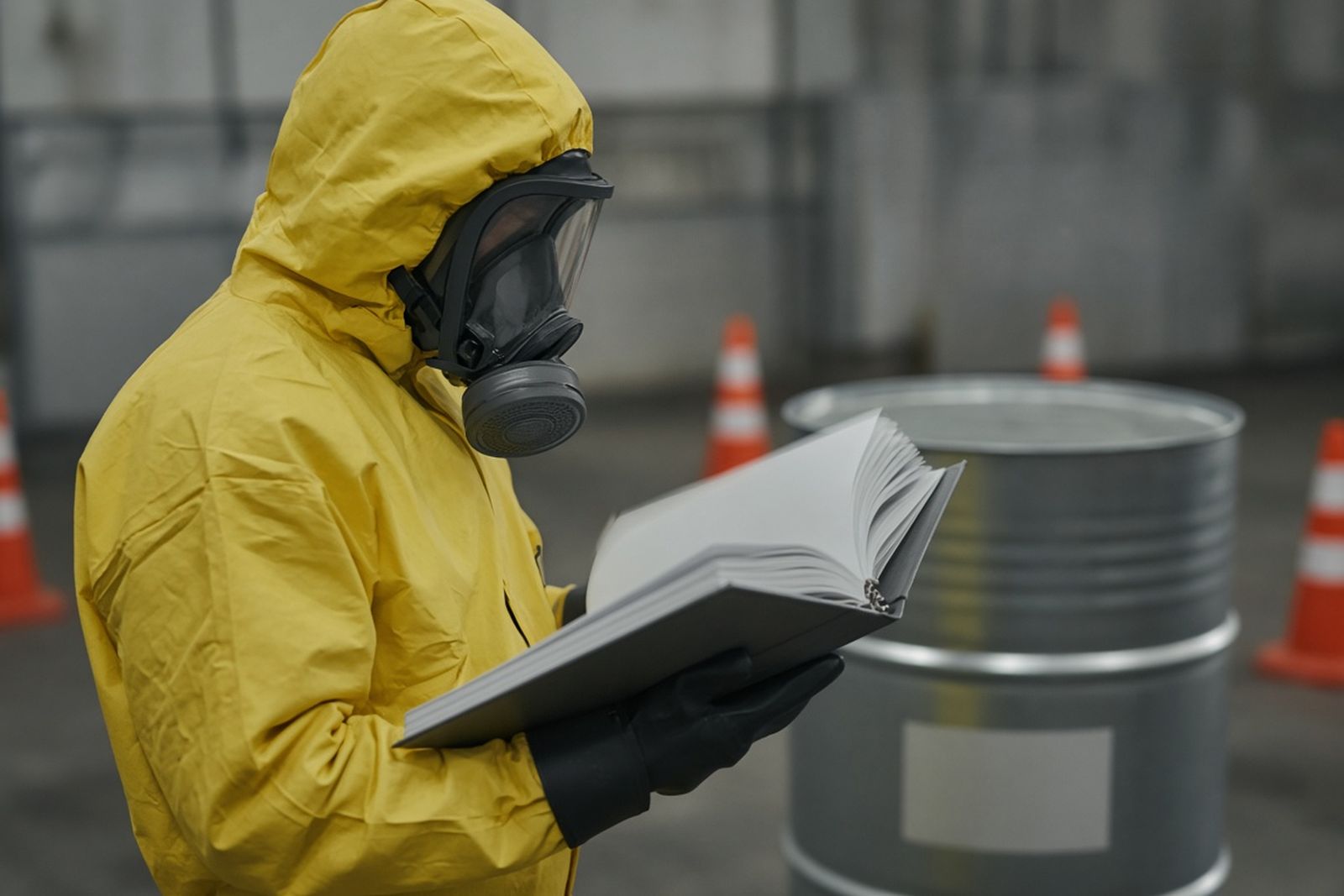
Hazmat spill PPE should be chosen only after assessing what spilled, its physical form, measured air concentrations, oxygen and flammability readings, and the task each responder will perform. That assessment points to a protection level from A to D, suit and glove materials rated against the specific chemical, and either air-purifying or supplied-air respiratory protection. Heat, mobility, and decontamination needs complete the plan.
Assessment first, suit second
A fully encapsulating chemical suit looks like the safest possible choice, and for some releases it is. For others it is overkill that slows the response, raises heat stress, limits vision, and increases the chance of a slip or a torn glove. Picking the wrong material can be worse still, because a suit that is excellent against one chemical may offer little protection against another.
That is why experienced spill technicians resist choosing gear from a closet shelf by habit. The assessment tells them how the chemical can reach a responder: through the lungs, the skin, the eyes, or all three. It also tells them how long the task will take and how much physical effort it demands.
OSHA's general PPE rule requires a hazard assessment for every workplace, and HAZWOPER adds specific expectations for emergency response and cleanup operations. In practice, the assessment on a spill is not a single form filled out once. It is revisited as air readings change, as the chemical is identified, and as the job moves from stopping the leak to removing the waste.
What information feeds a spill hazard assessment?
The best assessments start with documents and end with instruments. Shipping papers, placards, container labels, and safety data sheets identify what should be there. The exposure controls and personal protection section of a safety data sheet is a common starting point, though it is written for normal handling rather than a large release.
Real-time monitoring fills in what paperwork cannot. Responders check oxygen levels, flammable vapor readings, and, where possible, concentrations of the specific contaminant before deciding how close people may go and what they must wear.
Identity is not always known. PHMSA data summarized by Lion Technology in 2023 show that about 1,500 transportation incidents involving undeclared hazardous materials occur each year, totaling 11,430 over the decade to 2023. When the label cannot be trusted, responders start with the highest reasonable protection and step down only as information improves.
- Chemical identity and every product that may be mixed in
- Physical state: liquid, solid, gas, vapor, dust, or mist
- Oxygen, flammability, and contaminant readings
- Likely routes of exposure: inhalation, skin, eyes
- The task: approach, plugging, pumping, sampling, or cleanup
- Expected duration, workload, and weather
Levels A through D
EPA and OSHA describe four broad ensembles, known as Levels A, B, C, and D. They are a shorthand for combining respiratory and skin protection, not a substitute for the assessment. Two Level B ensembles can differ greatly depending on the suit material chosen.
Responders move between levels as a spill develops. The entry team that confirms identity may work in Level A or B, while the crew bagging absorbent a day later may be in Level C or D once air monitoring supports it.
- Level A: highest respiratory and skin protection, with a vapor-tight, fully encapsulating suit and self-contained breathing apparatus
- Level B: the same high respiratory protection, with chemical-resistant clothing that guards against splashes but is not vapor tight
- Level C: an air-purifying respirator with chemical-resistant clothing, used when the contaminant and concentration are known and air-purifying protection is suitable
- Level D: a work uniform with basic protection, used only when there is no respiratory or skin hazard
Matching suit and glove materials to the chemical
Chemical protective clothing fails in three main ways. Degradation means the material itself swells, cracks, or weakens. Penetration means liquid passes through seams, zippers, or pinholes. Permeation means the chemical moves through the intact material at a molecular level, sometimes without visible change.
Manufacturers publish test data showing breakthrough times for their materials against specific chemicals. A glove may hold up against an acid for a long period yet fail quickly against a solvent. No single material resists everything, which is why many technicians double glove with different materials or use a laminate barrier glove under a heavier outer glove for grip and abrasion resistance.
Mixtures complicate the picture. Permeation data usually covers pure chemicals, and a blend may behave differently from any of its ingredients. When data is thin, responders choose the most resistant option available, shorten the time in the hot zone, and change gloves often.
Inspect every item before use. Check suits for tears and stiffness, gloves for pinholes, and zippers and visors for damage. A suit that has been stored folded in a hot truck for years may not perform as it did when new.
When is an air-purifying respirator enough, and when is supplied air required?
Air-purifying respirators clean the air a responder breathes through filters or cartridges. They work only when the contaminant is known, its concentration is within the respirator's rated protection, the cartridge is designed for that chemical, and the atmosphere has enough oxygen. They also need a cartridge change schedule, because sorbent materials eventually saturate.
Supplied-air protection, most often a self-contained breathing apparatus, is chosen when those conditions are not met. Unknown chemicals, oxygen-deficient spaces, concentrations that may be immediately dangerous to life or health, and conditions that change quickly all push toward supplied air.
Any respirator use falls under OSHA's Respiratory Protection standard. Responders need medical clearance, fit testing for tight-fitting facepieces, and training on the specific model they will wear. SCBA users also need practice managing their air supply so they leave the hot zone with a reserve.
Heat and time limits
Protective suits trap heat and moisture. On a warm day, a responder in a chemical suit can develop heat illness in a surprisingly short period, and early signs like confusion or clumsiness can be mistaken for chemical exposure. Every PPE plan should include work-rest cycles, hydration, shaded rest areas, and medical monitoring before and after entry.
Mobility, communication, and the balance point
Mobility and communication matter as well. Heavy gloves reduce dexterity for plugging a leak or tightening a fitting. Thick visors fog and limit peripheral vision. Radios that work with the chosen headgear, hand signals agreed on beforehand, and a buddy who stays within sight all keep responders safer.
The goal is enough protection for the hazard without so much that the gear becomes the main risk. Assessments should explicitly weigh that balance and record why a given level was chosen.
Decontamination as part of the PPE plan
PPE protects the wearer only if it comes off without spreading contamination. A decontamination line, set up before entry begins, lets responders rinse or wipe their suits, remove outer gloves and boots, and doff the rest of their gear in a planned sequence.
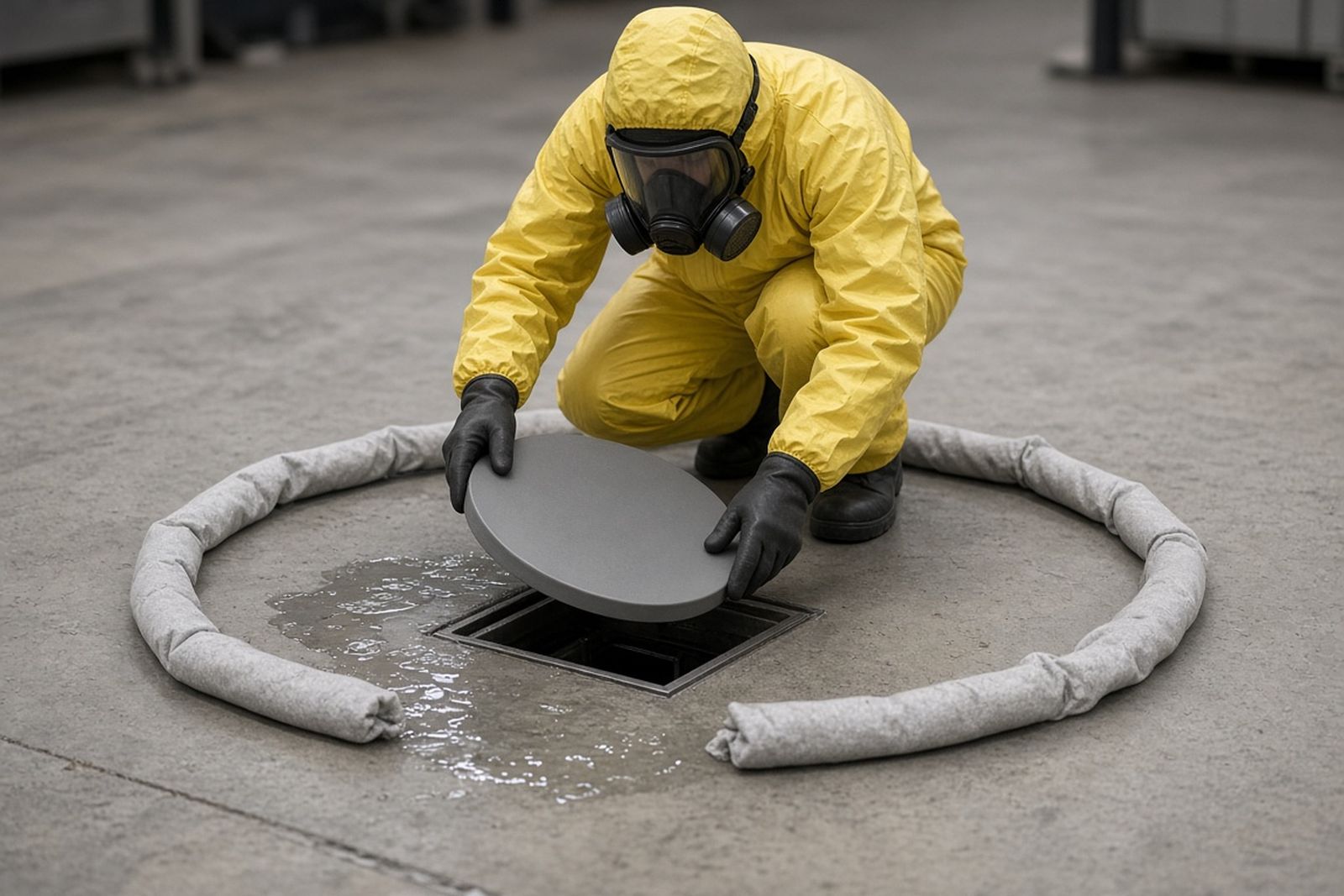
The people running decon need PPE too, often one level below the entry team. Rinse water and used disposable gear are collected as waste rather than allowed to run into drains. Reusable equipment is cleaned, inspected, and tagged out if it cannot be verified as clean.
Plan the doffing order in writing and rehearse it. Responders are tired and hot when they exit, which is exactly when steps get skipped. A decon attendant who calls out each step and watches for contact between a contaminated glove and bare skin catches mistakes the wearer would miss.
How the assessment changes the gear
Consider an illustrative case at a freight cross-dock terminal. A dock worker notices fumes and a puddle forming beneath a pallet whose paperwork lists auto parts. The carton is soaked, and the liquid is eating into the shrink wrap. No one knows what it is.
The terminal evacuates the dock and calls its spill contractor. Because the product is unknown and the fumes are strong, the entry team starts in Level B with SCBA and chemical-resistant splash suits, with laminate gloves under heavier outer gloves. Their first job is to read the air and test the liquid, not to clean it up.
Field tests point to a corrosive, and readings near the pallet drop quickly once the dock doors are opened. With identity confirmed and concentrations within the rated range of the crew's respirators, the supervisor steps the cleanup team down to Level C, with cartridges chosen for that chemical, and schedules shorter work cycles because the afternoon is hot.
The decon team, in Level C as well, stages rinse pools at the edge of the dock. The damaged cartons are overpacked, absorbent is drummed, and the shipper is contacted about the undeclared material. Every change in gear was driven by new information, which is exactly how a hazard assessment is supposed to work.
Preparing a facility's PPE before a spill
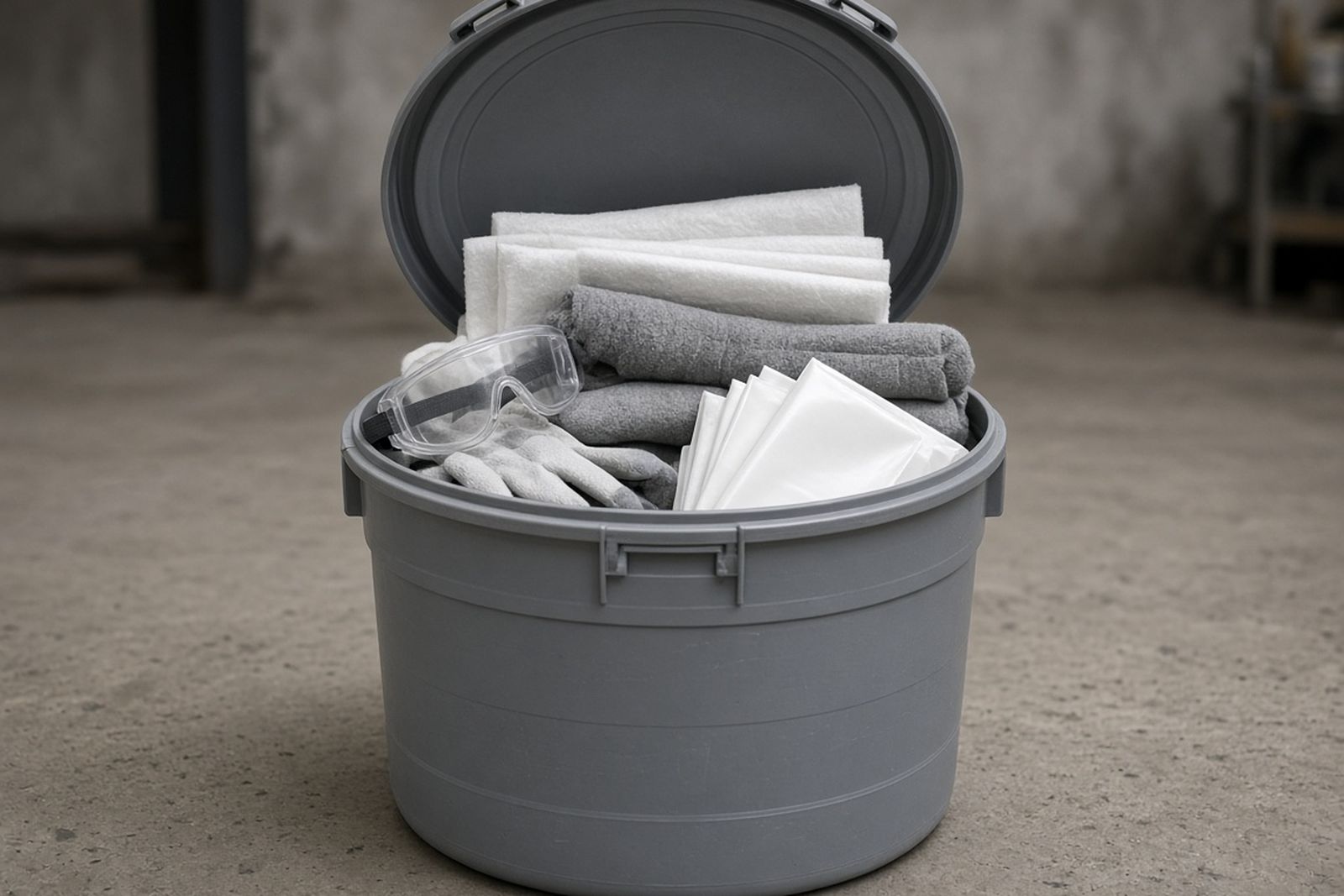
Facilities that expect employees to take any action beyond evacuation should assess their chemicals ahead of time, stock compatible gloves and suits, and train people on the gear they will actually use. Keep the equipment where responders can reach it without crossing the spill area, and check it on a schedule.
Do not forget sizes. Gloves and suits that are too large snag and tear, while those that are too small split at the seams. Stock a range of sizes for everyone who may respond, and replace items that pass their shelf life or show damage during inspections.
If you rely entirely on an outside contractor, share your chemical inventory and safety data sheets with them in advance so they can bring suitable equipment.