Short answer
ATP testing has a narrow role in hazmat spill response. It measures organic, biological residue, so it cannot confirm that a solvent, acid, caustic, fuel, or other chemical has been removed. It may help on mixed events where blood or other biological material was also released. Chemical clearance depends on methods matched to the specific substance, such as air monitoring, pH checks, or laboratory wipe samples.
What ATP measures, and what chemicals do to it
ATP swabs have become familiar in hospitals, food plants, and biohazard cleanup, so property owners sometimes assume the same tool can confirm any cleanup is finished. It is a reasonable question, and a responsible contractor should answer it directly.
The short answer is that ATP testing looks for biological residue. Adenosine triphosphate is a molecule found in living cells and in material such as blood, food soils, and microbial growth. A chemical like gasoline, sulfuric acid, or a chlorinated solvent does not contain it in any meaningful way. A floor soaked in hydraulic oil could produce a low ATP reading and still be badly contaminated.
If a company offers ATP numbers as proof that a chemical spill is cleaned up, that is a signal to ask more questions.
Chemicals can interfere with ATP readings, which makes the tool even less reliable on chemical scenes. ATP testing depends on an enzyme reaction that produces light. Strong oxidizers, extreme pH, some disinfectants, and certain solvents can affect that reaction, which may push readings lower or higher than the actual organic residue would.
Instrument makers generally warn users about these interferences in their guidance, and many programs specify that surfaces must be free of chemical residue before swabbing. On a spill site, that condition may not be met until late in the cleanup, if at all.
The practical takeaway is simple. On surfaces that may still carry chemical residue, ATP numbers can mislead in either direction. They should not be used to make or support a decision about chemical safety.
When might ATP testing still be useful at a hazmat scene?
Some events are mixed. A vehicle crash can release both fuel and blood. A laboratory accident can involve reagents and biological specimens. Floodwater that carried sewage may also have picked up heating oil or pesticides from a basement. In those cases, a cleanup plan has two separate goals: remove the chemical hazard and remove the biological soil.
ATP testing can play a supporting role for the second goal, on hard, nonporous surfaces, after the chemical hazard has been addressed and the surface has been cleaned. Used that way, it gives the crew a quick check on whether biological residue remains on sampled spots before final disinfection is documented.
It still cannot identify a pathogen or prove disinfection. It is a residue check that belongs inside a written program with defined sample sites, instruments, and action levels.
- Traffic collisions with both fuel and bodily fluid releases
- Laboratory spills involving reagents and specimen containers
- Basement flooding with sewage mixed with oil or household chemicals
- Veterinary or clinical settings where fixatives and biological material spill together
Tools that confirm a chemical cleanup
Chemical verification starts with knowing the chemical. The safety data sheet, container labels, and shipping papers identify the substance and point toward the right way to measure it. From there, the contractor selects methods that respond to that substance specifically.
Direct-reading instruments such as photoionization detectors, combustible gas meters, and single-gas sensors can monitor vapors in the air and near surfaces. pH paper or meters confirm whether acid or caustic residue has been neutralized. For persistent residues, wipe samples or bulk samples may be sent to an accredited laboratory for analysis against a cleanup target set by the regulator, the owner's consultant, or a published guideline.
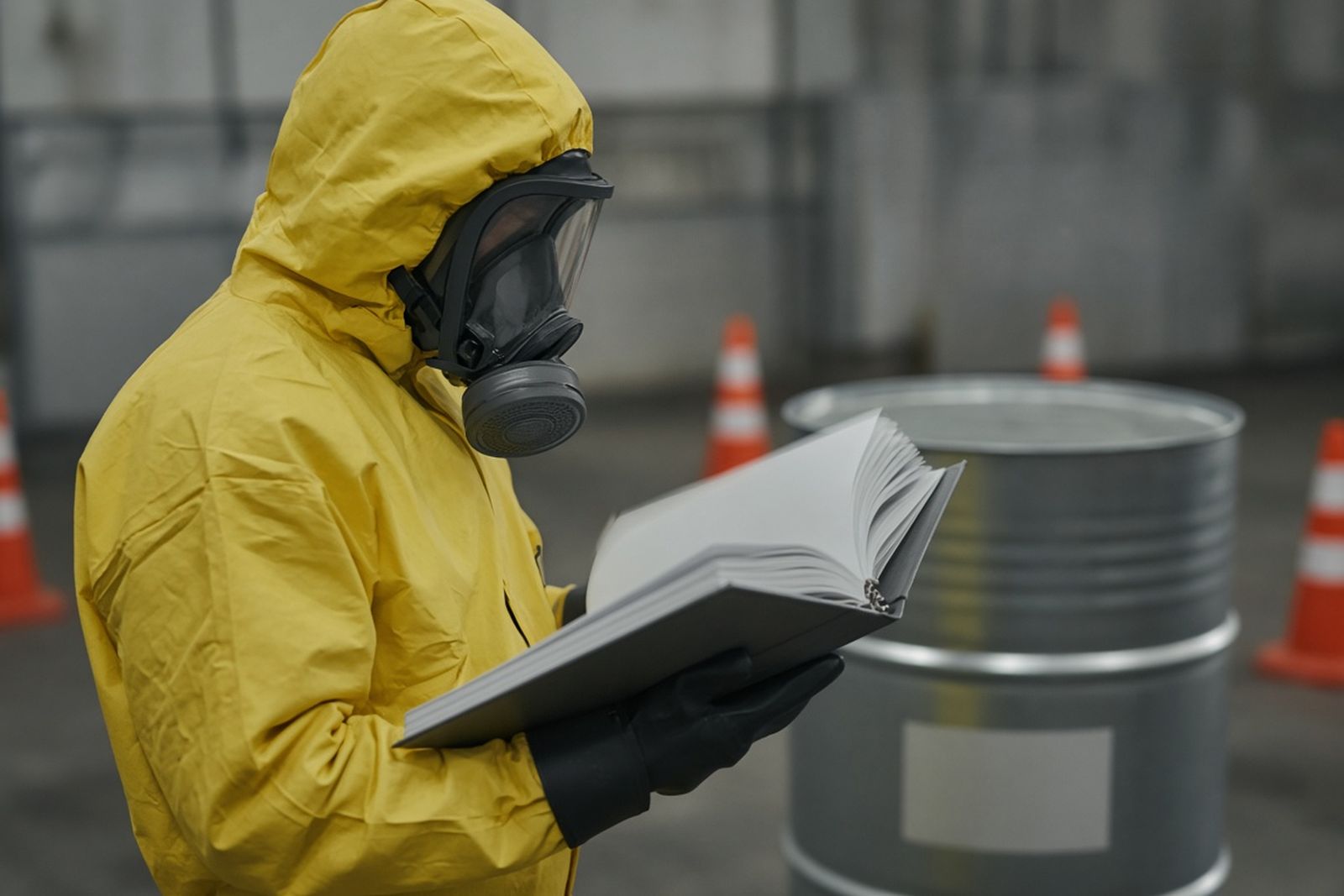
Who performs this work matters. Sampling and monitoring during cleanup should be done by people trained to use the instruments and interpret results for the chemical at hand.
A fixative spill in a small lab
Here is an illustrative mixed-hazard case. A shelf collapses overnight in a small veterinary diagnostic lab. Several containers of a formaldehyde-based fixative break, along with a tray of sealed tissue specimens, some of which open on impact. Staff arriving in the morning notice a strong odor and leave the room.
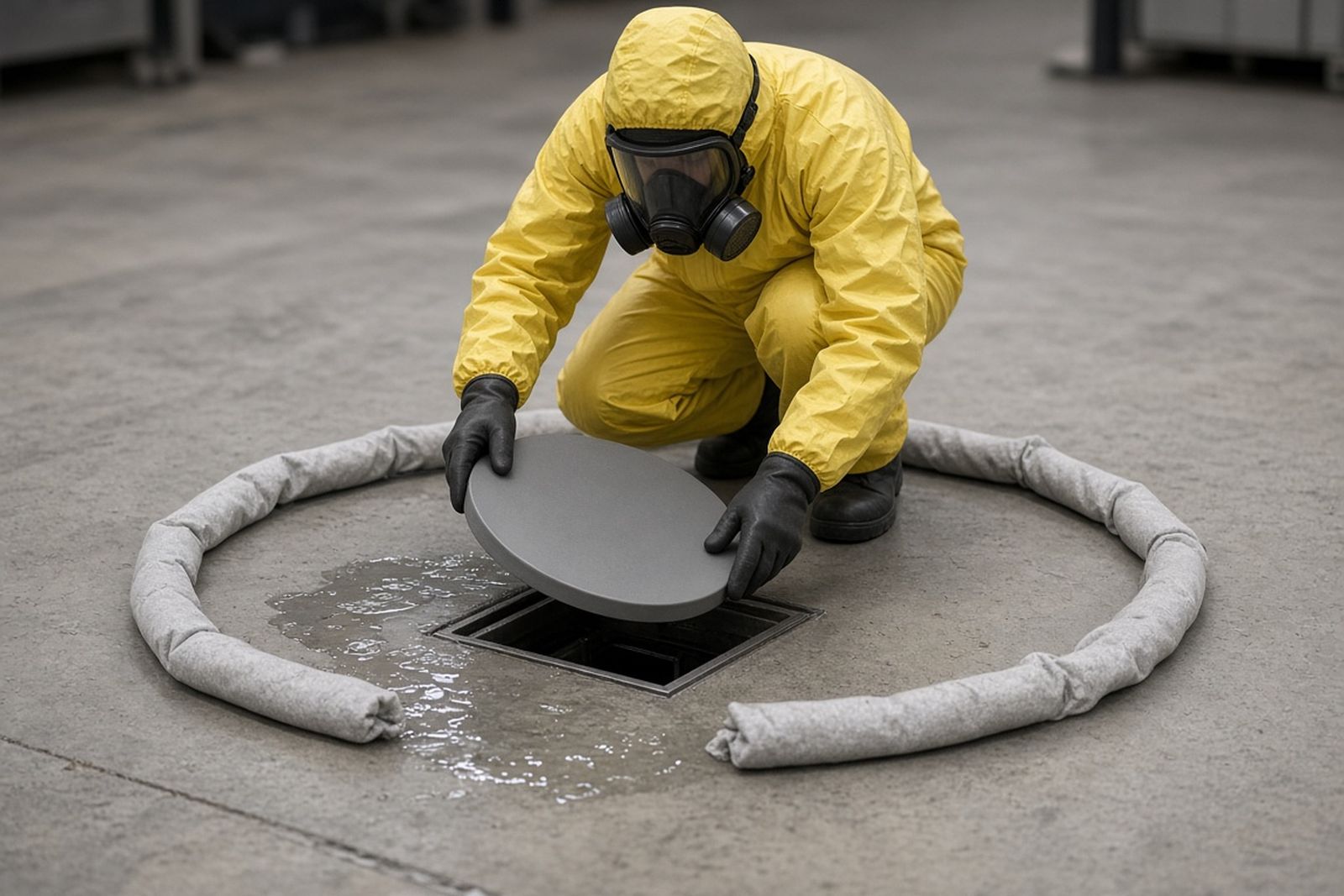
A hazmat cleanup contractor arrives after the fire department confirms the area is stable. The crew wears respiratory protection chosen for the fixative and gloves compatible with both the chemical and biological hazards. They absorb and collect the liquid, bag the broken glass and specimens separately, and clean the floor and lower cabinets with methods suited to the fixative.
Air monitoring confirms vapor levels have dropped to the target the lab's consultant set. Only then does the crew turn to the biological residue. After cleaning and applying a registered disinfectant for its full contact time, a technician swabs marked spots on the floor and cabinet faces with an ATP reader. One cabinet toe-kick reads high, gets re-cleaned, and passes on retest.
The closeout package shows two different kinds of evidence: air monitoring for the chemical and ATP readings for biological residue. Neither could have substituted for the other.
What should I ask a contractor about verification?
You do not need to become an industrial hygienist to hold a contractor accountable. You need to ask how each hazard will be verified and by whom, and to expect answers that name specific methods.
A contractor who plans to rely on ATP testing for a spill of oil, solvent, acid, or pesticide is either misunderstanding the tool or hoping you will not notice. A contractor who explains that ATP will play a minor role on the biological side of a mixed event, with chemical-specific testing for the rest, is describing a credible plan.
- Which substance or substances are you verifying for?
- What instrument or laboratory method will you use for each?
- What cleanup target will results be compared against, and who set it?
- Will an independent consultant review or collect samples?
- How will results appear in the closeout report?
Porous materials and hidden spaces
Chemical spills rarely stay on the surface. Liquids wick into drywall, soak through carpet pad, seep under baseboards, and travel along slab cracks. Vapors can settle into ceiling tiles and insulation. None of those places is a good candidate for a swab of any kind, and ATP in particular was designed for smooth, cleanable surfaces.
For porous or concealed materials, the decision is usually whether to remove and replace rather than whether a test passes. A contractor may cut out the lower portion of a wall, pull flooring back to the subfloor, or remove a section of soil. Where the chemical can persist or off-gas, sampling may follow removal to confirm what remains meets the target.
Ask the contractor to mark on a floor plan which materials were cleaned in place, which were removed, and which were sampled. That map, more than any single reading, shows whether the cleanup reached everywhere the spill went.
It also helps to ask how far past the visible stain the crew plans to look. Liquids often travel farther underneath than they appear on top, and a plan that stops at the edge of the discoloration can miss contamination that later shows up as an odor, a stain, or a failed sample.
The final report, and a rule of thumb
A good closeout report organizes verification by hazard. For the chemical part, it lists the substance, the monitoring or sampling method, locations, dates, results, and the target those results were compared against. For any biological part, it lists cleaning and disinfection products, contact times, and any ATP or other residue checks with their action levels.
It should also say plainly what was not tested. If porous materials were removed rather than cleaned, the report should state that. If a wall cavity or subfloor was not accessed, the report should note it. Honest gaps are more useful to you than a report that implies everything was checked.
Keep the report with waste manifests and any agency correspondence. If you later sell the property, refinance, or file an insurance claim, those documents together tell a coherent story.
Match the test to the hazard. ATP is for biological residue on hard surfaces. Chemical hazards need chemical methods chosen for the specific substance. When both are present, expect both kinds of evidence, and do not accept one as a stand-in for the other.
It also helps to remember who the verification is for. You, your tenants, your insurer, and possibly a regulator will each read the closeout package with different questions in mind. A residue number that answers none of their questions adds length without adding confidence. Evidence tied to the actual substance, collected by trained people, and compared against a stated target answers the questions that matter to all of them. When you are unsure whether a proposed test fits, ask the contractor to explain in one sentence what hazard it measures and what result would change their next step.
If a contractor cannot explain which test answers which question, keep looking. The right team will welcome the question, because clear verification protects them as much as it protects you.