Short answer
In hazmat spill response, cleaning means physically removing spilled chemicals and residue, often with absorbents, vacuums, and washing, while decontamination and neutralization reduce what remains to a safe level. Disinfection, which kills microorganisms, only matters when a spill involves biological material such as infectious waste or sewage. Using the wrong approach, like spraying disinfectant on a solvent, can waste time or create new hazards.
Different words for different hazards
In most biohazard work, cleaning and disinfection go together: remove the soil, then kill the germs. Chemical spills are different. The hazard is usually the chemical itself, not a living organism, so killing germs does little to make the area safe.
That is why spill professionals use a slightly different vocabulary. You will hear about containment, recovery, cleanup, neutralization, and decontamination. Disinfection comes up only in certain situations, such as when a spill involves infectious materials, sewage, or a mix of chemicals and body fluids.
Knowing these distinctions helps you understand a contractor's plan and spot a mismatch. A crew that arrives ready to disinfect a diesel spill is solving the wrong problem.
The confusion is understandable. Cleaning products, disinfectants, and spill supplies often sit on the same shelf, and many people reach for a disinfectant spray by habit whenever something spills. For household messes that habit is harmless. For industrial chemicals, fuels, and concentrated products, it can be the wrong move.
What cleaning means in hazmat spill response
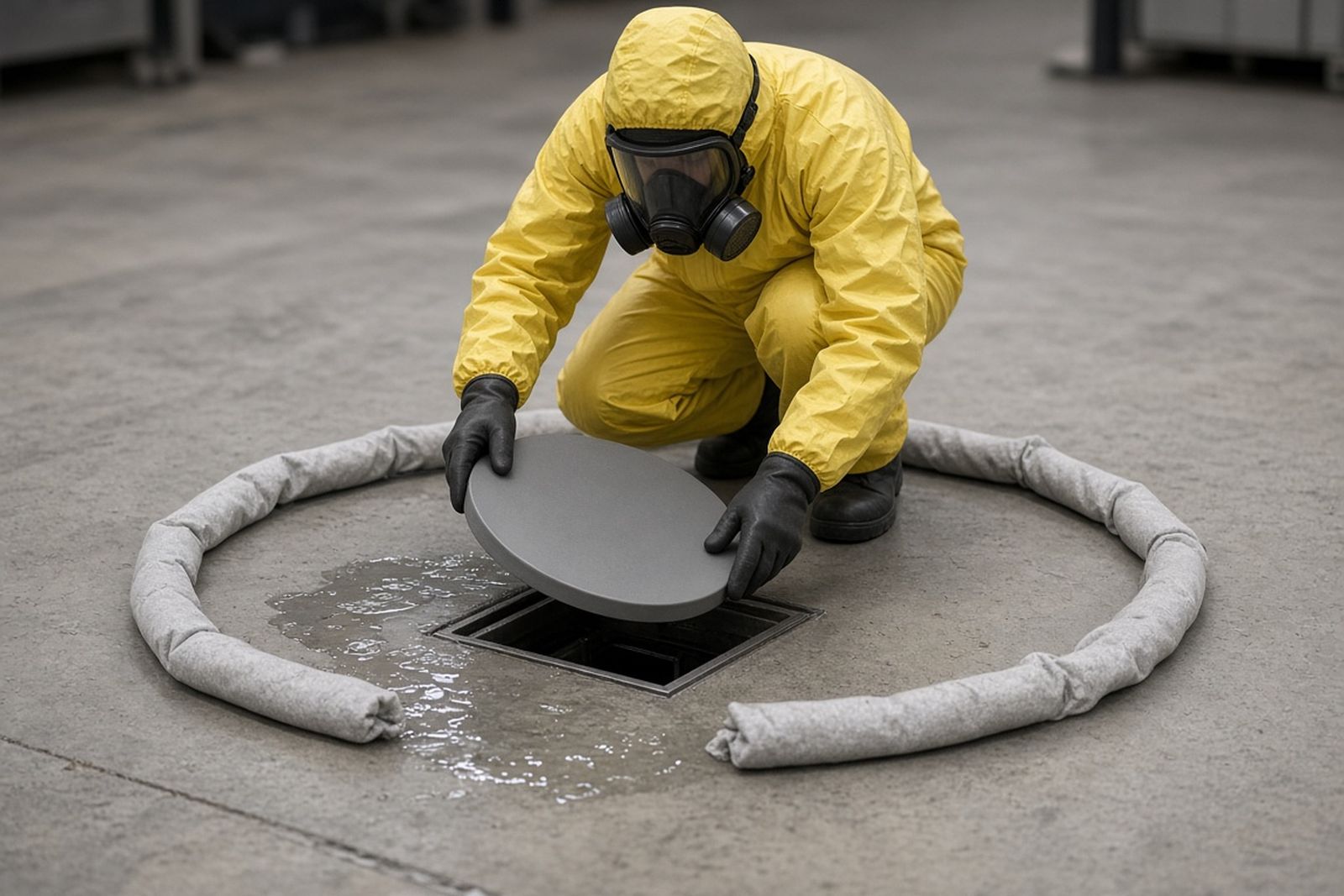
Cleaning in spill response means physically removing the spilled material and its residue. It usually starts with containment, such as blocking drains and building berms, then moves to recovery, using absorbents, pumps, or vacuum trucks to collect as much product as possible.
After the bulk is gone, crews clean the surfaces that remain. That may involve scrubbing concrete with a compatible detergent, washing equipment, pressure washing with collected rinse water, or removing and replacing materials that absorbed the chemical. Soil may need to be excavated.
Every part of this work generates waste: used absorbents, rinse water, protective equipment, and contaminated soil. Cleaning is not finished until that waste is characterized, packaged, and sent to an appropriate facility. Rinse water, in particular, should never simply run into a storm drain.
Porous surfaces change the picture. Unsealed concrete, asphalt, wood, and drywall can absorb a chemical below the surface, where it may continue to release vapors or leach out later. In those cases, cleaning may involve scarifying concrete, cutting out drywall, or removing wood rather than scrubbing alone.
- Contain the spill and protect drains
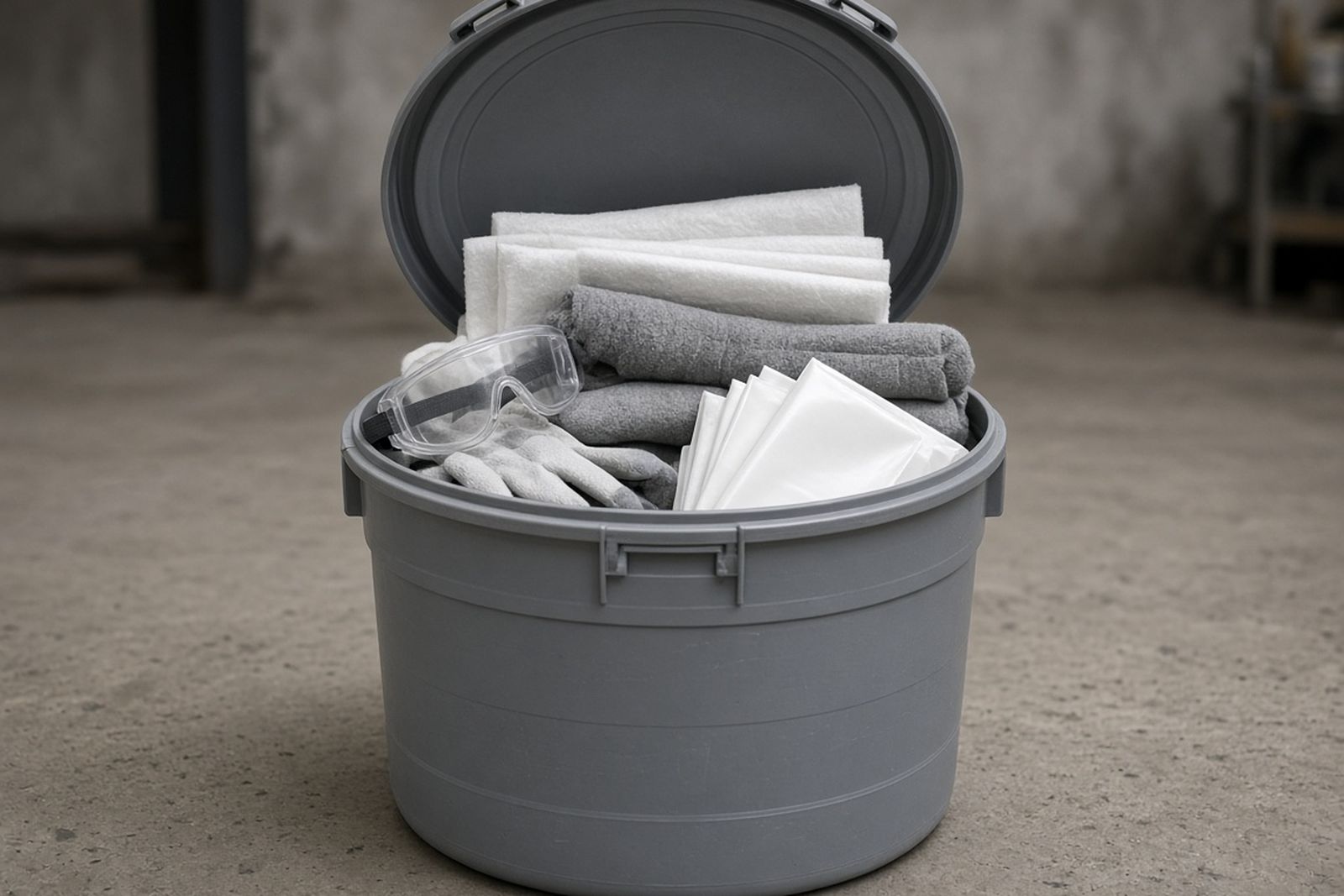
- Recover free liquid with absorbents, pumps, or vacuum trucks
- Clean remaining residue with compatible methods
- Collect rinse water rather than letting it run off
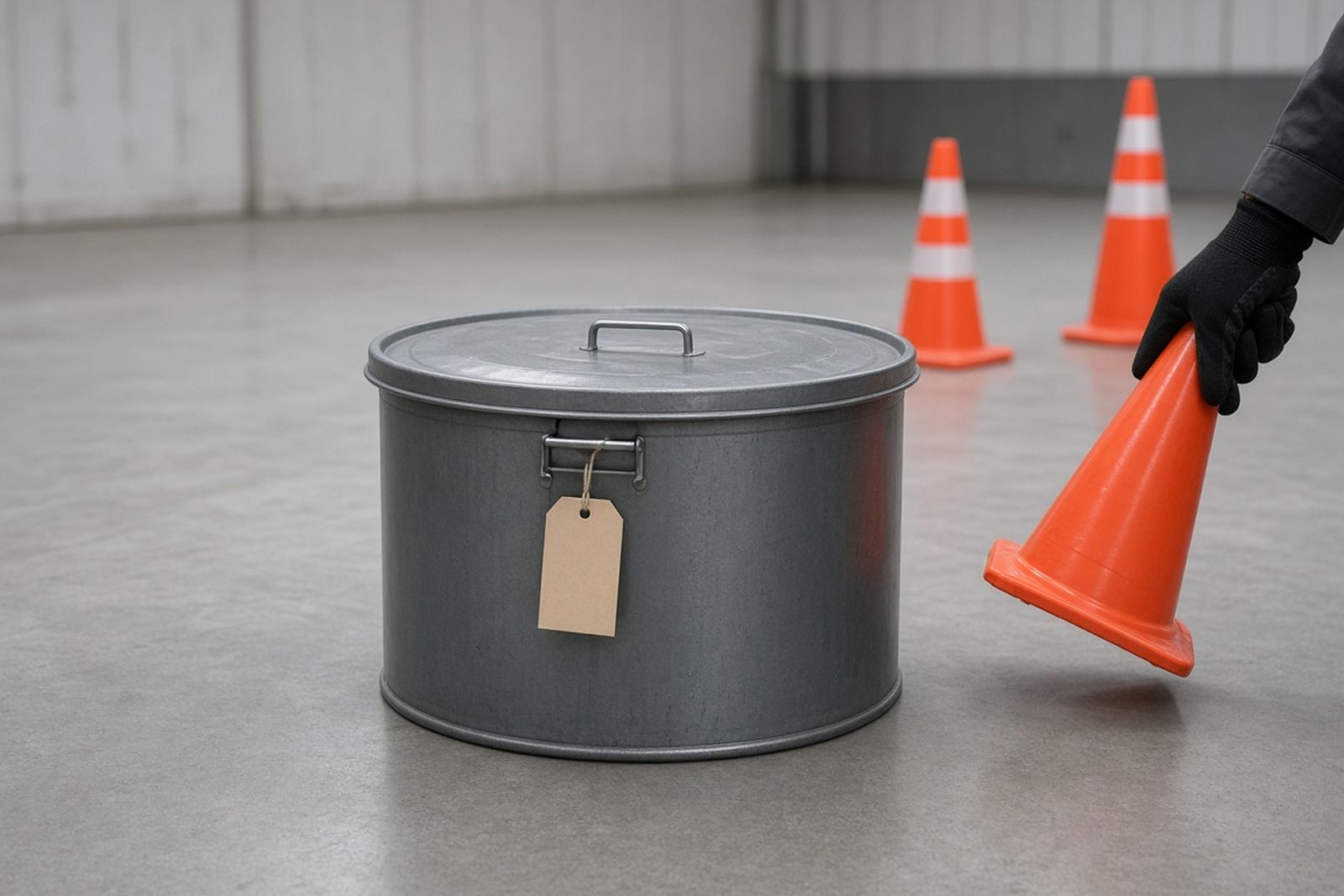
- Package all waste for characterization and disposal
Decontamination, neutralization, and when disinfection matters
Decontamination is the broad process of removing or reducing contamination from people, equipment, and surfaces to a safe level. In spill response, crews set up decontamination areas where workers remove protective gear in a set order, and tools are washed before leaving the site.
Neutralization is a specific chemical step used for certain spills, especially acids and bases. A compatible neutralizing agent is applied to bring the material closer to a neutral state, making it safer to handle and clean up. Neutralization must be done carefully, because some reactions produce heat or gas.
Neither step is the same as disinfection. Decontamination targets chemical residue. Neutralization changes the chemistry of the spilled material. Both depend on knowing exactly what spilled, which is why identification comes first.
Decontamination of people deserves special mention. If anyone was splashed, the first priority is removing contaminated clothing and flushing skin or eyes with water, following the safety data sheet and medical advice. Call 911 or poison control for guidance if exposure symptoms appear. Worker and bystander safety always comes before cleaning the site.
Disinfection becomes relevant when living microorganisms are part of the hazard. Examples include a spill of regulated medical waste from a truck, a laboratory release involving biological agents, a sewage overflow mixed with chemicals, or an industrial accident where workers were injured and blood is present alongside the spill.
In those cases, crews typically handle the chemical hazard and the biological hazard in order. They contain and clean the chemical first, then disinfect surfaces with an EPA-registered product appropriate for the organisms of concern, following the label's contact time.
Product compatibility is critical. Some disinfectants react with spilled chemicals. Bleach, for example, can produce dangerous gases when mixed with ammonia or acids. A trained crew checks compatibility before applying any disinfectant to an area that has held a chemical.
Sequencing also protects workers. Handling the chemical hazard first means crews are not exposed to reactive or toxic residue while they focus on biological contamination. It also keeps disinfectant from being wasted on surfaces that will be cleaned again anyway.
Mismatched methods and mixed spills
Mismatched methods can make a spill worse. Spraying disinfectant on a chemical spill wastes time and can cause a reaction. Washing a spill with water can spread it into drains or cause reactive chemicals to release heat or gas. Using the wrong absorbent can fail to hold the material or even react with it.
Unknown materials make this more likely. When a package or container is not labeled correctly, responders may not know what they are dealing with at first.
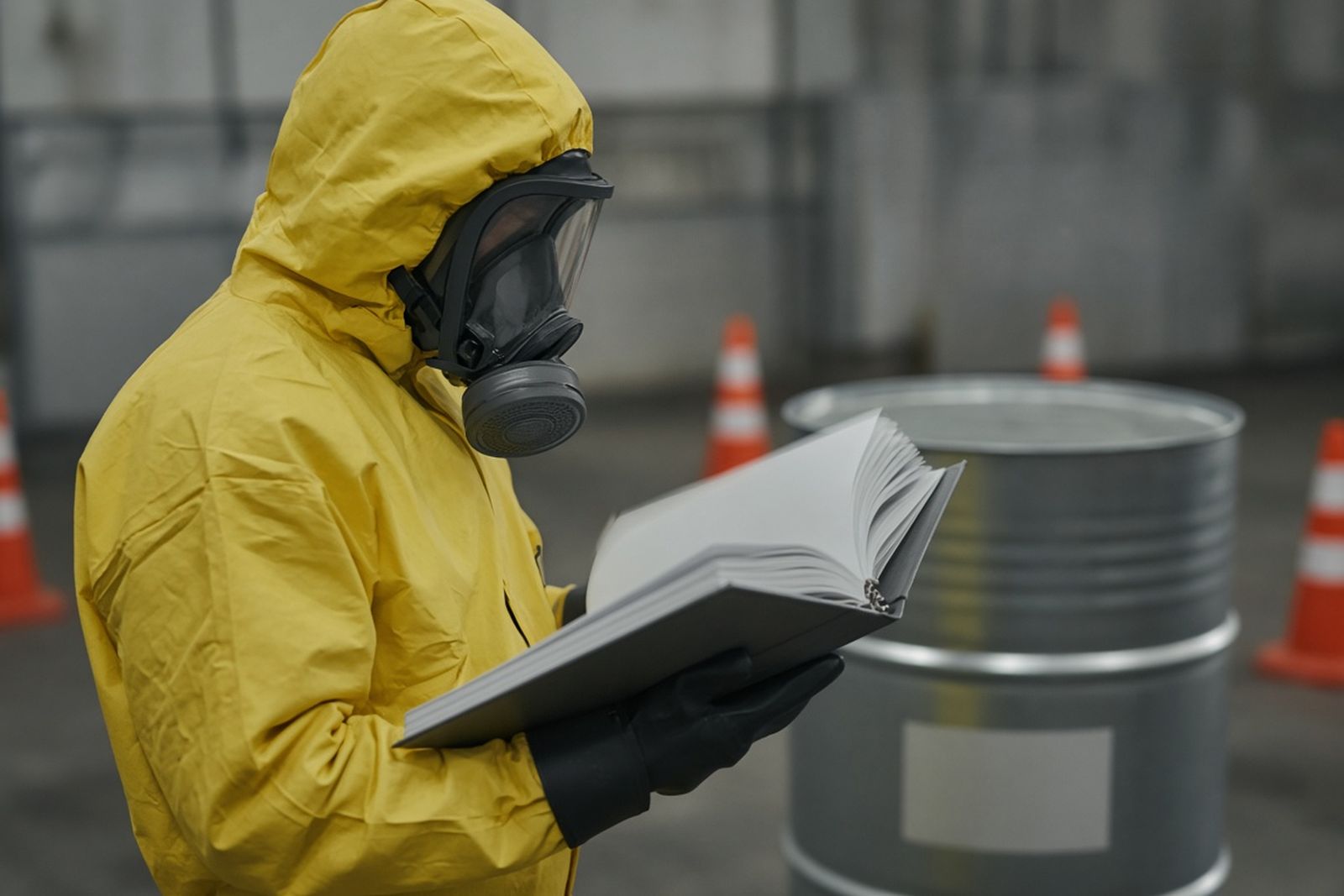
That is why a qualified contractor identifies the material before choosing any cleanup or neutralization method, and treats unknowns with caution until testing or documentation narrows the possibilities.
Mixed incidents are where the sequence matters most. A delivery vehicle that serves clinics and laboratories, for example, may carry both corrosive reagents and boxed medical specimens, and a minor collision can break both at once.
The chemical hazard comes first. A supervisor confirms what spilled from the shipping papers and container labels, the crew blocks any nearby storm drain, contains the corrosive liquid with a compatible absorbent, and neutralizes the residue according to the product's guidance. That waste is packaged and labeled for hazardous waste disposal.
Only then does the crew turn to the biological material. Damaged specimen packaging goes into an overpack as regulated medical waste, and the surrounding surface is cleaned and then disinfected with a registered product that is compatible with the neutralized area. The property owner should receive separate records for the chemical waste and the medical waste, along with photos and a summary of each step.
How do contractors confirm a surface is clean?
Confirmation after a chemical spill usually relies on measurement rather than appearance. Crews may use air monitoring to check for vapors, pH testing for acids and bases, wipe samples sent to a laboratory, or soil samples if the spill reached the ground.
The right test depends on the material and the setting. A small spill on sealed concrete might be confirmed with pH readings and air monitoring. A spill that soaked into soil or a porous floor might require laboratory analysis before the area is released.
Ask the contractor what standard it is working toward and how it will confirm the result. Where agencies are involved, cleanup targets may be set or approved by the state environmental agency.
Results should be written down. A good job file includes the readings or lab results, where samples were taken, and who took them. If you ever sell the property, refinance, or face questions from a neighbor, that record shows the spill was addressed and verified rather than just wiped up.
Questions that test the plan, and the one idea to keep
Start by asking what spilled and how the contractor confirmed it. Then ask what cleanup method it will use and why that method suits the material. If neutralization is planned, ask which agent and what precautions are in place.
Ask whether disinfection is needed and, if so, why. A contractor should be able to explain whether there is a biological component to the spill. If disinfection is planned for a purely chemical spill, ask what it is meant to accomplish.
Finally, ask how the area will be confirmed safe, which records you will receive, and how the waste will be classified and disposed of.
If the answers do not line up with what you know about the spill, pause and ask for clarification before the crew continues. A few extra minutes of discussion is far better than a cleanup method that has to be redone or that creates a new hazard.
For chemical spills, cleaning and decontamination remove the hazard, and neutralization changes it when appropriate. Disinfection is a separate tool for biological hazards and is only part of the plan when living organisms are involved. The right approach starts with knowing exactly what spilled and ends with measured proof that the area is safe.