Free hazmat spill response tool
Hazmat Spill Response Waste & Disposal Classifier
Five questions about the material point to the likely waste category and which authority to confirm the rules with.
Everything used to hold and clean a spill takes on the hazard of the spilled product. The disposal path for that material is where many sites go wrong. This guide asks about the material in front of you. Is it a soaked absorbent, recovered liquid, dirty soil or debris, used protective gear, or a damaged container or battery? What product did it touch, based on the label or SDS? Is that product fuel or oil, a listed chemical, or unknown? Did the material also touch blood or body fluids? Where did it come from? From those answers, it suggests a likely category. Most often that is hazardous waste under the federal hazardous waste law (RCRA). Sometimes it is regular industrial waste, a special recycling category called universal waste for some batteries, or medical waste when blood or body fluids are involved.
The tool stops at a likely category on purpose. Whether waste is hazardous depends on the exact product's traits. It also depends on state rules, which can be stricter than federal ones. Some materials need lab tests before a code can be assigned. Fuel-soaked pads show how rules vary. Some states allow a simpler path for small amounts, while others do not. Lithium batteries have their own shipping and disposal rules. When the guide flags an unclear or mixed result, keep that material apart and label it with what you know. Ask your response contractor and your state environmental agency before anyone moves it. Mixed or wrongly sorted loads can be turned away, billed again, or cited.
How to use it
- 1Describe the type of material, such as soaked absorbent, recovered liquid, soil, protective gear, or a damaged battery or container.
- 2Name the product it touched using the label or SDS. Say whether it is fuel or oil, a specific chemical, or unknown.
- 3Note whether blood or body fluids were also involved and where the material was generated.
- 4Read the likely category. Keep the waste apart and label it to match. Check with the named agency before it is hauled away.
Prefer to ask a person?
Your request is sent to the follow-up inbox. A coordinator can reply by email. Not for emergencies; call 911 first if anyone is in danger.
Work out the likely waste path
Hazmat Spill Response waste and disposal classifier
Points you to the likely waste category and who confirms the rule. State and local definitions control; verify before anything leaves the property.
Likely regulated medical waste (biohazard)
- Materials saturated with blood or other potentially infectious material, or that would release liquid if compressed, are treated as regulated medical waste in most states.
- Packaging usually means red bags inside rigid containers, labeled with the biohazard symbol, and a licensed transporter with a manifest.
Who confirms the rule
- State health or environmental agency (regulated medical waste program)
- The remediation provider, who should name the transporter and treatment facility in writing
This is an educational sorting aid, not a regulatory determination. Waste rules vary by state and county.
A worked example
Imagine a made-up city fleet yard. A pallet of forklift batteries tipped over while being unloaded. Several lead-acid batteries cracked and spilled acid across a concrete pad. Nearby, a dripping fuel hose had left a small oil stain, and the crew cleaned it at the same time. The yard supervisor uses the guide on each pile of material. The absorbent used on the battery acid is a soaked absorbent that touched a corrosive product named on the battery SDS. The tool returns hazardous waste as the likely category. It points him to his state environmental agency and his contractor for testing and a waste shipping record. The cracked batteries come back as likely universal waste. A note says damaged batteries may need different handling than whole ones. It says the recycler's rules and state guidance must be checked. The oil-only pads from the fuel drip get a different result. It says fuel-soaked pads may follow a simpler path in some states but must be confirmed locally. So he keeps them apart from the acid pads. The gloves and aprons used during cleanup go with the acid category because they touched the corrosive. He ends with three labeled containers and a list of questions for the contractor. He also sets up a call with the state agency to confirm each path.
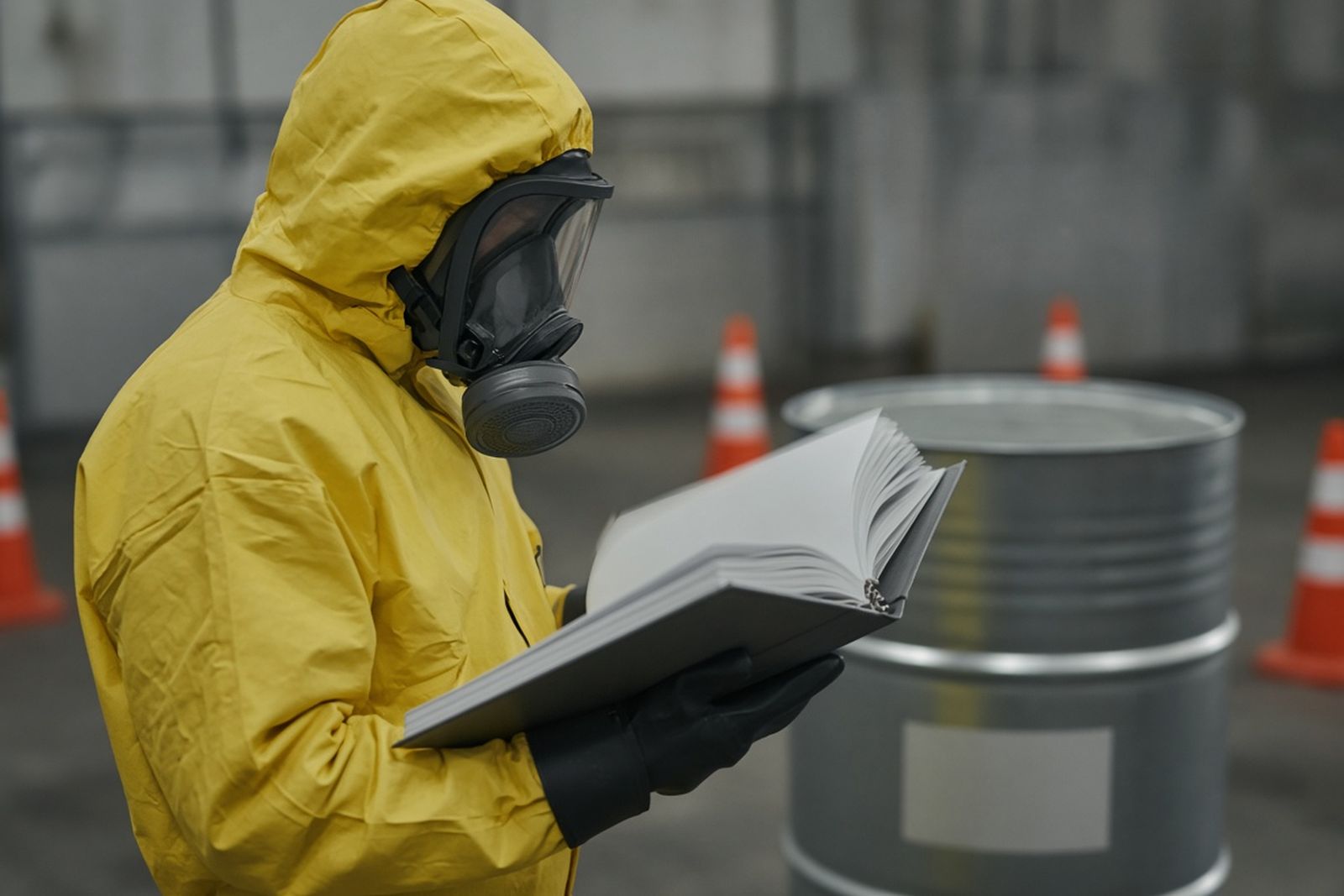
Numbers behind waste classifier decisions
- 54%
54% of respondents expressing a view considered environmental regulation insufficient.
Read with care: Self-reported behaviour; event-specific communications.
Source: Savoia et al. (2015)690 West Virginia adults surveyed online in February 2014, including affected and unaffected areas.
- 97.9%
97.9% in the nearer zone recalled mercaptan odor versus 77.6% in the farther zone.
Read with care: Reported symptoms and odor; not measured individual exposure doses.
Source: Behbod et al. (2014)204 household representatives surveyed in two distance zones, September 2012.
- 40 hours + 8 hours/year
OSHA's HAZWOPER rule requires general site workers to complete 40 hours of off-site instruction plus three days of supervised field experience, with 8 hours of annual refresher training.
Read with care: Not every biohazard cleanup legally falls under HAZWOPER; meth lab chemical work often does.
Source: OSHA (1990)US hazardous waste site workers
- 2.43 million
Janitors and building cleaners held about 2,432,600 jobs in the United States in 2025, with a median pay of $36,840 per year.
Read with care: Occupation-level count covers general cleaning, not specialized biohazard or remediation technicians.
Source: BLS (2025)United States, all employment settings, 2025 estimate
These figures are public research and agency data, not this network's own job records. Keep each number with its population, year and limits; none of them predicts cost, timing or outcome at a specific property.
Waste & Disposal Classifier questions for hazmat spill response
Are used absorbents always hazardous waste?
Not always, but they must be checked. An absorbent takes on the traits of what it soaked up. So a product that is corrosive or can catch fire usually makes hazardous waste. Some fuel-soaked materials may qualify for other paths in certain states. The business that made the waste must make and record the decision, usually with the contractor's help.
How are damaged batteries handled?
Whole lead-acid batteries and many lithium batteries are often handled as universal waste, a special recycling category, or through recycling programs. But cracked, leaking, or heat-damaged batteries may need hazardous waste handling. They may also need special packing to ship. Check the battery SDS, the recycler, and your state environmental agency. Never put damaged batteries in regular trash.
What if the spilled substance was never identified?
Waste from an unknown must be treated as hazardous until laboratory characterization says otherwise. Keep it segregated, labeled with the date and a description of the incident, and secured. Your contractor can arrange sampling and analysis, and the results drive the waste code and the disposal facility. Do not guess based on appearance.
Can rinse water go to the sanitary sewer?
Only with approval. The local wastewater agency controls what goes into the sewer. It often needs a permit or advance approval for anything beyond normal use. Storm drains are never an option. Collect rinse water and treat it as part of the spill waste. Keep doing so until the agency or your contractor confirms an approved path.
Which agency confirms the waste category?
The state environmental agency that runs the federal hazardous waste (RCRA) rules is the main authority. Some counties or cities add their own rules. For battery recycling, the recycler's rules on what it accepts also apply. For material that also touched blood or body fluids, the agency that oversees medical waste may need to weigh in.
Which material option fits oily absorbents or contaminated soil?
Choose the chemicals or residue option for saturated absorbents, drummed product, and soil stained with fuel, oil, or solvent. Choose the unknown option when the product has not been identified. Pick building materials only for removed drywall, flooring, or debris that the contractor has confirmed is not carrying chemical residue. The result points you to the agency that confirms the rule.
Why does the classifier ask where the waste came from?
The source changes the likely path. Households are usually sent to household hazardous waste drop-off programs. Businesses usually need a licensed hazardous waste hauler and a permitted site. Healthcare settings bring in separate medical waste rules. Picking the right source helps the tool point you to the program that really applies to you.
Related community polls
Every count is a real visitor vote; nothing is seeded or padded. One vote per poll per device, and you can change your answer.
How prepared is your site for a chemical or fuel spill right now?
In your most recent spill, what was the first action taken?
Other hazmat spill response tools
Cost Range Estimator
Set the affected area, surface types, severity and extras to see an educational cost range and the factors that move it.
OpenProvider Vetting Checklist
Fifteen questions to ask any remediation provider, a readiness score, and a copyable list of what is still unanswered.
OpenInsurance Claim Organizer
A guided checklist from finding the policy to tracking the carrier decision, with a printable summary of where the claim stands.
OpenFirst 24 Hours Planner
Tell the planner a few facts about the situation and get an ordered list of who to call, what not to touch, and what to photograph.
OpenDIY or Call a Pro? Risk Check
Eight yes-or-no questions that produce a risk level and explain when professional help is the safer choice.
OpenMore on hazmat spill response
Hazmat Spill Response services
Learn how spill response works for chemicals, fuel, oil, and unknown products. It runs from closing off the area and reading the SDS to waste disposal and reopening.
Costs explained
What drives the price, published cost ranges, and how to read a written quote line by line.
Insurance and payment
Which policies may respond, how to document a claim, and what to do if coverage is denied.
Community polls
Compare your spill planning and response choices with facility, fleet, and property managers who faced similar spills and learned from them.
Knowledge quiz
Check what you know about spotting hazards, who is in charge, containment, cleanup, waste, and records with a short quiz for managers.
Articles and resources
Useful articles on spill kits, guarding storm drains, battery spills, and who must report. Learn to build a spill file that holds up when an insurer or agency checks it.
City guides
Find learning resources and spill response contractor listings for your state, county, and city. See which agencies handle spill reports there, too.