Wellesley, MA

Hazmat Spill Response in Wellesley, MA

What to do, who to contact, and what to ask in Wellesley.

Oil or chemical spill at your Wellesley home? Get out of the fumes, call 911, keep it out of street drains, and know what to save for insurers.

Get an email reply about hazmat spill response

Send a short message to the follow-up inbox. A coordinator can reply by email. This form does not send emergency help; call 911 first if anyone is in danger.

Tell us what you need help with. Share a short description; please leave out medical details, access codes, and other sensitive information.

A request does not confirm a booking. For immediate danger, contact local emergency services.

Or email info@hazmatspillcleanup.online

The short answer for Wellesley, MA

If heating oil, generator fuel or a garden chemical spills at your Wellesley home, get everyone out of the fumes and call 911. Never hose it toward a street drain, because those drains feed the Charles River watershed. Here is what to give responders and what to keep before the basement reopens.

What to do, step by step

  1. 1

    Get the family out and close the basement door

    If the basement makes your eyes sting, bring everyone upstairs and outside. Close the door behind you and call 911. An attached garage can push heavy fumes toward the stairs you use every day, so stay clear of that too. Leave household fans off. Moving air can carry oil fumes to a furnace flame or a switch. Do not put down any pads yourself. Wait outside where the fire crew can find you.

  2. 2

    Hand over labels and the SDS from upstairs

    Give responders any labels, the oil delivery slip and the Safety Data Sheet, all from a safe place. A jug nobody can name gets checked by trained crews with field tests. Never stir household cleaners or powders into a spill. The crew needs to know the product before it can choose a cleanup method or decide how the waste must be handled. Tell them about anything else stored near the spill, such as pool or lawn products.

  3. 3

    Ask how the street drain will be protected

    Before a downpour on the Route 9 side of town, a good crew protects the end of your driveway and the street inlet. Fire officials work with MassDEP when drains, dry wells or soil are involved. Oil bound for a brook that feeds the Charles River may also need a report to the National Response Center. Write down the amounts responders mention, and take photos of the inlets from the sidewalk.

  4. 4

    Keep the shipping papers and wait for written clearance

    Pads from your basement go to a lab first, because federal law (RCRA) may treat them as hazardous waste. Ask for the signed shipping paper and the name of the plant that took them. Air freshener and dry concrete do not clear a basement after fumes. Ask for the air test notes in writing before you use the lower level again. Keep them with the SDS and your drain photos for the insurer.

What cleanup is like in Wellesley

In Wellesley, spills rarely start in a factory. They start in finished basements with heating oil, on generator pads, in pool rooms and where remodel supplies are stacked. On tree-lined blocks near the schools and colleges, neighbors and passing traffic notice a sheen on a driveway fast. Before any trouble, decide who in your household will meet the fire trucks on the Route 9 side. No one, including house staff, should walk into fumes to save the paving. People come first, and your driveway can be fixed later.

Your street's catch basins sit in the Charles River watershed, and many lawns have dry wells. That makes hosing a spill away a serious mistake. If you find a mystery jug in the garage, leave it unopened for the hazmat team. Do not try to neutralize anything by smell. Get the Safety Data Sheet (SDS) from an upstairs office or the contractor's truck, never from a cellar full of fumes. State rules decide when a home oil spill must be reported, so ask the fire officer or MassDEP.

Good records make your insurance claim and any later sale easier. Keep photos taken from a safe distance, leave drums unopened, and note who unlocked which door for responders. Write down the fire department and MassDEP reference numbers. Used pads cannot go out with Wellesley's curbside trash. If fumes pooled at the basement stairs, ask that the clearance for your finished lower level list the air targets that were met. That written clearance is what tells you the playroom or den is safe again.

What to expect for your type of home

  • Homes with finished basements and oil heat: Fumes can pool low at the stair landings. Keep the basement door shut, stay upstairs or outside, and ask the company where it will test the air.
  • Houses on blocks near schools: Other parents will ask what is going on. Follow what public responders say about sheltering, and do not pass along guesses from a group chat.
  • Pool houses and outbuildings: Pool oxidizers and fuel stored together are an unsafe pair. Tell responders both are there, and find the Safety Data Sheets if you can do so safely.
  • Homes with caretakers or house staff: Put it in writing that staff never mop or hose a spill. Their job is to close the area, call 911 and save the labels.
  • Sloped driveways: A driveway that tilts toward a curb inlet sends product into the watershed drains quickly. Tell the dispatcher which way yours slopes and where the inlet is.
  • Lower levels with rugs and couches: Soft furnishings can hold a solvent smell after the slab is clean. Ask the company which pieces can be saved and which should go.

Papers and records to keep

  • A timeline from the first basement oil smell to getting out, with who called 911
  • Photos of the garage slab and nearest street drain, taken from the sidewalk
  • The oil delivery slip or your landscaper's product sheet
  • Fire department and MassDEP reference numbers for your address
  • Where barriers or pads went near the driveway inlet, and estimated amounts recovered
  • The lab sheet for the basement pads and the signed paper naming the plant
  • Test results that let your family back into the finished basement
  • Times you called your insurer and your broker about the spill

Local offices and official help

Common questions in Wellesley

Heating oil is spreading on my garage floor near a school bus route. What do I do first?

If the smell is strong, get out and call 911. Keep anyone from starting a car parked over the oil. Do not mop it toward the catch basin on your street. Once you are safe, hand the fuel's Safety Data Sheet to responders. Trained crews will protect the street drain and haul the used pads away properly. Shut the basement door if fumes spread. Fuel is never a stain to scrub yourself.
Why shouldn't my caretaker try to neutralize a spill?

Because unknown mixes of acids, bases, oxidizers and solvents can make heat, toxic gas or fire. House staff have no meters, respirators or training for an unknown liquid. Their role is to close off the area, make the call and save the labels. Put that in your written house rules. Ban home chemistry, and ask staff to phone you whenever they notice fumes or an unlabeled product.

Does being in the Charles River watershed change how a driveway spill is handled?

Yes. Runoff from the end of a Wellesley driveway often reaches catch basins tied to the wider watershed. Pushing product off the pavement can turn a private mess into a release that must be reported. Once the product is known, a good crew blocks the inlet before anything reaches a brook. Photograph the flow path. State notice may be needed, depending on what spilled and how much. An insurance question does not pause that.

Where do the oily pads from my Wellesley basement go after cleanup?

They are tested, packed and labeled. If federal hazardous waste law (RCRA) covers them, a licensed hauler takes them to a permitted plant with a signed shipping paper. They are not normal trash. File the lab sheets and trucking papers with your photos and the oil company's Safety Data Sheet. Ask for the disposal site names in writing before the truck leaves. A later household hazardous waste drop-off is a separate thing.

When can my kids go back to the basement playroom after an oil smell?

Only when the playroom air meets numbers that an expert or the cleanup crew has written down. Air tests are often part of that. A dry slab says little, since carpet, drywall and ductwork can hold the smell long after. Air freshener does not clear a room. Write down who approved the return. If anyone still has symptoms, leave and have it checked again. Store the signed all-clear with the disposal papers.

A landscaping truck spilled fuel on my street. What should I do?

Keep yourself and your children away from it, and do not drive through it. Call 911 if fuel is spreading toward a storm drain or the smell is strong. Note the company name on the truck and the time. Tell the crew you have called, but do not try to help them clean up. Local officials will handle any notices that are needed after a street spill in Wellesley.

I rent to college students. How should I handle their chemical storage?

Limit what tenants may store, especially fuel for grills or scooters and strong cleaning chemicals. Give each tenant a short sheet that says not to mix cleaners and whom to call about a spill or smell. Keep basement storage labeled. If a spill happens, your tenants should leave and call for help instead of cleaning it up themselves. Go over the sheet again whenever new students move in.

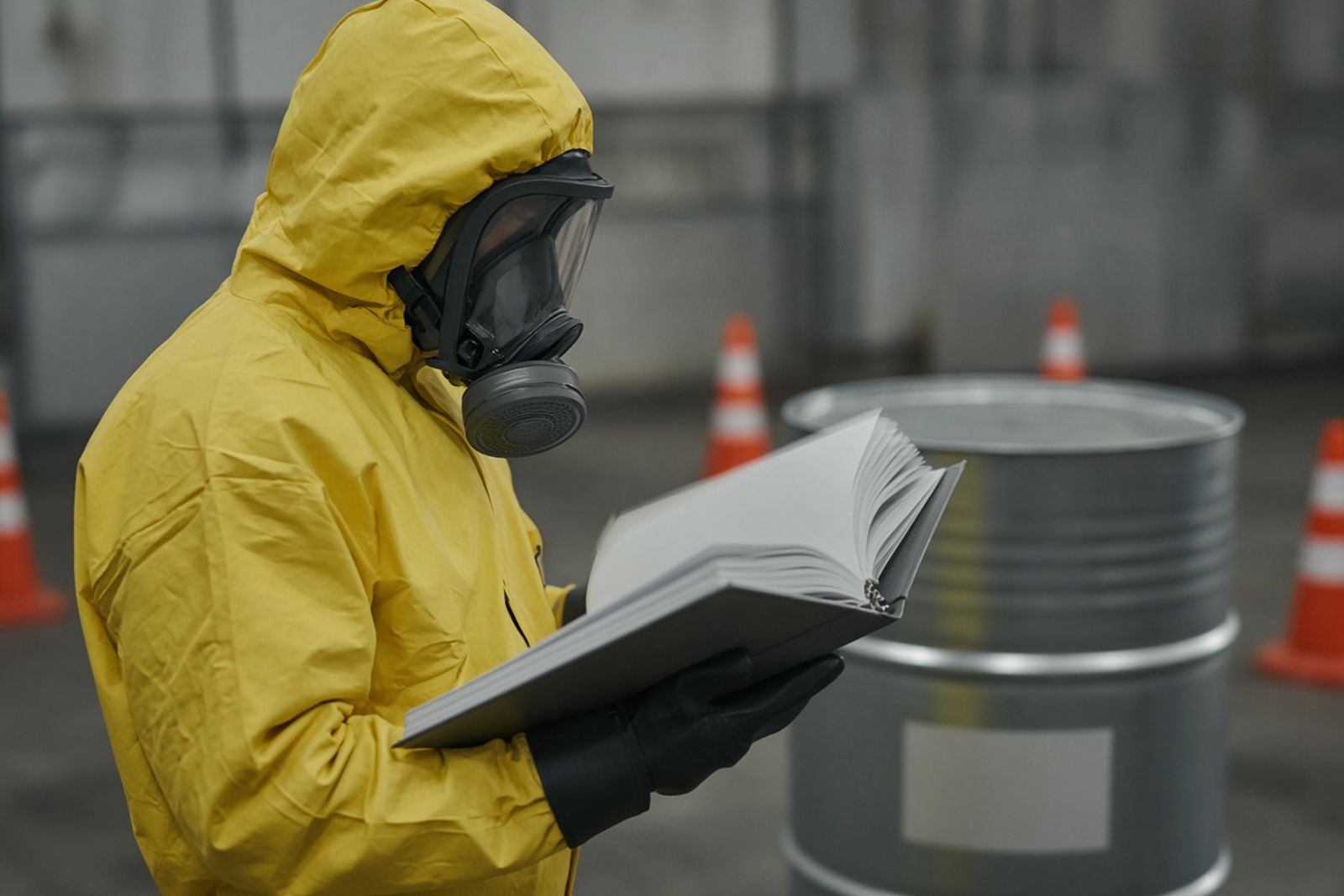
Technician in a yellow suit and respirator reading a safety data sheet binder beside a drum
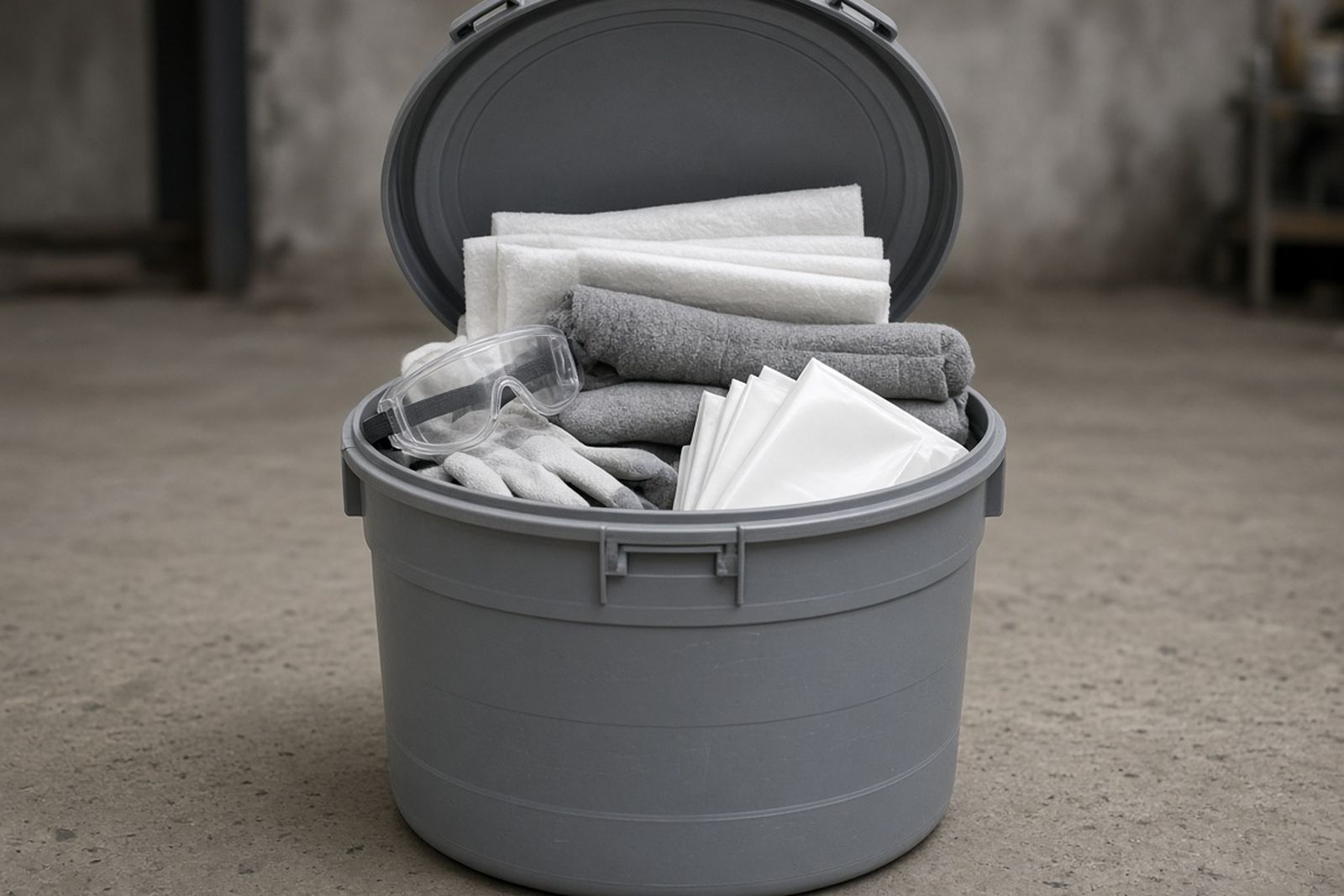
Open spill kit drum holding absorbent pads, goggles, gloves and disposal bags

Facts worth knowing

  • In West Virginia homes tested after a January 2014 spill, different faucets in the same home could have different contaminant levels.

    Why it matters: One clean tap does not clear your whole house; ask for testing at more than one faucet.

    Source: Whelton et al., 2015

  • Some insured flood victims in a study published in 2022 said their premiums went up a lot after they made a claim.

    Why it matters: Before you file, you may want to ask your insurer or agent how a claim could affect what you pay later.

    Source: McKenzie et al., 2022

  • Emergency responders at the first-responder operations level need at least 8 hours of training, and hazardous materials technicians need at least 24 hours.

    Why it matters: Check that your staff only take spill actions their training level covers; hours alone do not prove competence.

    Source: OSHA, 2024

Tools that help right now

What would you do?

Poll results

Vote to see how other people answered. You can change your answer at any time.

Safety

How prepared is your site for a chemical or fuel spill right now?

Be the first to vote
Your experience

In your most recent spill, what was the first action taken?

Be the first to vote

Need help in Wellesley?

Send a short message about the property to the follow-up inbox. A coordinator can reply by email with next steps.

Your request is sent to the follow-up inbox. A coordinator can reply by email.

If anyone is hurt or in danger, call 911 first.