Short answer
Compare local and national hazmat spill contractors on who actually responds, their HAZWOPER training and supervision, equipment for your chemicals, waste disposal arrangements, insurance, subcontracting, and documentation. National networks offer broad coverage and central dispatch, often through local subcontractors. Local firms offer familiarity and direct accountability but may have less capacity for large events. Vet both before a spill, not during one.
Choose before anything happens
The worst time to pick a hazmat contractor is while a chemical is spreading across your floor. Under pressure, people call whoever answers first, agree to terms they have not read, and hope for the best. Choosing ahead of time lets you compare options calmly and have a number ready.
Businesses that store chemicals, fleets that haul them, and property managers with commercial tenants all benefit from a pre-arranged contractor. Some sign service agreements that set rates and response expectations in advance. Others simply vet a few companies and keep their information in the emergency plan.
When you start looking, you will find two broad types: national response networks and local or regional contractors. Understanding how each works helps you decide which fits your risks.
Pre-arrangement also helps your insurer and your staff. An insurer may ask whether you have a response plan, and a named contractor shows that you do. Staff on a night shift can act quickly when the plan says exactly whom to call and what information to have ready, such as the chemical name, the approximate quantity, and whether anything reached a drain.
National networks and local contractors, compared
National networks typically run a 24-hour call center that takes emergency calls and dispatches a crew from their own branches or from a vetted local subcontractor near the incident. They are common in transportation, where a spill can happen anywhere along a route.
Transportation incidents are a large share of the work. Citing PHMSA data, CBS News reported in 2023 that hazmat incidents involving big rigs rose 155 percent over ten years, and that truck incidents outnumber train hazmat incidents 33 to 1. Carriers operating across many states often rely on national networks so one phone number covers every highway.
The strengths of this model are coverage, standardized documentation, and the ability to mobilize additional resources for large events. The trade-off is that the crew arriving at your site may belong to a subcontractor you have never vetted, and communication may pass through a coordinator rather than directly to the crew.
Local contractors are often based within driving distance of your facility and may already know your site, your fire department, and your state environmental agency staff. That familiarity can make coordination smoother during an incident.
You may deal directly with the owner or operations manager, and the same people who quote the job may lead the crew. For facilities with recurring needs, such as periodic tank cleaning or waste removal, a local relationship can extend beyond emergencies.
The limits are capacity and reach. A local firm may have fewer crews, less specialized equipment, and limited ability to handle a very large release or several at once. It may not be able to respond outside its region.
What training and supervision should any contractor have?
Regardless of size, the people working on your spill should be trained for the work they do. OSHA's HAZWOPER standard sets minimum training for different roles, and supervisors are expected to have more than the crew they lead.
Ask each contractor to describe the training of its crew members and supervisors, including refresher training. Ask who will be in charge on site and what their experience is with your type of chemical.
If a national network may send a subcontractor, ask how the network verifies that subcontractor's training and safety record. The network's standards should apply to everyone it dispatches.
- HAZWOPER training appropriate to each worker's role
- An experienced on-site supervisor for each job
- Respiratory protection program and medical clearance for workers
- Experience with the chemicals you store or haul
- Clear process for verifying subcontractor qualifications
Equipment, waste, contracts, and pricing
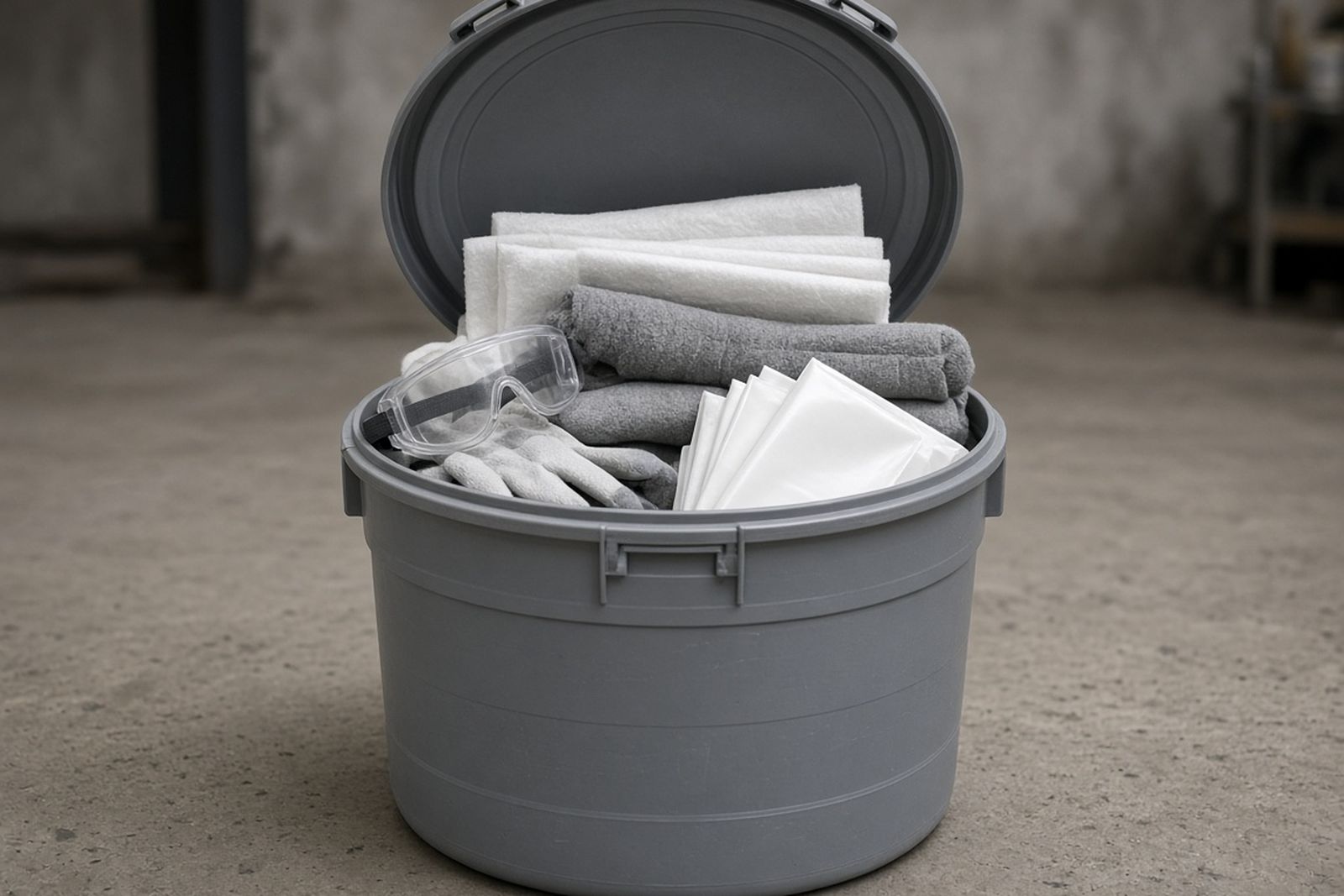
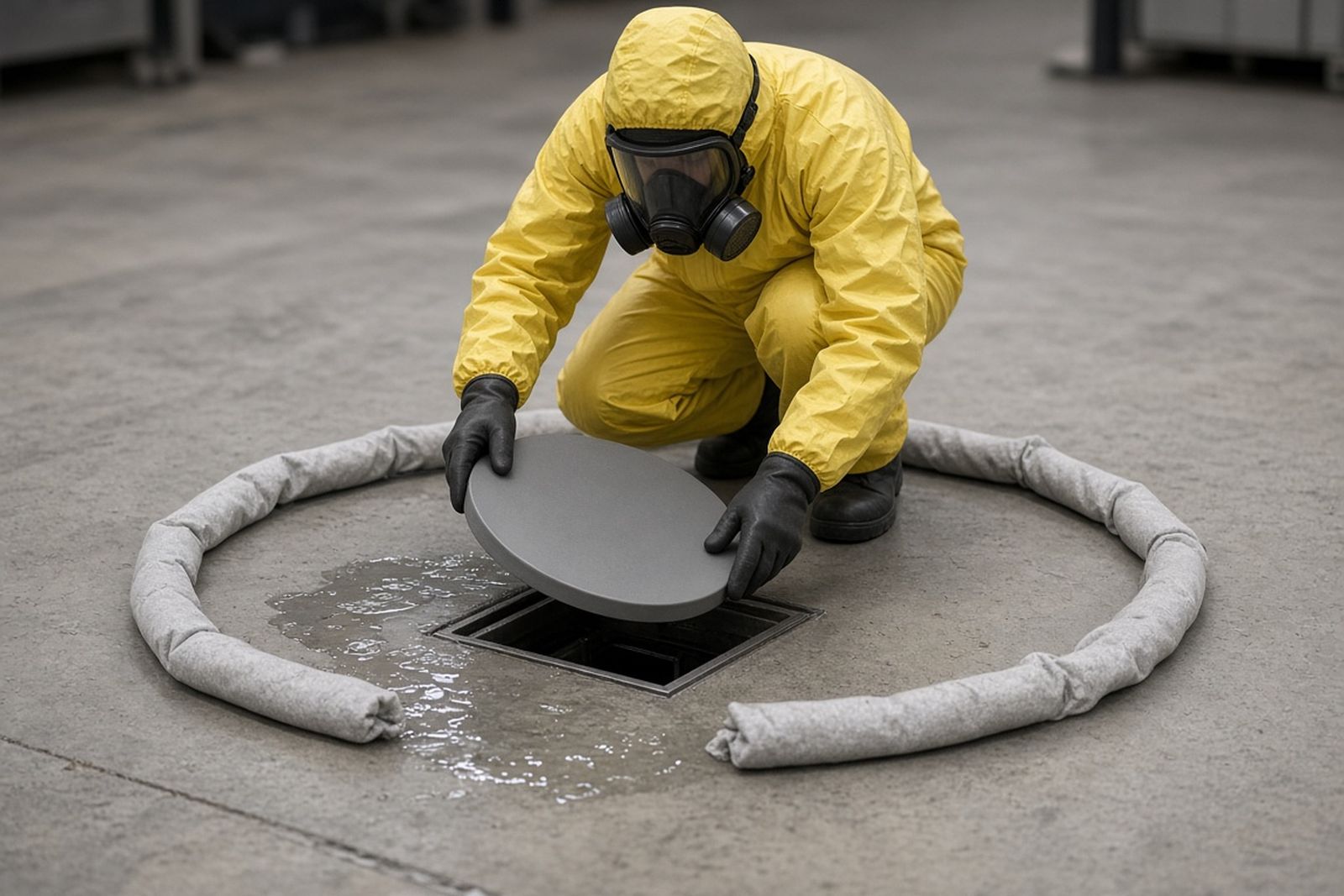
Ask what equipment each contractor keeps ready and how quickly it can be deployed. Relevant items include air monitoring instruments, absorbents and neutralizers suited to your chemicals, pumps, vacuum trucks, containment booms, drums and overpacks, and decontamination supplies.
Waste handling deserves just as much attention. A good contractor can characterize waste, arrange licensed transport, and deliver it to permitted facilities, then provide you with manifests and disposal records. Ask which facilities it uses and whether it handles the waste paperwork or expects you to.
National networks may have established relationships with disposal facilities across many regions. Local contractors may have strong relationships with nearby facilities. Either way, you want a clear, documented path.
Ask for a certificate of insurance showing general liability, pollution liability, workers' compensation, and auto coverage appropriate to the work. Confirm the policies are current.
Understand how pricing works. Many contractors use time-and-materials rates for emergencies, with published rates for labor categories, equipment, and materials. Ask for the rate sheet in advance and whether it changes for nights, weekends, or holidays. For national networks, ask whether coordination or dispatch fees apply on top of the responding crew's charges.
Read any service agreement for terms on authorization, billing disputes, and who can approve additional work. The fewer surprises in the contract, the easier the response.
After a response, compare the invoice with the daily logs and the rate sheet. Labor hours, equipment days, and materials should line up with what the crew recorded. Questions are easier to resolve within days of the job than months later, and a contractor that documents carefully will have the answers ready.
Using both: one manufacturer's plan
As an illustration, take a mid-size manufacturer that stores solvents, acids, and hydraulic oil at one plant and ships finished products by truck across several states. The safety manager is updating the emergency plan.
For the plant, she interviews two local contractors and one national network. She visits the local contractors' yards, reviews their training records and equipment, and asks each for a sample closeout report. One stands out for its experience with the plant's specific solvents and a supervisor who has worked with the local fire department for years. She signs a service agreement with that company for on-site incidents.
For shipments, she recognizes that a local contractor cannot cover a spill three states away. The company's carrier already has a national network agreement, so she confirms it covers the company's products, reviews how the network vets subcontractors, and adds the network's number to the shipping papers and driver instructions.
When a small hydraulic leak happens at the plant months later, the local contractor's supervisor knows the site layout and drains before arriving. When a pallet of product is damaged in a highway crash, the national network dispatches a crew near the scene within its coverage. Each choice fit a different risk.
Warning signs that rule out a contractor
Some problems disqualify a company no matter how large or small it is. Be wary of any contractor that cannot show training records, will not name its on-site supervisor, or declines to provide a certificate of insurance. Those are basic documents a professional firm has ready.
Watch how a company talks about the chemical. A contractor that proposes a cleanup method before asking what spilled, or that treats every spill the same way, is skipping the most important step. So is one that plans to wash residue into a drain or offers to haul waste without manifests.
Pricing can also signal trouble. A quote far below others may leave out waste disposal, air monitoring, or supervision, only for those costs to appear later as change orders. Ask every contractor to itemize what is included.
For national networks, a vague answer about subcontractor vetting is a warning sign. You are trusting the network to send qualified people, and it should be able to explain exactly how it checks them.
- No training records or unnamed supervisor
- No certificate of insurance on request
- Cleanup plan offered before the chemical is identified
- Willingness to rinse to drains or skip waste paperwork
- Unexplained low quotes that omit disposal or monitoring
- Vague answers about subcontractor qualifications
What is the simplest way to decide?
Map your risks. If your exposures are at fixed sites in one area, a strong local or regional contractor may be ideal. If your exposures travel or span many regions, a national network may be necessary, possibly alongside a local contractor for your main facilities.
Revisit the decision every year or whenever your operations change. A new chemical, a new facility, or a new shipping lane can shift which contractor fits best, and a quick annual call to confirm contacts, rates, and coverage keeps your plan accurate.
Then vet every option the same way: training, supervision, equipment, waste handling, insurance, pricing, documentation, and references. Verify rather than trust, and record your choice in your emergency plan so anyone on shift knows who to call.