Short answer
Expect a professional hazmat spill response to begin with questions about the material and a site assessment, followed by setting up work zones, containing the spill, and monitoring the air. The crew then recovers and cleans up the material, decontaminates people and equipment, packages and profiles the waste, and provides documentation you can use for regulators, insurers, and your own records.
What will the contractor ask me on the first call?
The first call is triage. The dispatcher needs enough information to send the right crew with the right equipment. Expect questions about what spilled, how much, where, when, and whether anyone was hurt or exposed.
They will also ask whether the material reached a drain, soil, or water, whether there is any fire or strong vapor, and whether emergency services are already on scene. If you know the product, have its safety data sheet ready. If you do not, say so plainly.
Keep your answers factual. Estimate volume as best you can, and describe what you see rather than what you guess. A crew that arrives expecting five gallons of motor oil and finds fifty gallons of solvent loses time re-equipping.
Directions, and what to do while you wait
Finally, give clear directions and a site contact. On large properties, name the gate, dock, or building where the crew should report.
While you wait for the crew, keep people away from the area, avoid anything that could create a spark near flammable material, and do not wash the spill toward a drain. Those steps are simple, but they often decide how large the job becomes.
What happens when the crew arrives?
The crew's supervisor typically meets your site contact first and gets a briefing. Then the supervisor walks the perimeter at a safe distance to see the spill, its path, nearby drains, ignition sources, and anyone who may have been exposed.
If fire or police responders are on scene, they are in charge of the emergency. The contractor coordinates with them and begins work once they allow it.
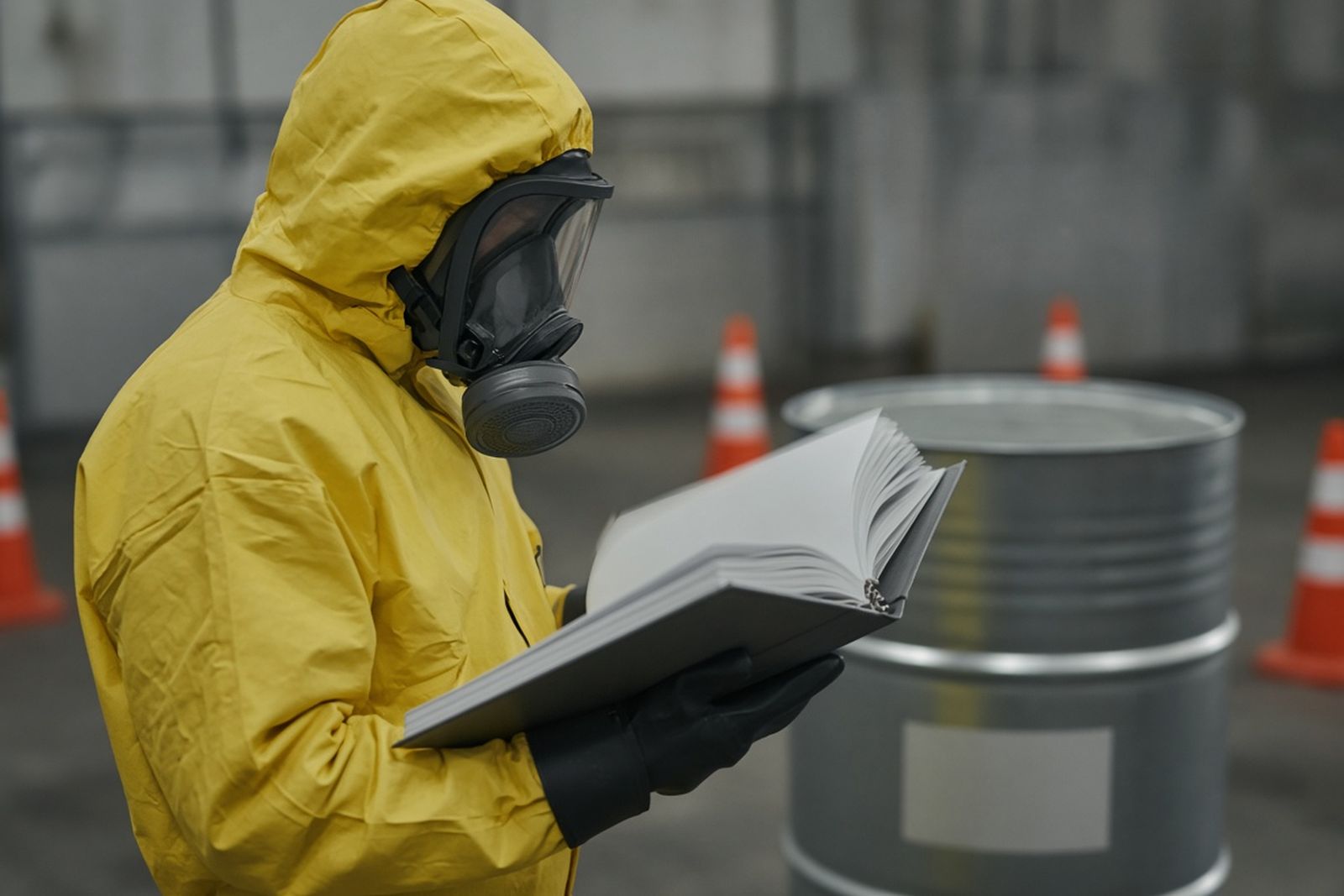
Air monitoring often begins right away. Instruments check for flammable vapors, oxygen levels, and specific chemicals, depending on what spilled. Those readings shape the protective equipment the crew wears and how close anyone can safely get.
Your role once the crew is working
You may be asked to move people farther away, shut off equipment or ventilation, or keep vehicles out of certain areas. Follow those requests promptly, even if they disrupt operations.
If anyone was splashed or felt ill before the crew arrived, tell the supervisor right away. The crew can help with initial decontamination steps, and the person should receive medical evaluation. Bring the safety data sheet along if they go to a clinic or hospital.
Zones and barriers
Zones keep contamination from spreading and keep people safe. You will often see three areas marked with tape, cones, or barriers.
Only trained people in appropriate protective gear enter the hot zone. Everyone else stays back. That separation can feel excessive for a small spill, but it is a standard practice that prevents tracking material through a building.
Expect your normal traffic patterns to change while zones are in place. A loading dock may close, a hallway may be blocked, or a parking area may be roped off. Let employees, tenants, or customers know early, and assign someone to redirect people so no one wanders into a marked area.
Zones are usually removed only after the supervisor confirms that cleanup and decontamination are complete. Do not take them down yourself, even if the area looks clean.
- Hot zone: the spill itself and the area where contamination is present
- Warm zone: the decontamination corridor where people and equipment are cleaned on the way out
- Cold zone: the support area where the crew stages equipment and where your staff can observe
- Drain protection: covers or berms placed on nearby drains, often before anything else
- Access control: a single entry and exit point so the crew can track who is inside
Containment and cleanup
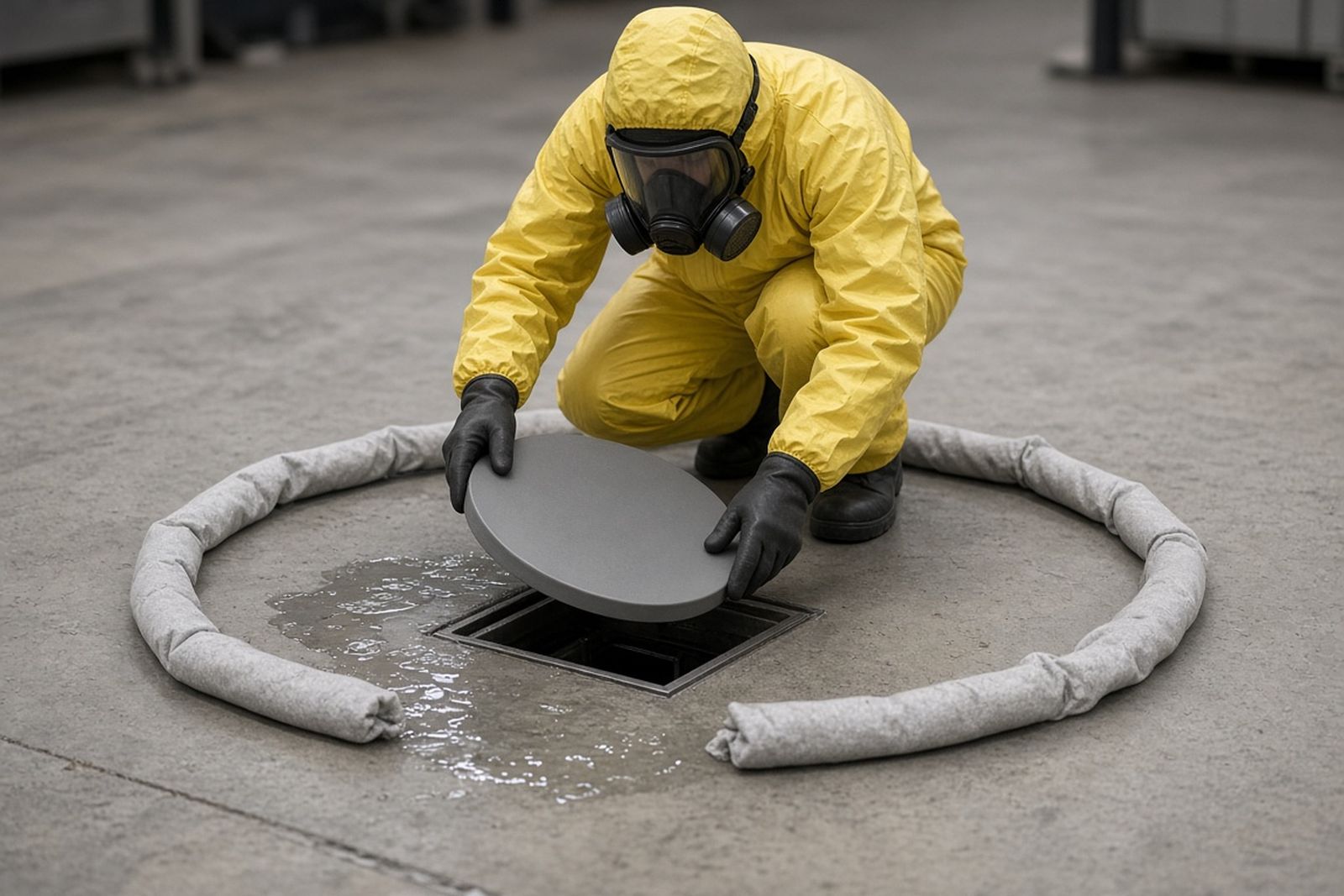
Containment comes first. The crew stops the source if possible, such as uprighting a drum or plugging a leak, then limits spread with berms, booms, or absorbent socks. Protecting drains is a top priority.
Recovery follows. Free liquid may be pumped or vacuumed into containers. Remaining material is absorbed with products compatible with the chemical, then swept or scooped into drums. Acids or caustics may be neutralized before absorption.
Surfaces are then cleaned. Depending on the material, that might involve detergents, solvents, pressure washing with capture, or repeated absorption. Rinse water is collected rather than sent down a drain.
If the spill reached soil, the crew may excavate affected material. That phase can involve heavier equipment, stockpiling on plastic sheeting, and sampling to confirm how far contamination extends.
Who is qualified to do this work?
Federal rules under OSHA's HAZWOPER standard set minimum training for people who respond to hazardous substance releases, with separate requirements for responders, technicians, cleanup workers, and on-site supervisors.
Training levels differ by role, so it is reasonable to ask which roles are on your site and how each person's training applies. A reputable contractor answers without hesitation.
Your own staff may also have roles. Some facilities train employees to contain small, known spills and to support a contractor safely. Others train staff only to evacuate and call. Your written program should say which applies at your site.
What happens to the waste?
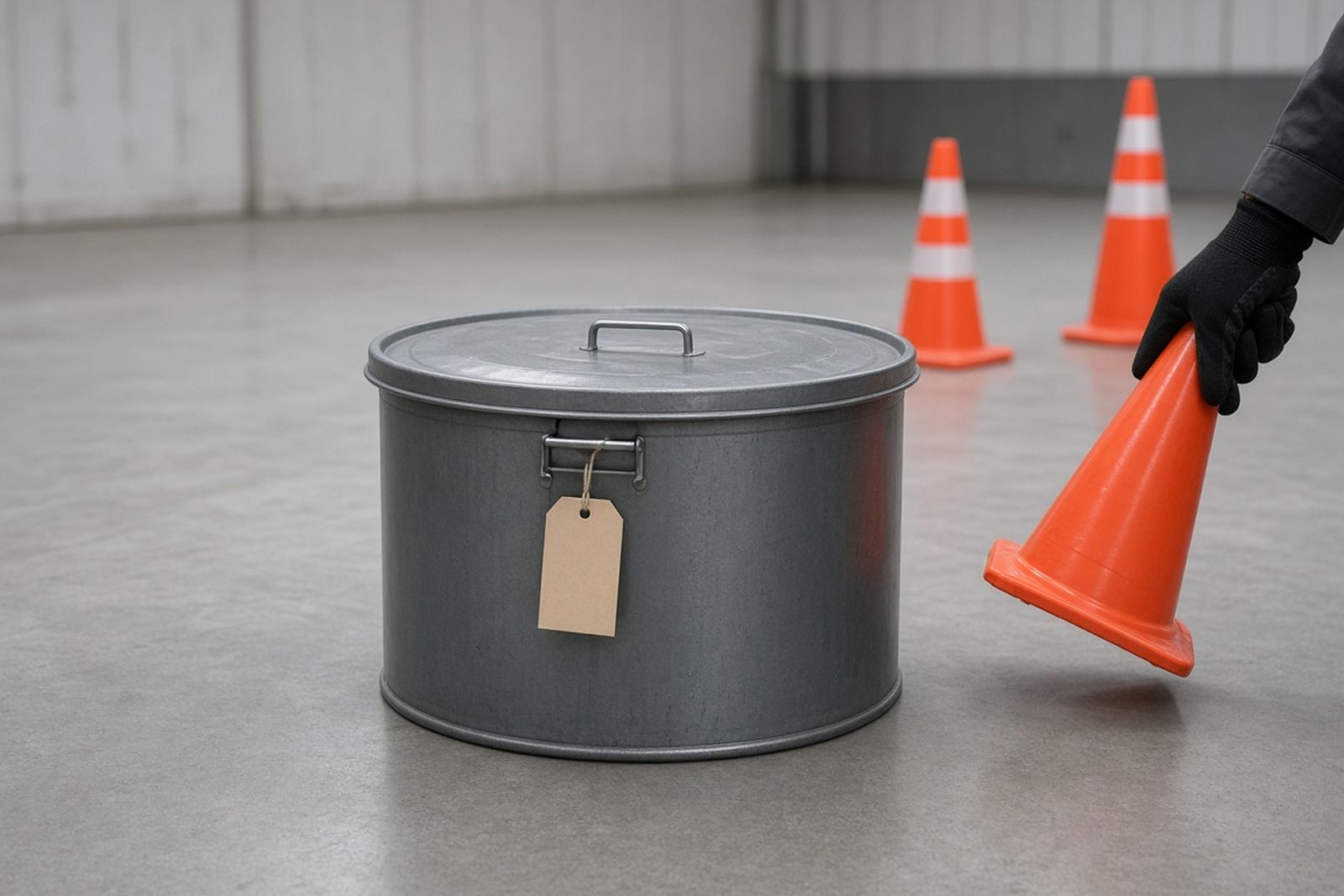
Everything used or recovered becomes waste: absorbents, protective gear, drums of liquid, and any excavated soil. The crew packages and labels it on site.
Before disposal, the waste is profiled. That may mean relying on the safety data sheet, or sending samples to a lab when the material is unknown or mixed. The profile determines whether the waste is hazardous or non-hazardous and where it can go.
You will usually be asked to sign as the generator. Read what you sign and ask questions if the description does not match what you know. Your business remains connected to that waste after it leaves, so keep copies of profiles, manifests, and disposal certificates.
Waste may stay on site in labeled drums for a period while profiling is completed. Ask where it will be stored and how it will be secured.
Waste transport usually happens after the crew leaves, on a separate schedule. The contractor or its disposal partner will arrange pickup once the profile is approved by the receiving facility.
A small fuel release, start to finish
Most calls are smaller than people fear, and they follow a recognizable arc. A split fuel transfer hose at a vehicle yard or loading area, spraying diesel across concrete toward a storm inlet, is a good example of what a well-run response looks like end to end.
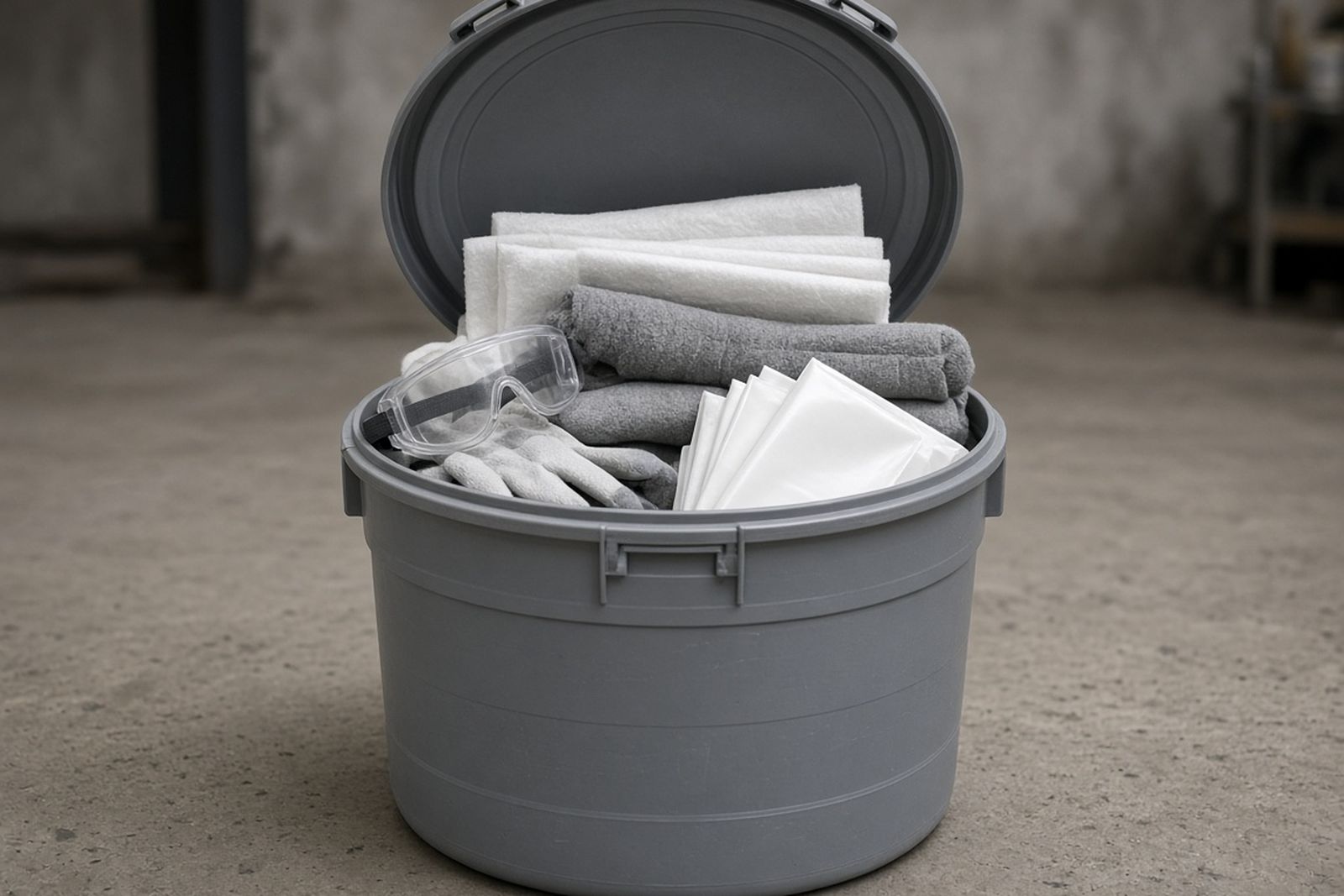
The best outcomes start before the crew arrives. Someone shuts off the pump and drops a drain cover over the inlet from a nearby spill kit. A supervisor calls the contracted responder and whoever handles environmental matters for the site, who starts checking whether any fuel reached the storm system and what reporting might be required.
The crew then sets up zones and monitors for vapors, recovers pooled diesel with a vacuum unit, absorbs the remaining film, and pressure washes the pad with a capture system. Opening the storm inlet to inspect it is routine; any sheen found there is recovered with absorbent pads.
Finally, the crew drums the waste, the site completes any required notifications, and the contractor sends a closeout report with photos, times, volumes, and disposal records.
What documentation should I receive at closeout?
A complete closeout package helps you answer questions from regulators, insurers, auditors, and your own leadership. Ask for it in writing and keep it in a place where others can find it.
Review the package within a few days while details are fresh. If a time, volume, or description does not match your own notes, ask the contractor to correct it before the report is shared with anyone outside your organization.
- A narrative of what happened, when, and what the crew did
- Photos before, during, and after the response
- Air monitoring and sampling results, if any were taken
- Waste profiles, manifests, and disposal or treatment certificates
- A list of crew members and their roles
- Recommendations to prevent a repeat, such as spill kit placement or secondary containment
When is the site considered clean?
For a small spill on sealed concrete, clean may simply mean no visible material, no odor, and no vapor readings. For spills that reached soil or water, a regulator may set cleanup standards and require confirmation sampling before the site is closed.
Ask your contractor what standard applies and who decides. If a regulator is involved, the answer may take weeks while samples are analyzed and reports are reviewed.
Once operations resume, review what happened with your team. Restock spill kits, update your procedure if needed, and consider whether storage, containment, or training should change.