Short answer
When a hazardous material spills, move people away and upwind, call 911 if there is fire, injury, strong vapor, or an unknown substance, and eliminate ignition sources only if it is safe. Protect nearby drains if you can do so without exposure, find the safety data sheet, keep a record of times and actions, and call your spill response contractor and required agencies.
The first minute
Get people away from the spill. Move them upwind and uphill if possible, since vapors and liquids travel with air and gravity. Do not let anyone walk through the spill or linger to look at it.
Call 911 if there is a fire, an injury, a strong vapor, a large release, or a substance you cannot identify. Tell the dispatcher what you know, what you do not know, and whether anyone was exposed. Emergency responders will take charge of the scene.
If someone was splashed or a vehicle is leaking
If a person was splashed, help them away from the spill and follow the first aid measures on the safety data sheet if you have it. Flushing skin and eyes with water is a common first step for many chemicals, but check the SDS if you can do so quickly.
If the spill came from a vehicle, such as a tanker, a delivery truck, or a fleet van, look for placards or shipping papers from a safe distance and share what you see with the dispatcher. Do not approach a leaking vehicle to read labels.
Do not try to be a hero. Your job in the first minute is to keep people safe and get trained help on the way.
Act now or wait for responders?
Your written spill procedure should draw this line in advance. In general, trained staff may handle small spills of known, low-hazard materials using the right spill kit and protective equipment. Everything else waits for trained responders.
Wait for responders if you do not know what the material is, if there is strong odor or visible vapor, if the spill is large or spreading quickly, if there is any fire or ignition risk, or if you do not have the right protective equipment. Also wait if anyone has symptoms.
When in doubt, isolate the area and call. A contractor or fire department will never fault you for asking for help on a spill you were unsure about.
Trained staff and after-hours shifts
If your site has trained spill responders on staff, notify them immediately and let them assess. Their training and your procedure determine what they can safely do.
After-hours spills deserve special planning. Night and weekend crews are often smaller and may include newer staff, so make sure every shift knows the call sequence and where the spill kits and SDS library are kept.
What can I safely do to limit the spill?
If you are trained and it is safe, a few quick actions can dramatically reduce the size of a spill. Each one should be done from a safe position without entering the spill or vapors.
- Stop the source if it is simple and safe, such as closing a valve or uprighting a container
- Shut off ignition sources near flammable materials, if you can do so without entering vapors
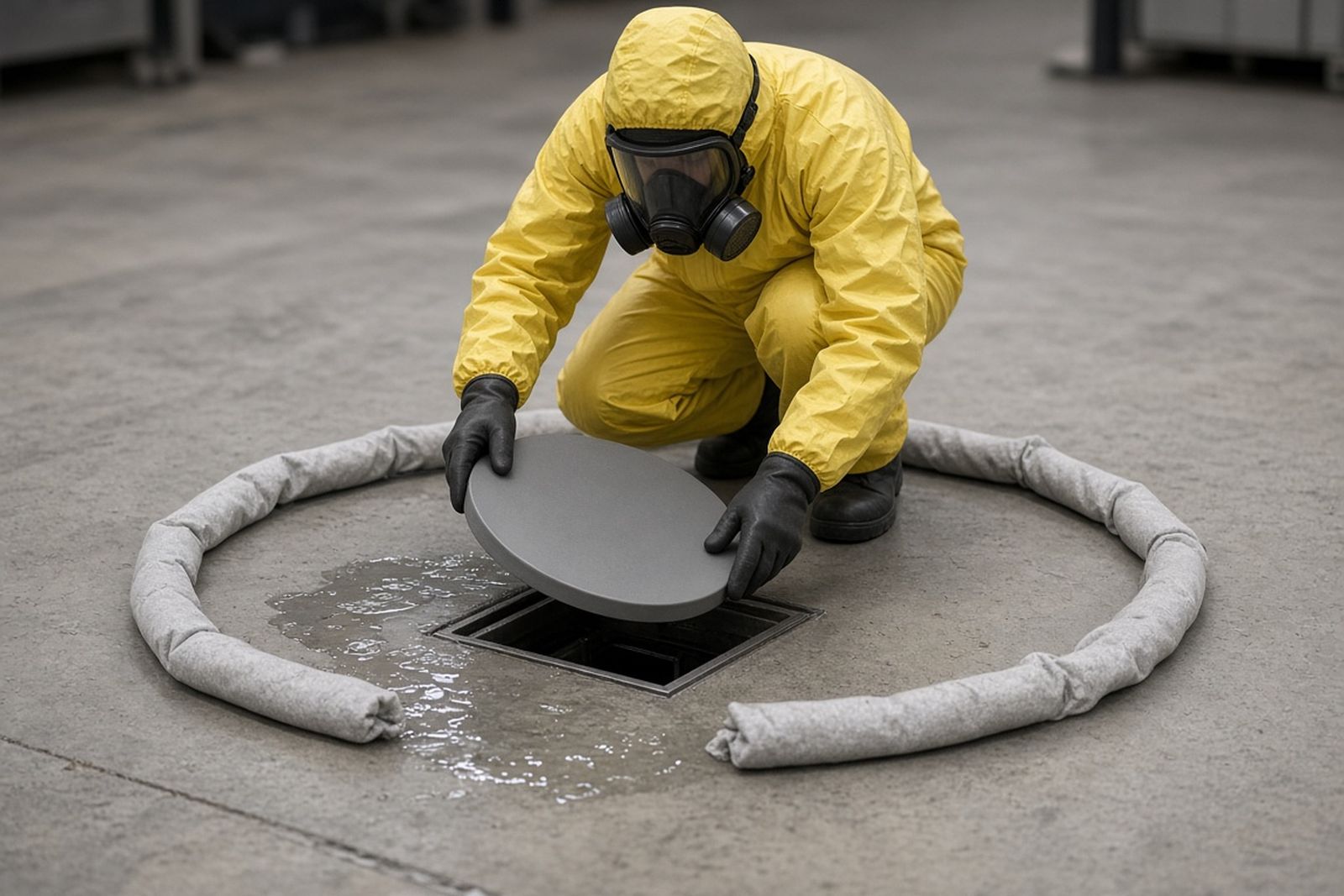
- Place drain covers or absorbent socks to keep liquid out of storm and floor drains
- Surround the spill with absorbent booms or socks to stop it spreading
- Close doors to contain vapors inside a room, and shut off air handlers that might spread them
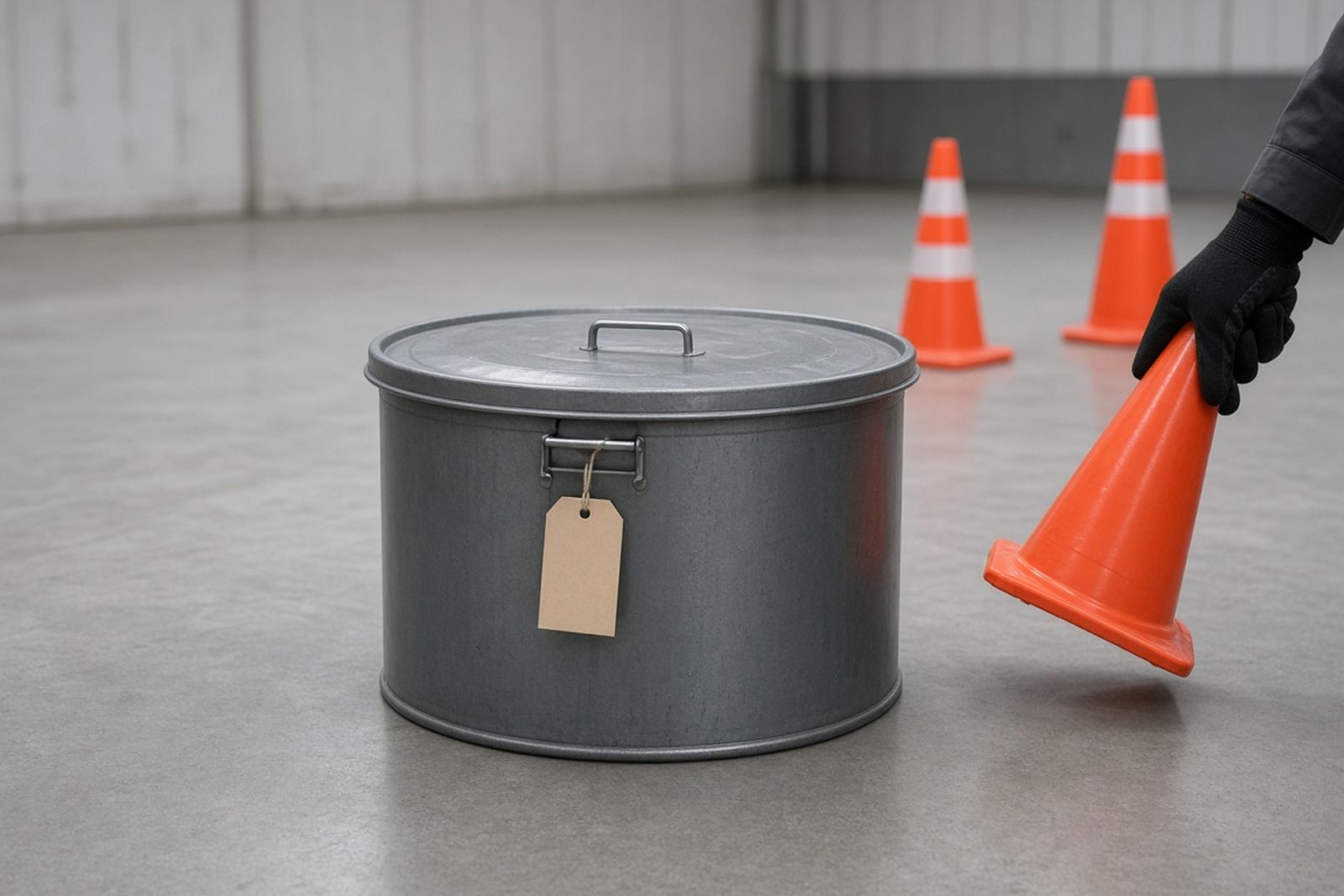
- Keep vehicles and forklifts away from the spill area
Using the safety data sheet quickly
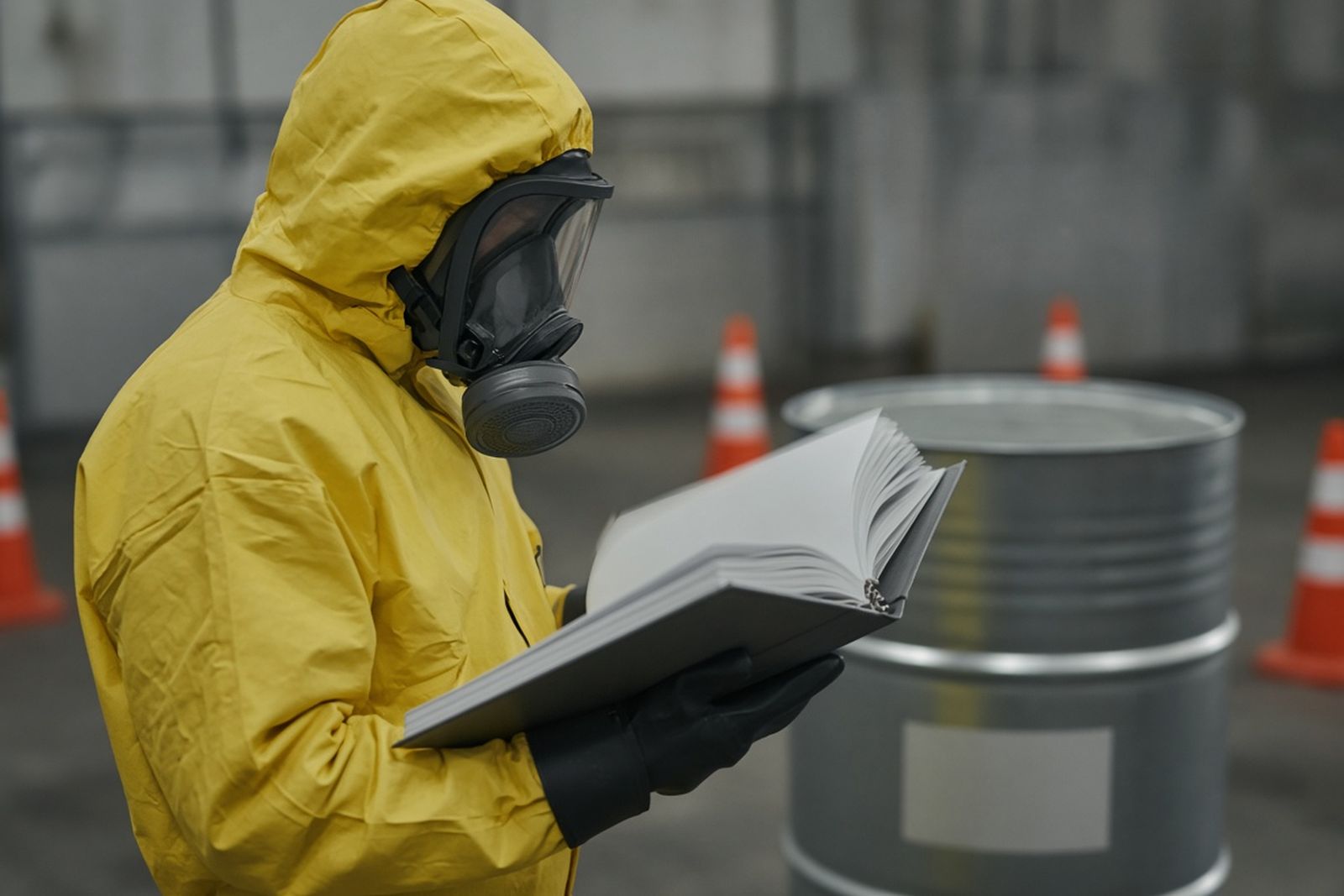
The safety data sheet is your best source of quick information about a known product. Keep SDSs organized and accessible, ideally both on paper near storage areas and in a digital library.
In an emergency, go to the sections on hazard identification, first aid measures, firefighting measures, accidental release measures, and exposure controls. They tell you whether the material is flammable or toxic, what protective equipment is recommended, and how to contain and absorb it.
Hand the SDS to responders when they arrive. Emergency crews and contractors rely on it to choose equipment and tactics, and having it ready saves time.
If the material is unknown, tell responders what you do know: container labels, placards on a vehicle, the process that was running, or the smell and color of the liquid.
If your SDS library is missing a product, make a note to request it from the supplier after the incident. Gaps in the library are common and easy to fix once someone notices them.
What should I avoid doing?
Some actions make a spill larger or more dangerous. Many of them feel helpful in the moment, which is why it is worth knowing them in advance.
Do not wash spilled material toward a drain with water. Do not use incompatible absorbents; for example, some absorbents react with strong oxidizers. Do not mix chemicals or try to neutralize something unless you are trained and the SDS supports it.
Do not use electrical equipment, vehicles, or anything that could spark near flammable liquids or vapors. Do not remove contaminated clothing or equipment carelessly; bag it for proper disposal.
Avoid sending staff back into a building to retrieve belongings, paperwork, or equipment while vapors may still be present. Those items can wait until responders say the area is safe.
Finally, do not assume the spill is someone else's problem. If you discover it, you are the one who can start the right chain of calls.
Whom do I need to call, and when?
Call sequences should be written in your spill procedure and posted near spill kits. A typical sequence looks like the list below, but your site may differ.
Reporting obligations depend on the material, the quantity, and where it went. Some reports must be made within hours. Your environmental manager or contractor can help identify which agencies apply, and the state environmental agency's spill line can confirm whether a report is needed.
- 911, if there is fire, injury, strong vapor, a large release, or an unknown substance
- Your internal emergency coordinator or environmental manager
- Your spill response contractor
- Required agencies, which may include local, state, and federal contacts depending on the release
- Your insurance carrier, once the emergency is controlled
- Neighbors or tenants, if the spill could affect them
What a well-handled urgent spill looks like
A well-handled urgent spill rarely looks dramatic. Whether it is battery acid pooling in a warehouse aisle or fuel on a loading dock, the same few moves happen in roughly the same order, and each one is small.
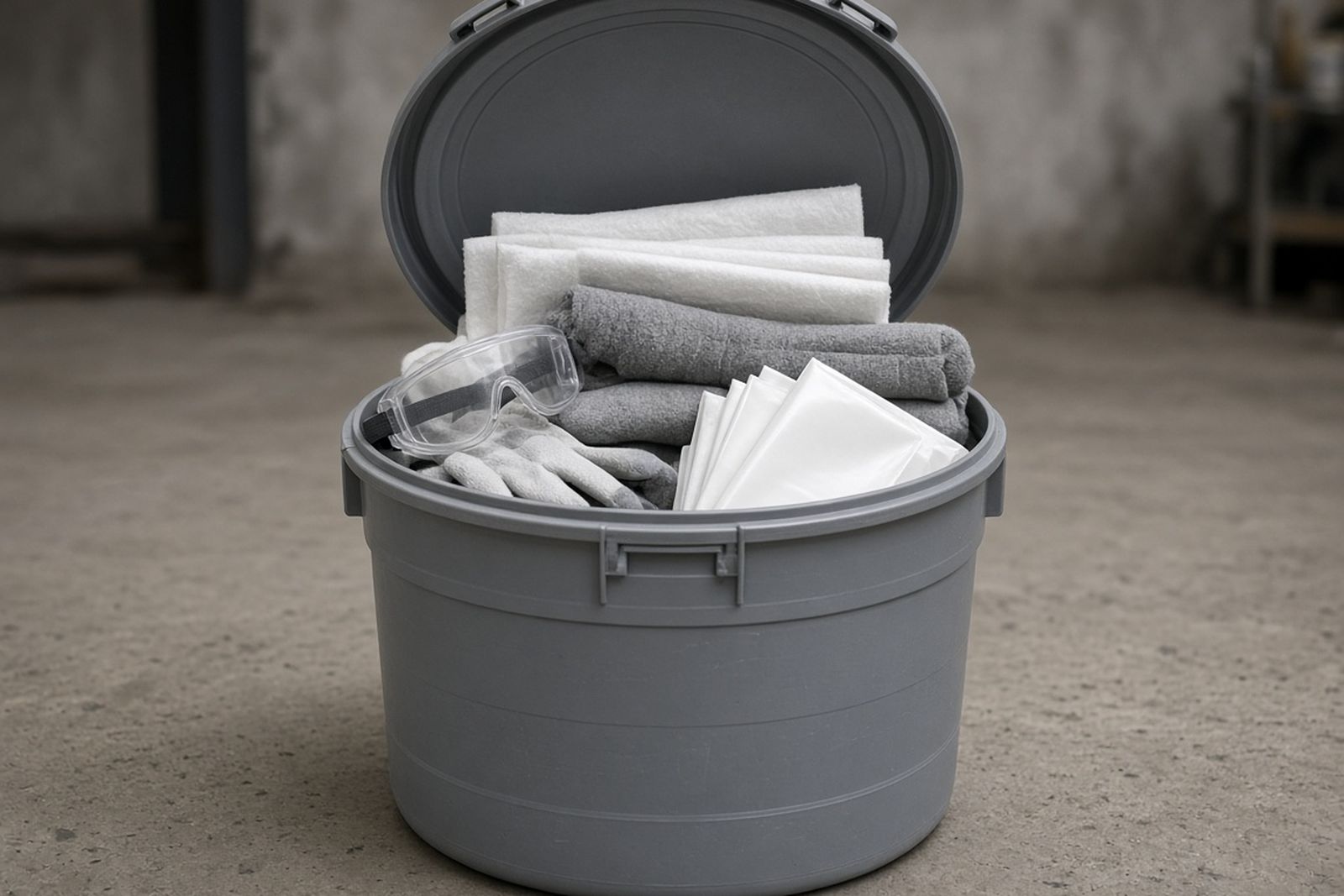
Someone clears the aisle and sends people to a set meeting point away from the spill. A trained responder puts on the gloves, goggles, and apron from the spill station, covers the nearest floor drain, and rings the spill with an absorbent that is compatible with the material. That person does not try to handle cracked or damaged containers.
Meanwhile, someone else pulls the safety data sheet, calls the site's environmental coordinator, and calls the contracted responder. The contractor neutralizes or absorbs the material, packages damaged containers and waste, and provides closeout records. The coordinator confirms whether anything reached a drain and documents the incident.
Afterward, the site restocks the spill station, looks at what caused the release, such as a rack that needs inspection, and walks the shift through what happened at the next safety meeting. In most cases, a quick drain cover and the correct absorbent are what keep a potentially reportable release confined to one area.
Communicating with people nearby
Clear communication keeps people safe and reduces panic. Tell employees, tenants, or neighbors what they need to do, not everything you know. Simple instructions, such as avoid the east lot or stay indoors with windows closed, are easier to follow.
People tend to follow clear guidance. In a 2015 study of the 2014 chemical spill in West Virginia, Savoia and colleagues reported that 70% in affected counties reported following recommended behaviours. Give people something clear to follow, and update them as the situation changes.
Choose one person to handle communication so messages stay consistent. Keep a log of what was said, to whom, and when.
What should I record while it is happening?
Records made during the incident are more reliable than memories reconstructed later. Assign someone to keep a simple log, and let responders take the lead on the scene.
Record the time the spill was discovered, what was spilled if known, the estimated volume, where it went, who was exposed, what actions were taken and when, and whom you called. Take photos only when it is safe to do so.
These records support regulatory reports, insurance claims, and your own review afterward. They also help you improve your procedure, spill kits, and training for the next time.
Keep the log with the contractor's closeout package, waste manifests, and any agency correspondence in one file. If questions come up months later, everything will be in one place.