Short answer
Commercial spills happen where employers have legal duties to plan, train, and report, and cleanup often involves larger quantities, regulated waste streams, and agency oversight. Residential spills usually involve household products, heating oil, or pool chemicals, and homeowners rely on 911, poison control, and hired contractors. Both need the chemical identified before cleanup.
Same chemistry, different setting
The chemistry of a spill does not care whether it happens in a factory or a family garage. A flammable liquid gives off vapor either way, and an acid burns skin either way. What changes is the setting around the spill: who is legally responsible, how much material is involved, who is trained to respond, and which agencies expect to hear about it.
Businesses that store or use hazardous chemicals operate under workplace safety, environmental, and fire code requirements that homeowners generally do not face. Those rules shape everything from the spill kit on the wall to the phone calls made in the first hour.
Homeowners, on the other hand, usually have no plan, no training, and no idea which products under the sink are dangerous together. Their best tools are a quick exit, a phone call, and a qualified contractor.
Commercial preparedness, from spill kits to Risk Management Plans
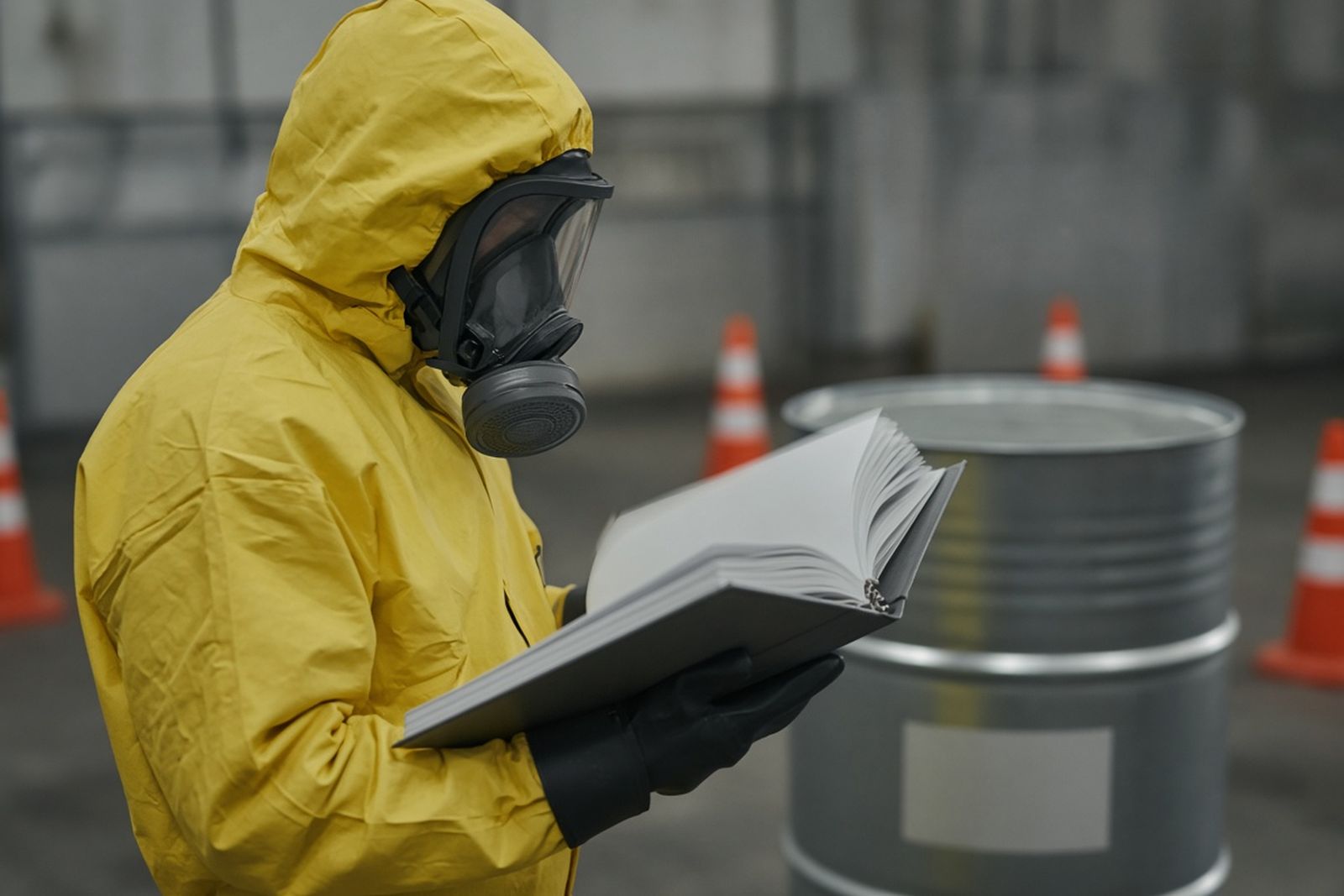
Employers whose workers may respond to releases need emergency response plans, trained personnel, and equipment suited to the chemicals on site. OSHA's HAZWOPER standard sets training levels for different responder roles, and fire codes govern how chemicals are stored and separated.
Facilities with large quantities of certain highly hazardous chemicals face an added layer. EPA reported in its 2024 Federal Register rule on chemical accident prevention that approximately 11,740 facilities hold current Risk Management Plans for handling extremely hazardous substances. Those plans require hazard assessments, prevention programs, and emergency response coordination with local responders.
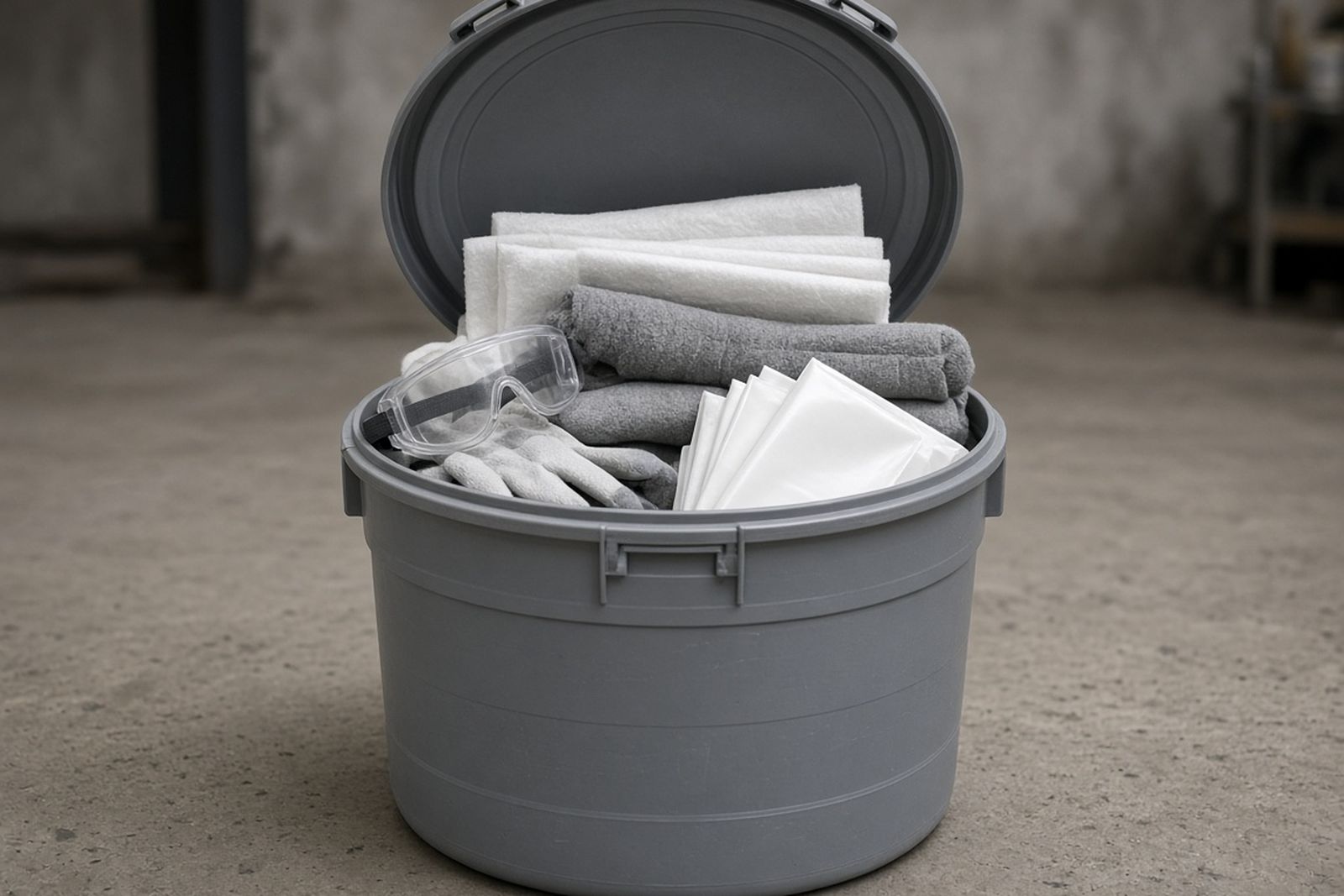
Most businesses are not in that category. A body shop, a print shop, or a cleaning contractor still needs safety data sheets available to workers, labeled containers, compatible storage, a spill kit sized for its materials, and a clear rule about when employees clean up and when they evacuate and call for help.
Serious accidents at large chemical facilities are uncommon relative to the number of sites, but they do happen. In its 2024 rule, EPA reported that 382 of 12,855 RMP facilities, about 3 percent of regulated sites, reported at least one accident during 2016-2020.
That figure applies only to the facilities that hold the most hazardous chemicals, not to the much larger number of ordinary businesses or homes. It is a reminder that even sites with formal prevention programs experience releases, which is why planning for the response matters as much as preventing the spill.
- A written emergency plan that names roles and evacuation routes
- Safety data sheets accessible to every shift
- Spill kits matched to the chemicals actually stored
- Training for anyone expected to contain or clean a release
- A pre-arranged cleanup contractor and waste vendor
Common household spills
Residential spills usually involve familiar products: gasoline or oil in a garage, heating oil from an indoor tank, pool and spa chemicals, pesticides, paint thinner, drain cleaners, and bleach mixed with other cleaners. Older homes may also hold a broken mercury thermometer or thermostat.
Quantities are smaller than at a commercial site, but homes have their own risks. Children and pets are close by, ventilation is limited, and ignition sources such as water heaters and furnaces sit near storage areas. People also tend to try cleaning up with whatever is on hand, including water, paper towels, or another cleaning product, which can spread or worsen the problem.
For a household spill that produces fumes, spreads beyond a small area, involves an unknown product, or causes symptoms, leave the space and call 911. For questions about exposure, the national Poison Help line at 1-800-222-1222 connects you with a local poison center.
Who has to report a release in each setting?
Commercial facilities often carry reporting duties. Depending on the substance, the amount, and where it went, a business may need to notify federal, state, or local agencies, and certain accidental releases trigger reports to the Chemical Safety Board. Businesses usually designate someone to make those calls, and a cleanup contractor may help assess whether a threshold was met.
Homeowners face fewer formal duties, but not none. A heating oil release that reaches soil, groundwater, or a storm drain may be reportable to a state environmental agency in some places. Fuel spilled into a creek or ditch may also require notice.
In either setting, when in doubt, ask. Fire departments, state spill hotlines, and environmental agencies would rather receive a call about a release that turns out to be minor than miss one that is not. Your state spill hotline or environmental agency can tell you whether a particular release has to be reported.
How does the cleanup itself differ?
Commercial cleanups tend to be larger and more technical. Crews may work in defined hot, warm, and cold zones, run continuous air monitoring, pump free product into drums, decontaminate process equipment, and coordinate with facility engineers on restarting operations. Waste volumes can be significant, and each stream must be characterized for disposal.
Residential cleanups are smaller but often more invasive to the living space. A contractor may need to remove carpet, drywall, cabinets, or insulation that absorbed a chemical, then ventilate, clean, and verify before the family returns. Odor is a larger concern in a home because people live with it every day.
In both settings, the right contractor starts by identifying the chemical, uses protective equipment and methods suited to it, and documents where waste goes.
Timelines differ too. A facility may need to restart a production line or reopen a loading dock, so cleanup is often scheduled around operations and may run overnight. A household cleanup is usually scheduled around the family's ability to stay elsewhere, and the pressure is about getting people back into their home. Ask any contractor how they plan to sequence work so the space that matters most to you is cleared and verified first.
Insurance and cost conversations
Businesses may have pollution liability policies, environmental endorsements, or specific coverage for spills, along with business interruption coverage for downtime. They may also have contracts that shift responsibility to a supplier, carrier, or tenant. Those conversations often involve risk managers, brokers, and counsel.
Homeowners' policies vary widely in how they treat chemical and fuel releases. Some cover sudden accidental events and exclude gradual leaks; some exclude pollution broadly. Coverage is decided by the policy language and the adjuster, not by the contractor or by general assumptions.
Whatever the setting, notify your insurer promptly, document everything with photos, keep receipts, and ask the contractor for a written scope the adjuster can review.
Two typical calls, side by side
The contrast is clearest when the same contractor handles a facility spill and a household spill in the same week, which is common. A warehouse forklift puncturing a tote of concentrated floor cleaner and a gas can knocked off a garage shelf are both routine calls, but they unfold differently.
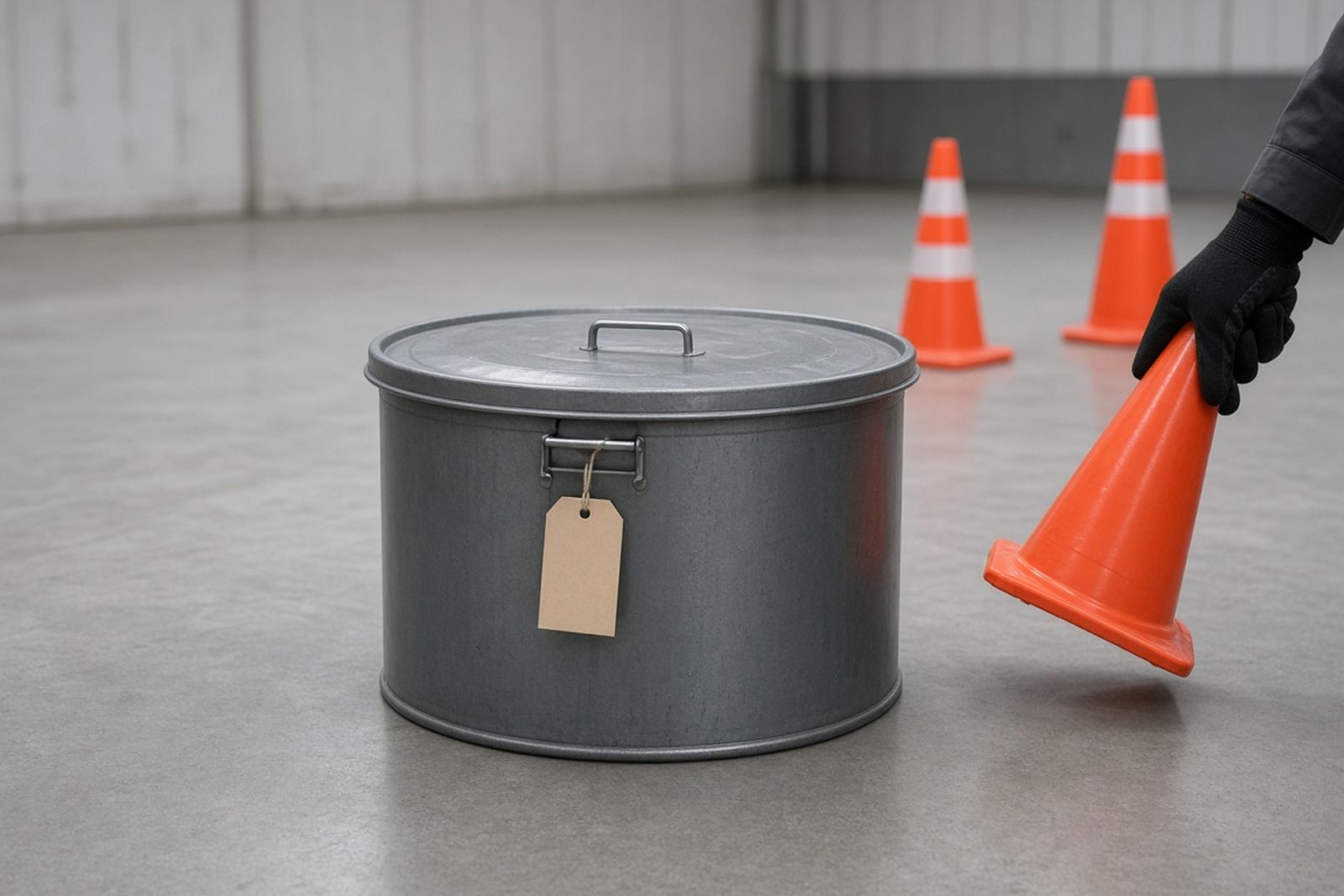
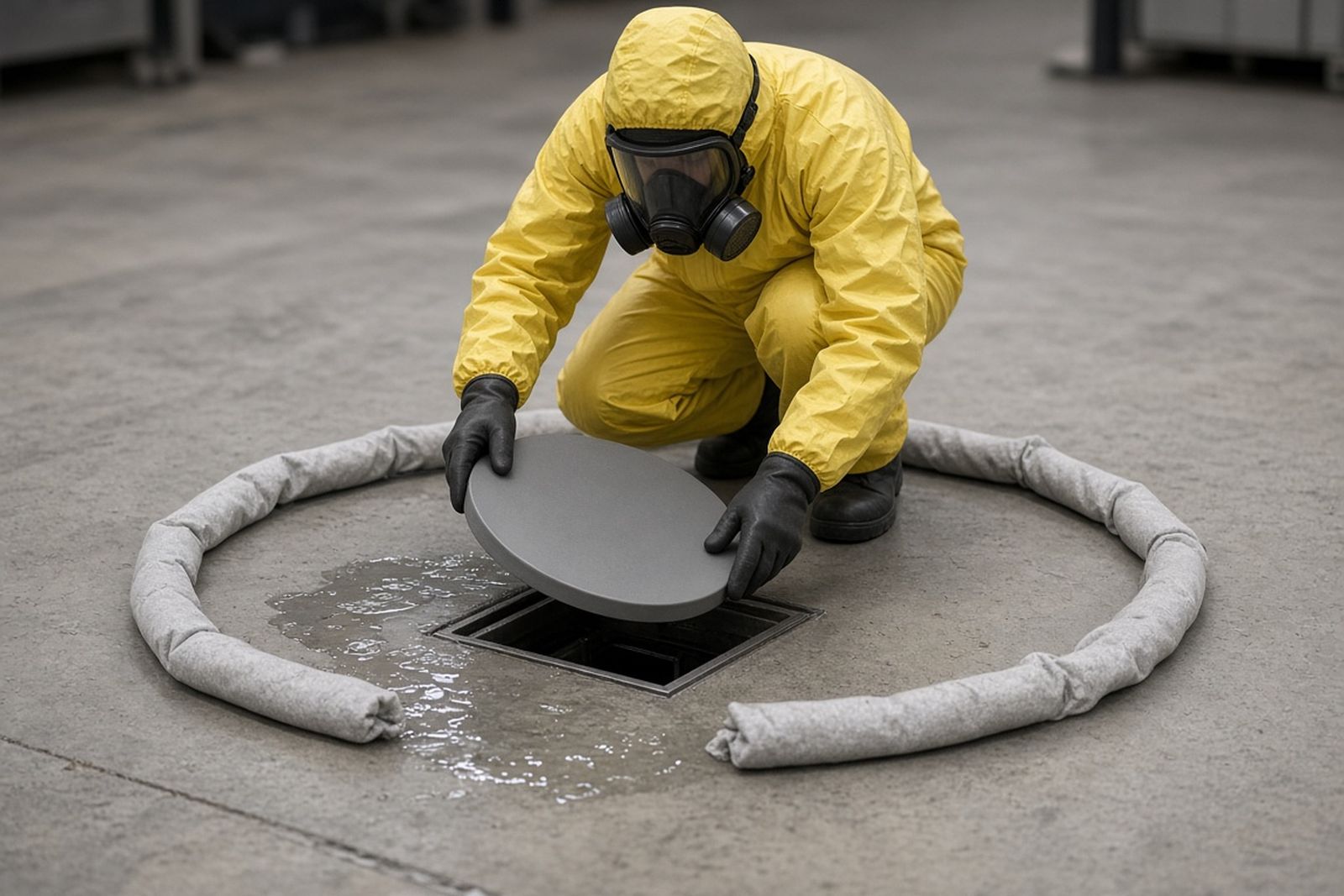
At a facility with a plan, the trained team has often already isolated the aisle, diked the edge of the pool with the spill kit, and pulled the safety data sheet before the crew arrives. A safety manager meets the crew, confirms whether anything reached a floor drain, and asks whether the release might be reportable. The crew neutralizes or recovers the material, drums the waste for profiling, checks the floor, and hands over documentation for the facility's records.
At a home, the best starting point is a family that has left the garage and opened the door, which is exactly the right move. The crew controls ignition sources such as a water heater pilot, recovers fuel from the concrete with absorbents, removes soaked boxes or rugs, ventilates, and monitors vapor levels before saying the space is safe to use. The homeowner usually receives a shorter report and a disposal receipt.
The chemistry may be equally simple in both cases. The difference is that the business had a plan and a trained team, while the household had good instincts and a phone.
What should I take away if I own a home or run a business?
If you run a business, know your chemicals, train your people to the level you expect them to act, keep safety data sheets and spill supplies where they are needed, and have a cleanup contractor's number ready before you need it.
If you own a home, store chemicals in original containers away from heat and each other, never mix cleaning products, and treat any spill with fumes or an unknown product as a reason to leave and call.
In both cases, identify the chemical before anyone cleans, and hire people whose training and methods match the hazard.
Mixed-use buildings deserve a special mention. A ground-floor dry cleaner, nail salon, or auto shop under apartments brings commercial chemicals into residential space. If you live or manage property in that kind of building, find out what the business stores, where its spill supplies are, and how residents will be told to evacuate or shelter if something goes wrong.