1Recognizing the hazard before you act
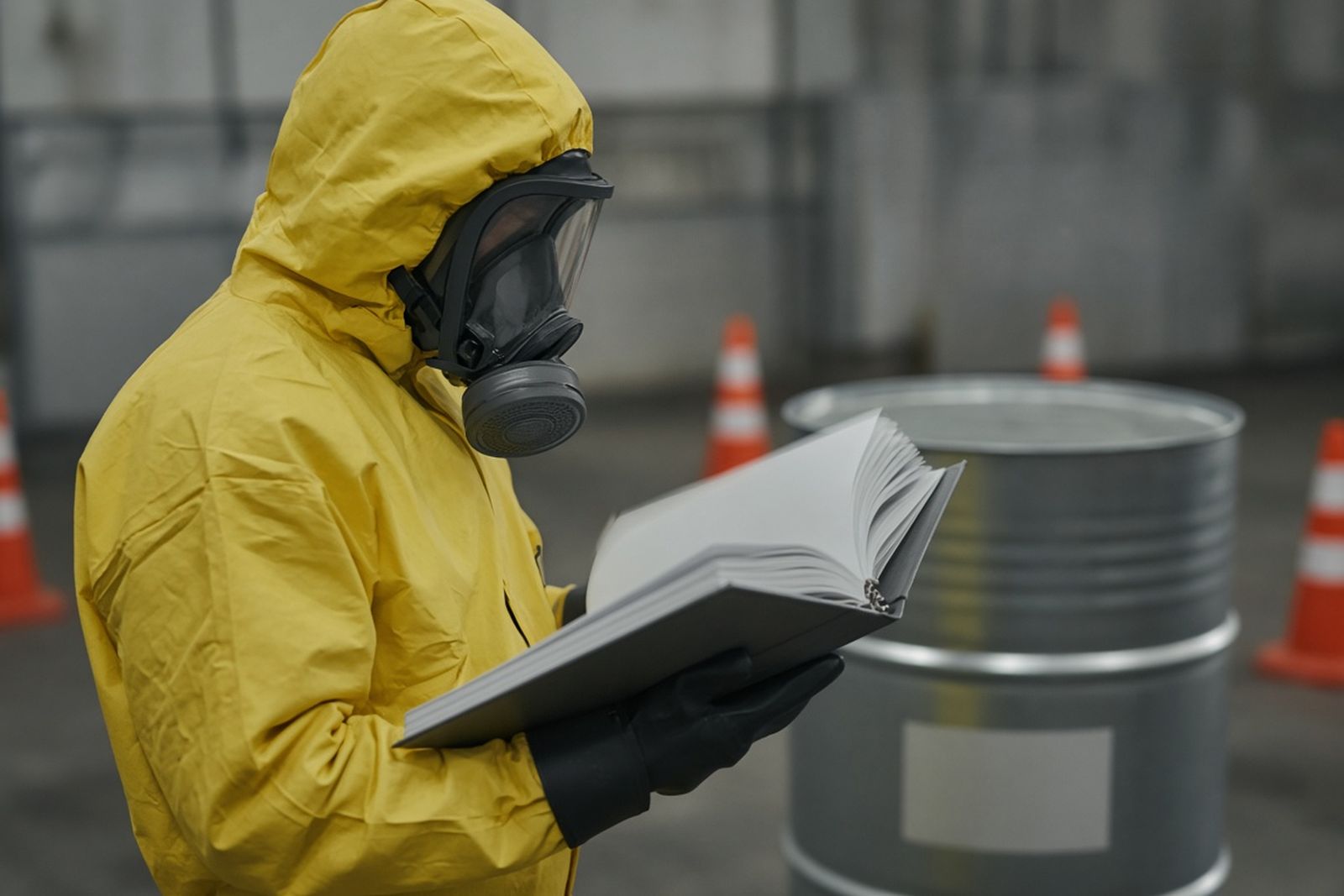
Every spilled liquid has a mix of hazards. Spotting them starts with knowing what it is. Look for the container label, a warning sign, or shipping papers. Then pull the safety data sheet. The SDS tells you whether the product can burn, eat away skin or metal, poison you when breathed, react with water, or a mix of these. Your senses are not a safe guide. Some toxic vapors have no smell, and a strong smell does not mean the level is safe. Signs like fumes, bubbling, heat, color change, or a shiny film moving toward a drain make things more urgent. Treat anything you cannot name as hazardous until a qualified person says otherwise. Battery incidents add electric shock and heat risks that normal chemical thinking does not fully cover.
2Responsibility and who has authority at the scene
The site owner or operator is usually responsible for the spill. That includes reporting, cleanup, and cost. The exception is when a shipper or contractor caused it, which is often argued about later. Inside the building, your written emergency plan should name who orders people out, who calls outside help, and who may try to contain the spill. Once the fire department or a hazmat team arrives, they take charge. Your role then is to give them facts, such as the SDS, site maps, and drain locations. OSHA's HAZWOPER rule at 29 CFR 1910.120 covers the responders and any workers who do more than leave the area. Federal, state, and local environmental agencies set the reporting and cleanup rules. Those rules vary by state and county.
3Containment that protects people and the environment
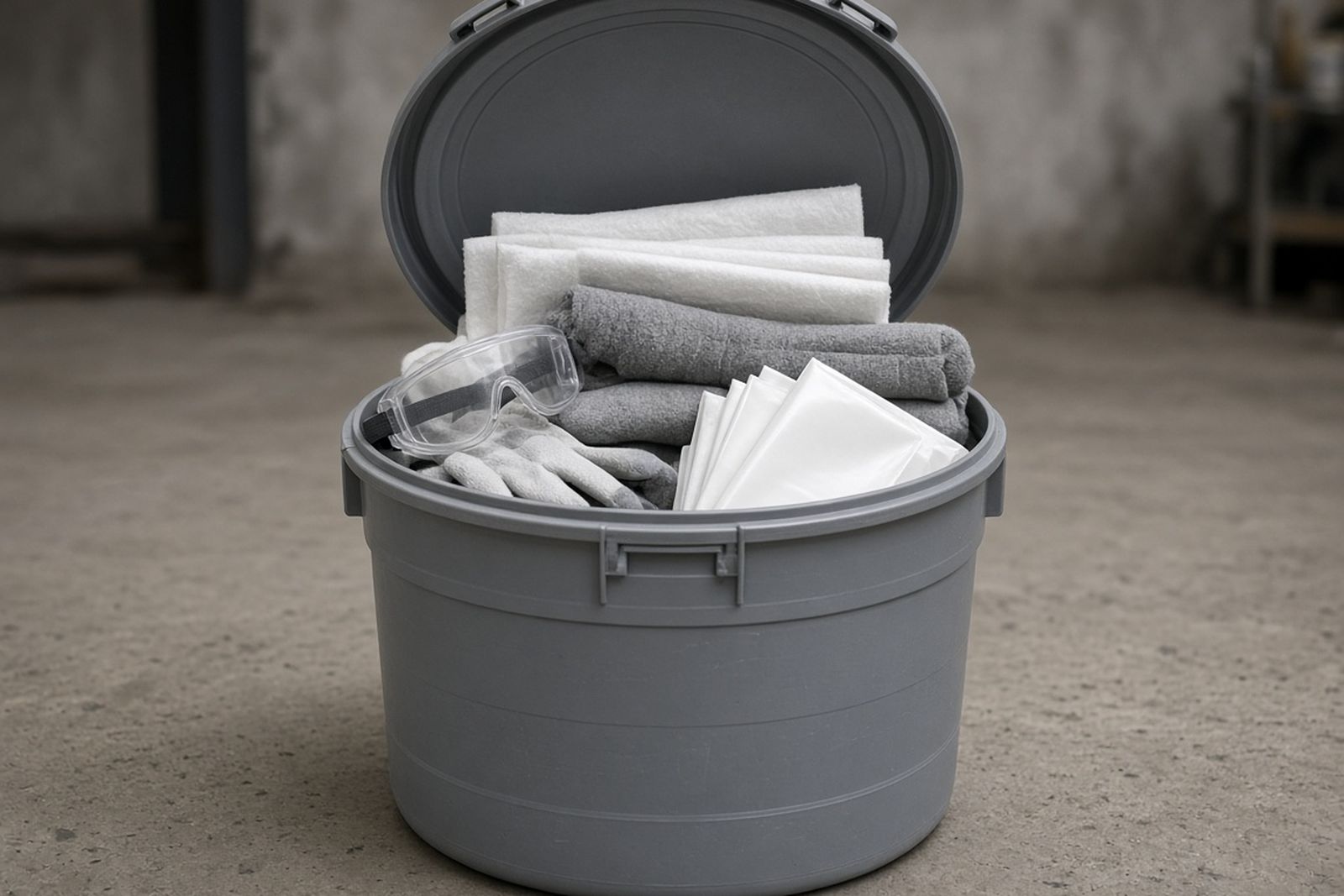
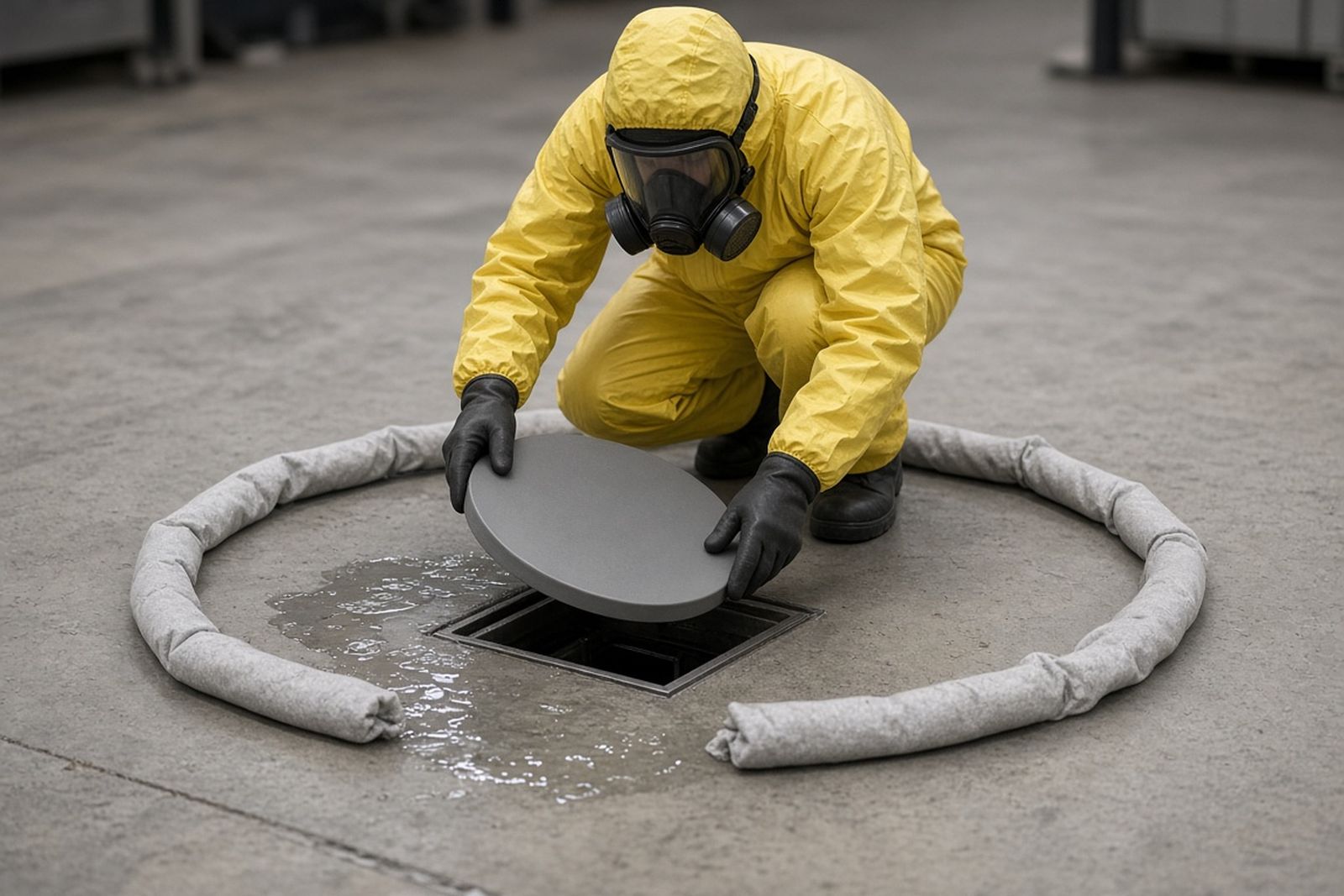
Containment starts with distance. Move people upwind and uphill and close doors. Stop the flow at its source only if you can do it without breathing vapors or touching the liquid. Next, keep the spill from spreading toward drains, soil, and chemicals it could react with. Use drain covers, absorbent socks, or small barriers placed from the outer edge inward. Airflow is a judgment call. Fans can thin out toxic vapors, but they can also push vapors that burn toward a spark. So check the SDS and your plan. Absorbents must be safe to use with that chemical, since some react with acids or strong oxidizers. Containment only holds things in place until trained responders arrive. It does not replace cleanup. Staff should never risk their safety to make a puddle smaller.
4Cleaning versus decontamination after a chemical release
Removing the loose liquid and soaked absorbent is cleaning. The product you can see is gone. The next step removes the hidden part. Some residue soaks into concrete, cracks, floor joints, or other porous surfaces. That residue must be neutralized, drawn out, or removed so the surface is no longer harmful to touch or breathe near. The method depends on the chemical. A caustic may be neutralized under careful control. A fuel may need degreasing and vapor checks. A solvent that soaked into soil may need digging out. Testing tells the two steps apart. A floor that looks clean can still give off fumes or still burn skin. So the choice to reopen should rest on testing, wipe samples, or written standards from a qualified person, not looks. Bleach-based trauma cleanup methods have no place in chemical cleanup.
5The waste path for absorbents, liquids, and contaminated media
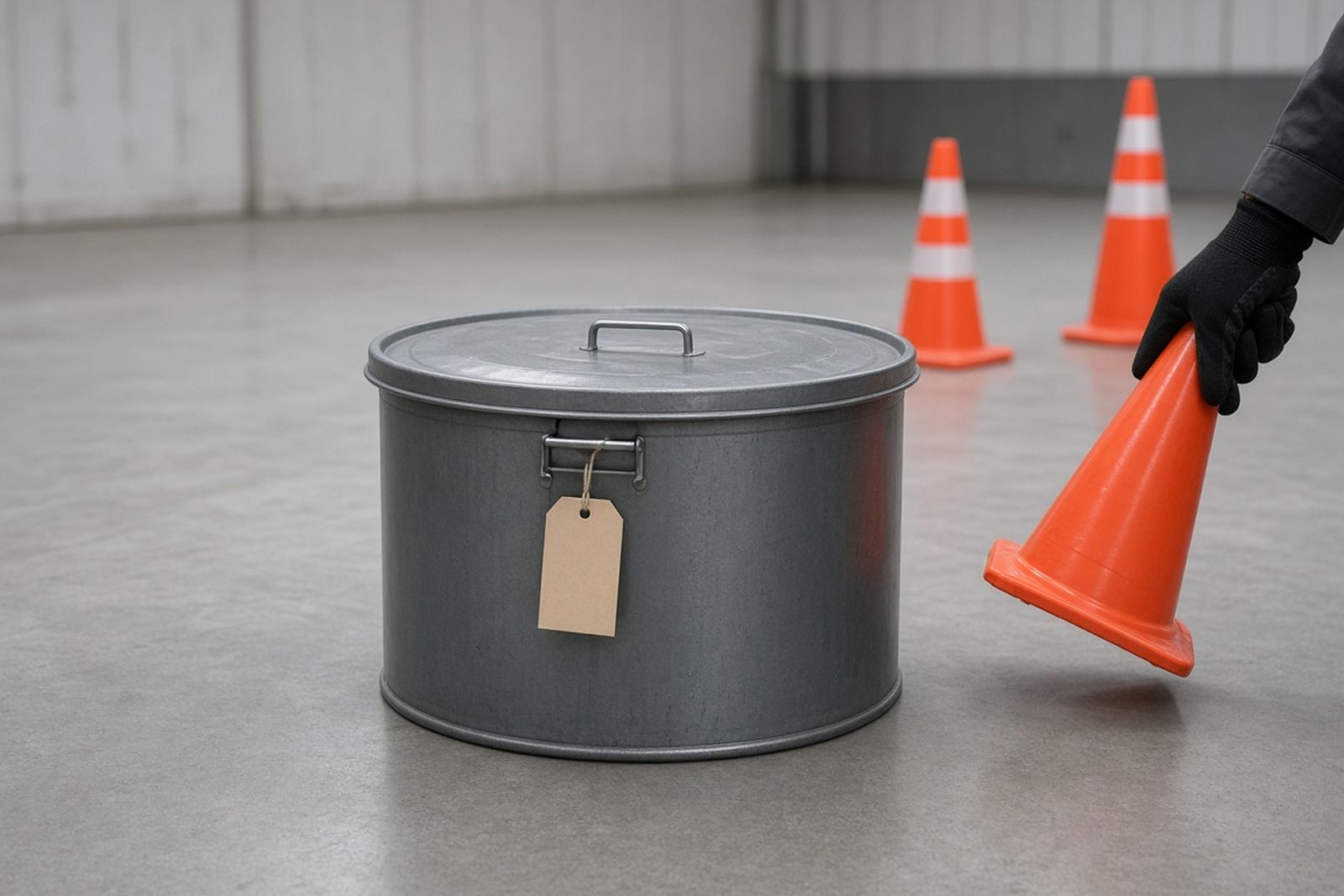
Everything used to hold and clean a spill becomes waste with the same hazards as the product. That includes soaked pads and socks, recovered liquid, dirty soil, used gear, and rinse water. This waste must be tested and sorted, usually under the federal hazardous waste law (RCRA), to see if it counts as hazardous waste. If so, it needs proper containers and labels, a start date, and a waste shipping record. It also needs a hauler approved for hazardous waste and a permitted site to treat, store, or dispose of it. Fuel-soaked pads in a dumpster or rinse water sent to a storm drain are common violations. Oil-only pads from a small fuel spill may follow a different path in some states, but the business that made the waste must confirm. Your contractor should explain the waste codes, where the waste goes, and how the signed shipping records come back to you.
6Documentation and verification that hold up later
A spill file has to satisfy several readers. These include your insurer, your environmental agency, your company safety program, and maybe a court. Start writing things down once the scene is safe. Note the time you found the spill, the product, about how much spilled, where it went, who was exposed, and what was done. Photograph the source, the spread, the drains, and the containment before cleanup begins. Save agency confirmation numbers, the contractor's scope, daily logs, test readings, waste records, and waste shipping records. Verification means a qualified person wrote down the standards for reopening the area. It also means they recorded proof that those standards were met. Keep the file as long as your state and your insurer require. Use it to update your plan and training.